Halloween in Shibuya started underground, as a party for foreigners on a Tokyo train, and grew into a street crowd that the ward now asks people to avoid.
more
In the late 1980s, the nearest thing Japan had to Halloween was a season of August festivals honouring the dead. Almost nobody marked 31 October except foreigners living in the country. A group of young expats took over part of the Yamanote Line for an hour around Halloween. The event became known as the “Yamanote Halloween Train.”
From a train to the streets
Riders dressed up and travelled the full loop, which stops at 29 stations and takes about an hour. The ride grew rowdier each year. Some commuters objected, and police had to join the ride to protect partiers from protests at Shinjuku Station. As far as Condé Nast Traveler could tell, 2009 saw the last ride in its original form.
By then the holiday had gained a second home above ground. Tokyo Disneyland and Universal Studios Japan began Halloween events in 2000, and other businesses copied them. National Geographic notes that Japanese celebrants often take on an alter ego in costume and skip trick-or-treating.
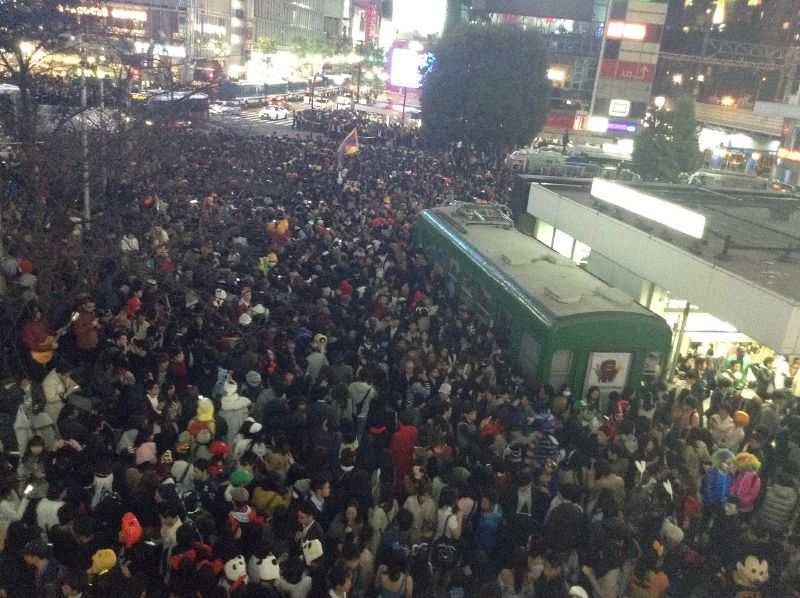
Shibuya drew the biggest adult crowds. National Geographic reported in 2017 that costumed revellers had grown so numerous that police were closing streets to traffic. Condé Nast Traveler put the 2016 turnout at nearly 100,000 people across 90 events in the area.
Why Shibuya now asks people to stay away
In October 2023, Shibuya’s mayor, Ken Hasebe, told visitors not to come. He pointed to the crowd crush in Seoul’s Itaewon district the year before, in which more than 150 people died. “The streets of Shibuya are not Halloween party venues,” he said.
The ward said the area around the station becomes nearly impossible to move through each year. It listed property damage from street drinking, quarrels with residents and heaps of empty cans and bottles. Officials estimated 40,000 people gathered in 2019 and feared more than 60,000 in 2023.
The ward banned street drinking near the main station from 6pm to 5am between 27 and 31 October. It asked dozens of shops not to sell alcohol and added police and security guards.
Katsuhiro Nishinari, a crowd management expert at the University of Tokyo, said the gathering’s unofficial status makes planning hard. His main concern was who would be responsible if an accident happened.
Milad Haghani of the University of New South Wales agreed that Itaewon holds lessons. He warned against using it to stop people enjoying large gatherings.