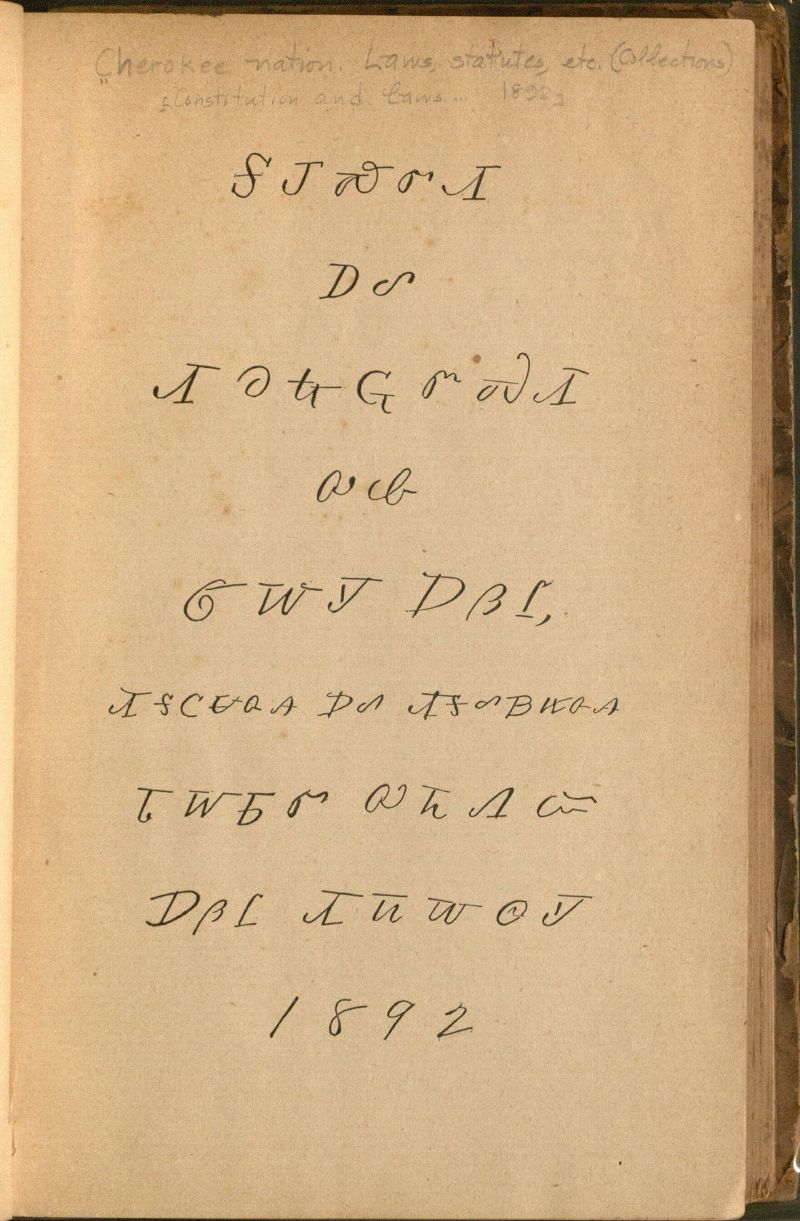
Sequoyah could not read or write a word of any language, including his own. What he built instead was a character for every syllable a Cherokee speaker says, rather than a letter for every sound the way English does. Because the system matched sounds Cherokee speakers already made, native speakers found it easy to learn. Reported literacy rates climbed quickly once it appeared, and the Cherokee Nation had adopted it as the tribe’s formal writing system within a few years.
more
What convinced him to try
Sequoyah spoke only Cherokee. Around 1809 he began thinking hard about the written English he saw settlers using, and about whether his own language could have a script of its own. A 2019 study of the syllabary’s origins, published in the archaeology journal Antiquity, is candid about the gap in the record. It does not say exactly how Sequoyah worked out his method. The invention itself happened in and around Willstown, a Cherokee community in present-day Fort Payne, Alabama, where Sequoyah lived for more than two decades.
One widely told account fills in what the academic record leaves open. Sequoyah is said to have first tried drawing a separate symbol for every word, then to have considered borrowing English letters outright, before realising that English’s sounds did not match Cherokee’s. He settled on a third approach: a single character for every syllable, so that “ga”, “li” and “do” each got one shape rather than several. Working that way, he arrived at roughly 85 distinct characters.
The test that ended the argument
Not everyone welcomed the project. Word of a Cherokee man trying to fix speech onto paper reached his neighbours, and some accused him of practising witchcraft. The doubts ended with a demonstration rather than a debate. The Cherokee Nation adopted the syllabary only after Sequoyah and his daughter proved it carried real meaning: they exchanged written messages while kept out of each other’s sight and hearing, and the words arrived intact.
It worked. A skill that could survive a test like that was hard to dismiss as a trick.
How fast readers took to it
Because the syllabary was built for Cherokee’s own sound patterns rather than adapted from another language, native speakers picked it up with unusual speed, and literacy rates were reportedly high soon after the system appeared. The Cherokee Nation formally adopted it as the tribe’s official writing system in 1825, and it went into wide everyday use almost as quickly.
That speed showed up in what Cherokee readers did with the script next. In 1828 the Cherokee Nation launched the bilingual Cherokee Phoenix, printed in English and Sequoyah’s characters, which The Conversation describes as the first Native American newspaper in the United States. Missionaries and Cherokee converts used the same script for a different kind of text. A Cherokee version of the Book of John appeared in 1824, and a complete New Testament, along with most of the Old Testament, followed over the next few decades. Neither project required teaching a reader a foreign alphabet first.
The script also carried private life onto stone rather than paper. In Manitou Cave, near Willstown, nineteenth-century Cherokees used the syllabary to write first-person accounts of ceremonies they held there, inscriptions that a team of Cherokee scholars and archaeologists first reported and translated in 2019. The writing dates from a period of mounting pressure on the Cherokee from surrounding white settlement, in the years before the forced removal west known as the Trail of Tears.
Where the syllabary stands now
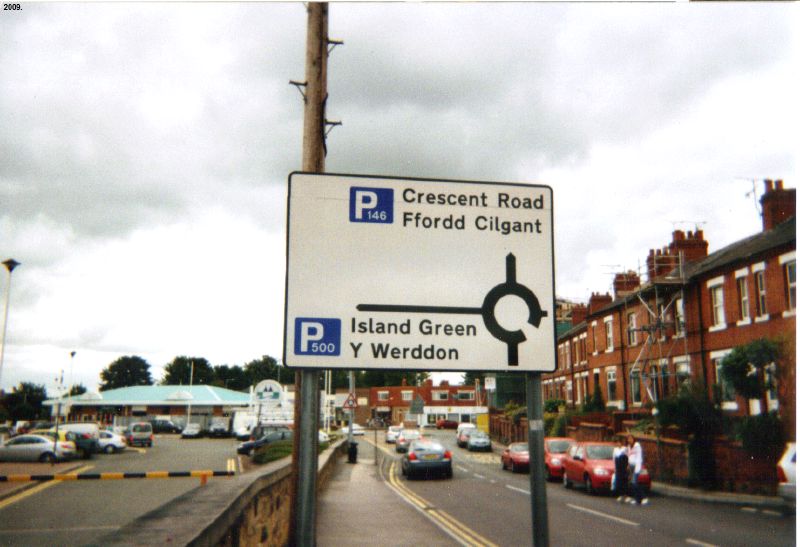
Roughly 500,000 people belong to the three federally recognised Cherokee tribes today: the Cherokee Nation and the United Keetoowah Band in Oklahoma, and the Eastern Band of Cherokee Indians in North Carolina. Only about 2,000 of them speak Cherokee as a first language. Bilingual signage now runs through the Eastern Cherokee reservation and through Tahlequah, Oklahoma, the Cherokee Nation’s capital, on tribal buildings and on some private businesses.
The script Sequoyah built to record a spoken language now has to compete with the pressures that shrank the number of people who speak that language at home. What changed is who is doing the work: apps, immersion schools and a generation of new learners are now aimed at a problem literacy alone cannot fix.