The Berlin Wall fell on 9 November 1989, after East Germany’s government fumbled the announcement of a modest change to its travel rules. The BBC notes that it came five days after half a million people had protested in East Berlin.
The press conference that went wrong
East German leaders wanted to calm the protests by making travel a little easier. They never meant to open the border outright. The new rules went to a spokesman, Günter Schabowski, who had no chance to read them before his regular press conference.
He read the note aloud and told reporters that private travel abroad could now be applied for without preconditions. Pressed on timing, he said that as far as he knew it took effect at once. The plan had been to start the next day.
Television carried the news, and East Germans headed for the crossings in their thousands.
A guard with no orders
Harald Jäger was in charge at one crossing that evening. He told Der Spiegel in 2009 that his superiors gave him no order, either to open the gate or to fire on the crowd. With a few guards facing a crowd that size, he feared people could die in a crush even without shooting. So he told his men to open the barrier.
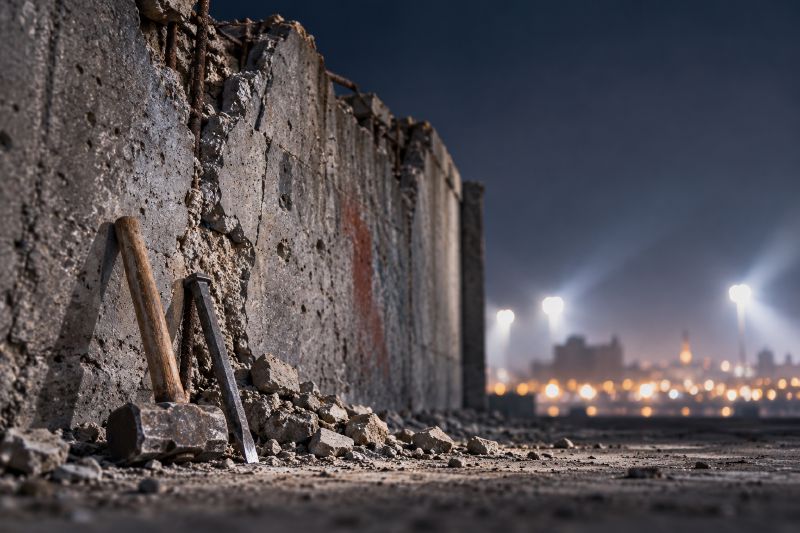
East Berliners poured through and tens of thousands of West Berliners met them. People climbed the wall at the Brandenburg Gate and began breaking it apart with hammers and pickaxes.
Why the wall was there
The GDR began sealing off East Berlin in the early hours of 13 August 1961. It had been losing people fast. About 3 million East Germans left for the West through West Berlin between 1949 and 1961.
The finished barrier ran almost 27 miles through the city. It was two parallel walls with a “death strip” between them, guarded by soldiers under orders to shoot escapers. National Geographic counts over 5,000 successful escapes and at least 140 deaths at the wall.
A year of cracks
The wall fell at the end of a year of revolt across the Soviet bloc. In Poland, the Solidarity union won seats in partly free elections that summer. In May, Hungary took down 150 miles of barbed wire on its border with Austria. By August it had opened that border, giving East Germans a way out.
Less than a month after 9 November, the GDR collapsed. Germany reunified in 1990. Today a double row of cobblestones traces where the wall stood.