A number for what the book is, not when it arrived
more
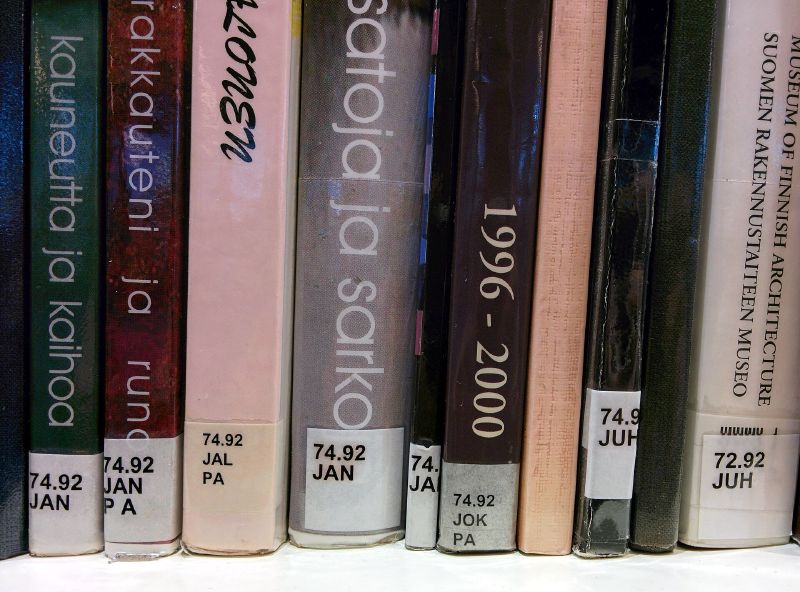
A Dewey number files a book by what it is about, not by its size or the day a library received it. The classification splits the whole of human knowledge into ten classes of a hundred numbers each. A decimal point after the three digits then lets a cataloguer narrow the subject as far as the collection needs. Two books on the same exact subject can still land on the same number, and it is the letters after the number that keep them apart on the shelf.
Ten classes for the whole of human knowledge
Melvil Dewey worked the scheme out as a young assistant at the Amherst College library, and published it in 1876, at the age of 25. Before that, a library commonly shelved a book by its size or by when it arrived, which could put a guide to rabbit breeding beside Plato’s Republic. Dewey’s alternative divided knowledge into ten classes of a hundred numbers each.
- 000: Computer science, information and general works
- 100: Philosophy and psychology
- 200: Religion
- 300: Social sciences
- 400: Language
- 500: Science
- 600: Technology
- 700: Arts and recreation
- 800: Literature
- 900: History and geography
Each class then splits into ten divisions, and each division into ten sections, so the three digits before any decimal point can already point to a narrow run of shelf.
At the University of Roehampton’s library, the numbers climb the higher up the building a reader goes. A longer number does not mean a book sits further along the shelf. It is the value of the whole decimal string, read one place at a time, that decides the order, not how many digits it runs to.
Following one book to its exact shelf
A real classmark shows the whole scheme working on an actual book. Taxation: Policy and Practice, by Andy Lymer and Lynne Oats, carries the classmark 336.200941/LYM in the University of Wolverhampton’s library. The 336 places it under economics, and specifically under taxation. The digits after the point, 200941, narrow that down further, to tax policy specifically. LYM, taken from the lead author’s surname, is what a cataloguer calls a cutter number, and it tells a shelver exactly where among every other 336.200941 this one sits.
Why letters do the job numbers cannot
Two books that land on the identical subject number still need separating, and that is what the letters are for. Most classmarks carry three letters taken from the author’s or editor’s surname, and libraries shelve them alphabetically, so a classmark ending 945.805 TAB sits before one ending 945.805 TRB, for that reason alone.
Journals get their own version of the same idea. At Newcastle University Library, a periodical’s classmark starts with the letters PER, then a subject number, then three letters from the journal’s own title, so an architecture journal begins PER720 ARC. A medical journal follows the same pattern, but starts MED PER instead.
From a 44-page pamphlet to a global standard
Dewey published his scheme in 1876 as a 44-page pamphlet, in a print run of 200 copies. By its twelfth edition, in 1927, the same scheme had grown to 1,243 pages. It is now in use in libraries in more than 135 countries.
The classification is owned and updated today by OCLC, the non-profit cooperative behind it. Its four-volume 22nd edition, published in 2003, added new numbers for developing fields such as computer science, engineering and sociology. A BBC Radio 4 Extra documentary on the system describes Dewey as so fixated on efficiency that he kept a separate pocket for a different part of the day. Its guests included Wayne Wiegand, author of the Dewey biography Irrepressible Reformer, and Caroline Kent, of the British Library, who sat on the Dewey Decimal editorial policy committee.
What the numbers get wrong
The University of Roehampton’s own library guidance calls the classification established but controversial, and says it carries bias in how it treats gender, race and religion. To lessen that, the library layers its own classification on top of Dewey’s numbers, so some items sit somewhere other than the shelf his scheme alone would give them. The 2003 revision tackled part of the same problem directly. It completed a plan, begun in the previous edition, to correct the religion class’s old bias toward Christianity, and it updated how the scheme treats social groups and institutions.
A pamphlet run of 200 copies in 1876 now sorts shelves in more than 135 countries. At Roehampton, the library itself decides where those numbers get things wrong.