The Ross Sea became the world’s largest marine protected area on 28 October 2016, when every member of the body that manages Antarctic waters finally agreed to it. The Commission for the Conservation of Antarctic Marine Living Resources, meeting in Hobart, Tasmania, approved a joint proposal from the United States and New Zealand without a vote against. The decision needed consensus, and getting there took years.
The area is about 1.57 million square kilometres, or 600,000 square miles. National Geographic put it at more than twice the size of Texas.
The body that had to agree
The commission grew out of a 1982 convention set up to manage Antarctic fishing while keeping the region’s species and ecosystems stable. Its members either fish or do research in the Southern Ocean, and the convention allows what it calls reasonable harvesting under a precautionary approach. In 2016 the commission comprised 24 countries and the European Union.
That made fishing the sticking point. Antarctic toothfish, sold as Chilean sea bass, was already caught in the Ross Sea, and rising seafood prices had fishing fleets eyeing it as new ground.
Two holdouts
Environmental groups and several countries had pushed for protection for decades. In the final years two countries resisted. China and Russia worried about closing too much ocean to fishing and other uses, seabed mining among them.
Pressure came from several directions. Five hundred prominent scientists signed a letter urging protection. US Secretary of State John Kerry raised the Ross Sea with Russia during talks over Syria. The swimmer Lewis Pugh, the UN Patron of the Oceans, spent two years in what he called “speedo diplomacy” with Russian officials, after swims in the sea’s icy water.
China changed course in 2015. Russia, the last holdout after the 2015 meeting, came on board in the week of the 2016 vote. Its turn came months after it expanded a protected area around Franz Josef Land in the Arctic, with President Vladimir Putin declaring 2017 a Year of Ecology.
The compromise
The price of agreement was time and some fishing. China had said 20 years of protection was enough, conservationists wanted far longer, and the parties settled on 35.
Most of the reserve is a no-take zone, where nothing can be removed, living or mineral. Fishing is banned across 432,000 square miles. Special zones allow krill and toothfish fishing for research. The protection came into force on 1 December 2017.
Why this sea
The Ross Sea lies south of New Zealand and has been called the “Last Ocean”, because humans have left it largely untouched. A 2011 study in the journal Biological Conservation described it as the least altered marine ecosystem on Earth.
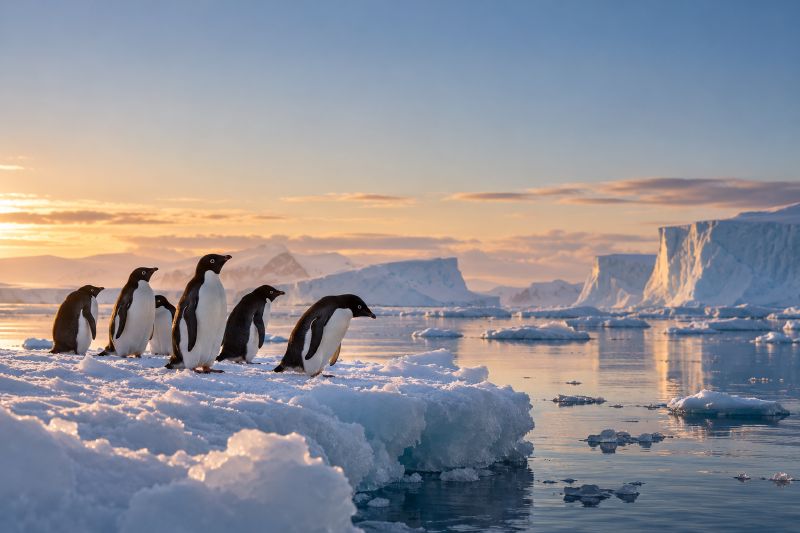
Its shelf and slope make up only 2% of the Southern Ocean. They hold 38% of the world’s Adélie penguins, 30% of its Antarctic petrels and around 6% of its Antarctic minke whales. Krill underpin it, as they do the rest of the Southern Ocean food web, feeding fish, birds, seals and whales.