A hydrogen fuel cell makes electricity by pulling hydrogen apart and sending its pieces down two different routes. A catalyst splits each hydrogen atom into a proton and an electron. The protons pass through the middle of the cell, while the electrons travel round an outside wire, and that flow is the current. At the far side the two meet oxygen and become water and heat.
more
The US Energy Information Administration reckons a fuel cell may beat a petrol engine on efficiency by a factor of two or three. NASA flew fuel cells on the Apollo and Space Shuttle missions.
What sits inside the cell
Every fuel cell has the same basic sandwich. A negative electrode, the anode, and a positive electrode, the cathode, sit on either side of an electrolyte. Hydrogen goes in at the anode, and air goes in at the cathode.
In the polymer electrolyte membrane cell, the design the Department of Energy favours for cars, the electrolyte is a polymer sheet that conducts protons. The electrons cannot cross it. They take the long way, through the circuit outside the cell, and do useful work on the way. At the cathode, protons, electrons and oxygen recombine into water, releasing heat.
The EIA describes the same reaction from the outside. Hydrogen and oxygen react across an electrochemical cell, much like a battery, and out come electricity, water and a little heat.
Why it is not a battery
A battery stores a fixed amount of energy and then runs flat. A fuel cell never runs down and never needs recharging. It keeps producing power and heat for as long as it has fuel.
Chemists describe the process in two halves. Oxidation happens at the anode and reduction at the cathode, linked by a charged particle crossing the electrolyte and by electrons in the outside circuit. Every type of fuel cell works on that principle, even when the fuel and the charged particle change.
Not every fuel cell runs on pure hydrogen
The Department of Energy groups fuel cells by their electrolyte, and the temperature they run at decides which fuels they can use.
Membrane cells run cool and respond fast to changing demand, which is why the department calls them the best candidates for cars. That low temperature also means they cannot take natural gas or ethanol directly. A reformer has to turn those fuels into hydrogen first.
Phosphoric acid cells run at about 200°C. They supply hotels, hospitals, grocery stores and offices in modules of 400 kW or more. Molten carbonate cells run near 600°C, hot enough to reform natural gas and biogas inside the cell. Solid oxide cells, built on a thin ceramic layer, run anywhere from 500°C to 1,000°C. Paired with a gas turbine, a solid oxide cell can reach an electrical efficiency as high as 75%.
The heat is useful too. Put a fuel cell in a building, use its waste heat for hot water and space heating, and total efficiency can reach 90%.
Where fuel cells run today
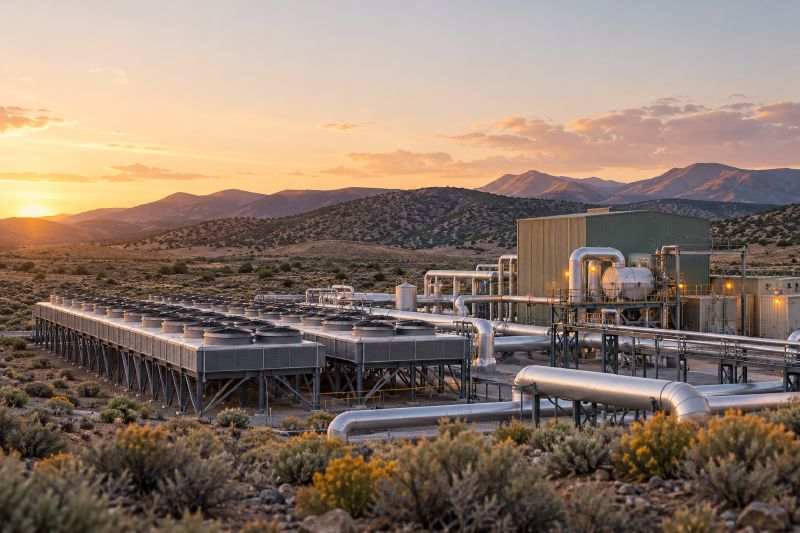
By the end of December 2025, the United States had about 186 fuel cell generators in operation, with about 364 megawatts of combined capacity. Most provide backup or supplemental power for single buildings. Most take their hydrogen from pipeline natural gas, and some use biogas from landfills or wastewater treatment.
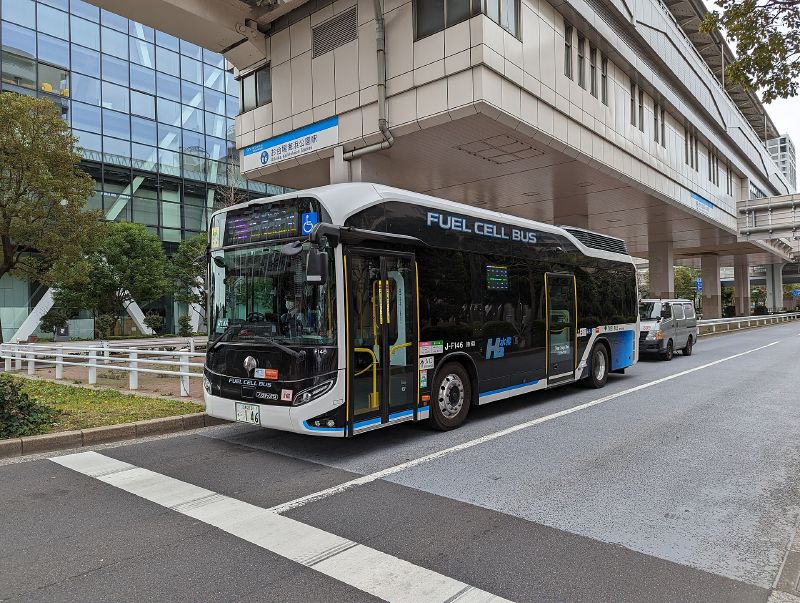
Cars are a harder sell. The EIA blames the high cost of fuel cells and the scarcity of fuelling stations. The US has about 52 hydrogen stations, all of them in California. Drivers will not buy the cars without stations, and companies will not build stations without drivers.
One variant runs the whole process backwards. Fed with electricity, it splits water into hydrogen and oxygen. The Department of Energy sees it as a way to bank surplus wind and solar power for the hours when little is generated.