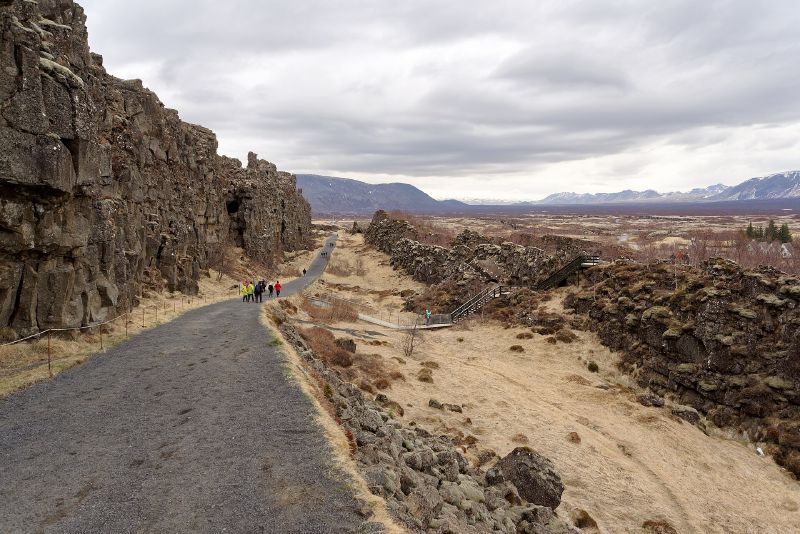
Iceland founded the Althing in 930, when Norse chieftains began gathering each year to make laws and settle disputes. Icelanders call it the world’s oldest parliament, and one argument for that claim rests on an unbroken list of presiding officers. The assembly itself was not unbroken. It was formally disbanded in 1800 and re-established by royal decree in 1845, a gap of about 45 years.
more
Iceland had no king to answer to in 930. Many of its Norse settlers had left Norway specifically to get away from one, so its regional chieftains, the goðar, ran the new assembly by consensus rather than royal decree. Early on, a settler named Úlfljótur sailed to Norway, studied its legal system there, and brought home the code the Althing then adopted. Nothing was written down at first, so the Lawspeaker had to recite the whole of it from memory at every meeting.
The case for calling it the oldest
One version of that case came in a letter to the Guardian, in 2017. John McKinnell, an emeritus professor of medieval literature at Durham University, wrote in to reject two rival claimants. One was the UK parliament, which the then prime minister Theresa May had called the oldest. The other was the Manx Tynwald, floated in an earlier reader’s letter. McKinnell’s own argument turned on continuity. Iceland can name every law-speaker who has presided since 930, he wrote, along with exactly how long each one served. He added a linguistic aside: “Althing” and “Tynwald” share an Old Norse root that also survives in British place names, among them Tingwall in Orkney and Dingwall in Easter Ross.
The gap the letter doesn’t mention
McKinnell’s letter says nothing about the Althing ever falling silent. Yet by his own account it sat in the open air at Þingvellir only up to 1800. The BBC’s timeline of Iceland then jumps straight to the Althing convening again in Reykjavík in 1845, with no session recorded between the two dates. Under Danish rule it had already been reduced, in effect, to a court of law before it was formally disbanded in 1800. The Danish crown had held a trade monopoly over Iceland since 1602, one that ran for close to two centuries. The 1700s had already brought plague and famine, along with a 1783 volcanic eruption that cut Iceland’s population from 50,000 to 35,000. Some historians question whether the Althing is truly the oldest continuously running parliament, because it was abolished for a period.
How the Althing came back
Its authority then returned in stages. Iceland gained limited autonomy over its own internal affairs in 1874, home rule in 1904, and full self-government, bar foreign policy, in 1918. Icelanders then voted in a 1944 referendum to cut every remaining tie with Denmark and become a republic, proclaimed on 17 June. The country has run its own Althing, from Reykjavík, ever since.
Today’s parliament sits in a dark basalt building on Austurvöllur square, built in 1880 and 1881 to mark the thousandth anniversary of Iceland’s settlement. The square out front is the traditional place for political demonstrations, among them the crowds who gathered there after the 2008 banking collapse, in what Icelanders still call the Kitchenware Revolution.