A girl with long black hair climbs out of a television set in Hideo Nakata’s Ringu (1998). Variety credits the film with launching the J-horror trend of the 2000s. This guide follows it from the old ghost stories to the remakes, and ends with eight films to watch this Halloween.
more
Where J-horror came from
J-horror’s ghosts are far older than the videotapes they crawl out of. When BBC Culture traced Ring and Ju-on: The Grudge back to their roots, it found Kaneto Shindo’s Kuroneko (1968) and Masaki Kobayashi’s Kwaidan waiting there. The more traditional films, Ring and Dark Water among them, took their look and their themes from Noh and Kabuki theatre and from Japanese folk mythology.
more
The word “horror” came much later than the ghosts. Chika Kinoshita, a film scholar at Kyoto University, told a Senses of Cinema roundtable that in Japan horror arrived in the mid-1970s as something foreign and new. The label existed, she said, to set a fresh kind of film apart from the traditional ghost stories called kaidan.
Those kaidan had filled Japanese screens for decades. Daiei’s 1960 film The Demon of Mount Oe, directed by Tokuzō Tanaka, drew on a story dating from the 14th century. By 1970 Kimiyoshi Yasuda’s Ghost of Kasane Swamp was bloodier, full of handheld camerawork and zooms. It was his second run at the same old tale, ten years after Ghost Story: Depth of Kasane.
The video shop that trained a generation
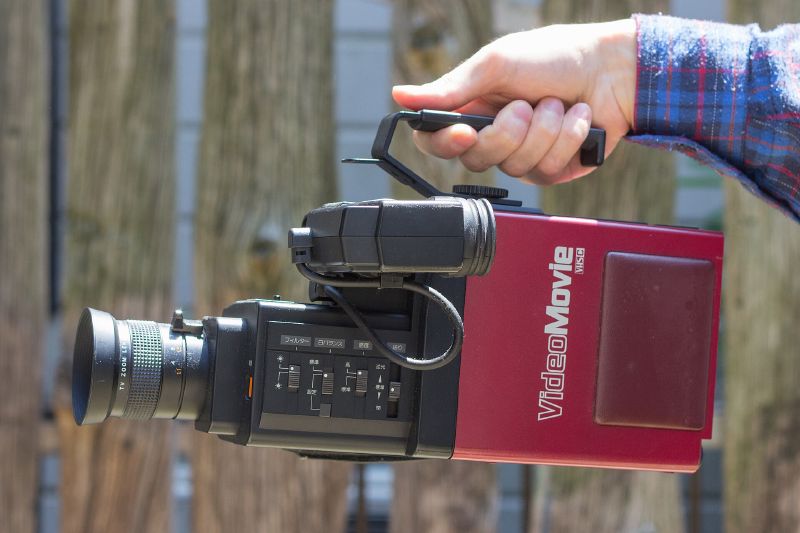
The modern form grew up somewhere humbler than a film studio. Kinoshita told BBC Culture about V-Cinema, the straight-to-video market that boomed in Japan in the late 1980s as the economic bubble burst. It let young directors such as Hideo Nakata, Kiyoshi Kurosawa and Takashi Miike learn their craft on cheap thrills sold by their VHS box art.
Their timing was perfect. In 1997 films by Shohei Imamura, Naomi Kawase and Takeshi Kitano won major prizes at Cannes and Venice, the Palme d’Or and the Golden Lion among them. The V-Cinema graduates reached cinemas at almost exactly that moment.
Across the Pacific, the genre had gone stale. Scream (1996) had turned into a worn franchise of its own, trailing teen copycats. The BFI, marking 25 years of Audition, describes the Japanese films that followed, Cure (1997) and Ring (1998) among them, as a corrective to that tricksy meta-horror. They worked on subliminal fears and on tension that tightened slowly.
Ring itself began as a bestselling novel by Koji Suzuki. And Kinoshita’s summary of the tradition is worth keeping in mind for everything that follows: “J-horror is much more muted and atmospheric.”
The old stories have not stopped travelling. Anna Biller’s The Face of Horror moves the Yotsuya Kaidan, Japan’s famous ghost story, to 14th-century England. Dave Boyle’s Never After Dark, made in Japan with Japanese financing, plays with the expectations of kaidan from its opening minutes. Boyle said he and his producing partner Kento Kaku wanted to honour J-horror’s conventions while giving them a fresh twist.
The people who built it
Japanese ghost films once had a season. Until the late 1960s, yurei films opened in summer to coincide with Obon, the Buddhist festival of spirits, the BFI notes. As far back as the 1930s, stars such as Sumiko Suzuki were taking monster roles like the bakeneko, or ghost cat.
The postwar masters gave those ghosts their grandeur. Nobuo Nakagawa’s The Ghost of Yotsuya (1959) adapted an 1825 kabuki play by Nanboku Tsuruya, the tale of a ronin named Iemon who betrays and murders. Kenji Mizoguchi’s reworking of Tales of Moonlight and Rain, by the 18th-century author Ueda Akinari, won the Silver Lion at Venice.
Masaki Kobayashi went further. Kwaidan, drawn from four supernatural tales by Lafcadio Hearn, was his first colour film and the most expensive Japanese film yet made. He built it from hand-painted sets and heaps of dry ice, with a score by Toru Takemitsu. Kaneto Shindo made Onibaba, then four years later Kuroneko, about a mother and daughter-in-law who return as demon cats to take revenge on samurai. He cast his wife and muse, Nobuko Otowa, and the BFI reads the film as a salute to female strength.
The BFI calls one haunted-house film in the lineage a complete hoot. Nobuhiko Obayashi’s experimental horror sends seven schoolgirls, named Gorgeous, Melody, Prof, Sweet, Kung Fu, Mac and Fantasy, to an aunt’s mansion that eats people. Obayashi drew its special effects from his daughter’s imagination. Under the comedy, the BFI finds grief for those lost in the atomic bombings of Hiroshima and Nagasaki.
The producer who would not give up
The modern wave owes a great deal to one stubborn producer. Takashige Ichise’s name runs across almost every headline hit of the period, from Ring (1998) and Dark Water (2002) to the Ju-on films and Hollywood’s The Grudge. When he started out in the 1980s, he told Little White Lies, there was no market at all for Japanese horror.
He read the novel Ring and started work on a film in the early 1990s. Every company he asked for money told him it would never be a hit, so he shelved it. Then Hideo Nakata’s Don’t Look Up (1996) and Kiyoshi Kurosawa’s Cure (1997) signalled a new potential for horror. After Ring spread by word of mouth in 1998, Ichise doubled down and turned hits into franchises.
He saw horror as cheap, and so as a safe place to experiment. In 2005 he went further, declaring that Japanese horror is scarier than American horror.
Three directors from one TV show
The directors who became the faces of J-horror met in an unlikely place. In the 1990s, a revival of supernatural stories was aimed squarely at young readers and viewers. The TV film anthology The Haunted School gave segments to Hideo Nakata, Kiyoshi Kurosawa and Takashi Shimizu. All three went on to define the J-horror boom of the 2000s, mixing ghosts with modern fears about family, technology and money.
Each brought something of his own. Nakata made Ring from Koji Suzuki’s bestseller. Shimizu has said that butoh dance theatre shaped his pale, contorted ghosts, which he daubed in thick white paint.
Their films were full of rules and rooms. Ring’s rules are strict: watch the tape, the phone rings, and you die seven days later. Its journalist heroine teams up with her psychic former husband, played by Hiroyuki Sanada, to save herself. Shimizu’s Ju-on turns a family home into the trap, with a ghost whose rage curses anyone who crosses her threshold. Its disturbing sound design, all drawn-out croaks and meows, amps up the tension.
Fantasia’s programme note, which IndieWire prints, says Kurosawa proved himself a master of psychological chills with Cure and Pulse, definitive early titles of the wave. It adds that he has since applied his own flavour to drama, science fiction, action, romance and espionage.
The films that set the rules
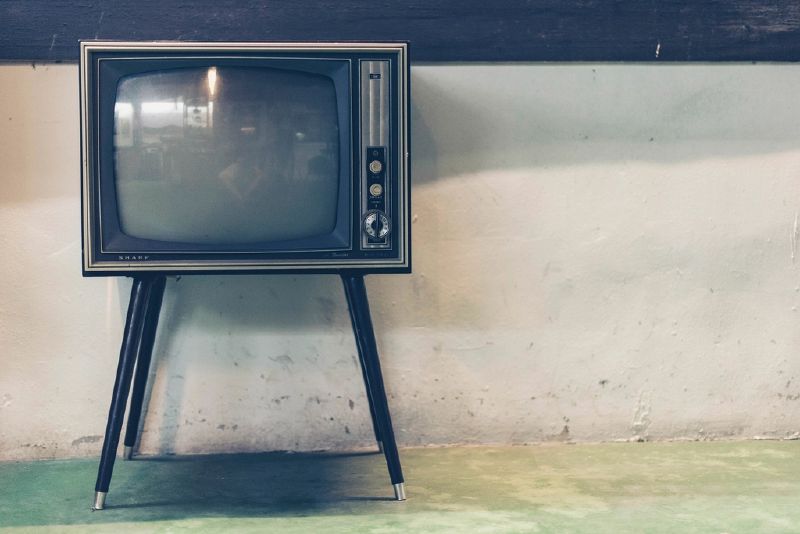
Everything starts with a videotape. In Hideo Nakata’s Ringu (1998), anyone who watches a cursed VHS tape dies within a week. Variety credits it with launching the J-horror trend of the 2000s in earnest, thanks to a premise both original and endlessly adaptable. Its defining image is a ghostly girl with long hair crawling out of a television set.
more
The film made money at home before it made history abroad. Ichise told MovieMaker that Ringu took $20 million in Japan, and that its sequel doubled that. Tartan Video argued that the Korean film Whispering Corridors was the first Asian horror hit abroad, just before Ringu. Even so, MovieMaker judged that Ringu was the film that blew the doors open.
What still lands is the restraint. IndieWire contrasts Nakata’s version with Gore Verbinski’s 2002 remake: where Verbinski reaches for jump scares, Nakata holds on the terrified face of his star, Nanako Matsushima.
Why the ghost is a woman
Ringu’s ghost has a long family tree. The director Norio Tsuruta told MovieMaker that kwaidan films did well until the 1960s, then faded after The Exorcist reached Japan in the 1970s. Slasher films took over in the 1980s, before Ringu brought the old form back in an updated version. Its long-haired female ghost, in his words, is a classic type from those stories.
Takashi Miike gave the deeper reason. Japan has had the idea of kwaidan for more than a century, he said, and most of those stories centre on a woman whom society suppressed. Usually a man betrayed her, and she returns from death for revenge.
You can see the line clearly in Kenji Misumi’s Yotsuya Ghost Story, one of three films in Radiance’s Daiei Gothic box set. Slant Magazine finds its scenes of revenge, a disfigured face and a hand rising slowly out of a bucket of water, still deeply unsettling. Their influence on J-horror, the review says, is plain to see. Kiyoshi Kurosawa appears in the set’s extras to explain why it is his favourite telling of the tale.
The canon, and the films that broke it
After Ring came a run of films that the West would learn by heart. Nakata’s Dark Water, Takashi Shimizu’s Ju-On: The Grudge and Kiyoshi Kurosawa’s Pulse all reached the UK on new distribution labels devoted to Asian cinema. Little White Lies sums up the canon these films made: low budgets, muted colours, long-haired ghosts, and a strong dose of fear about technology.
Two American voices in the business tried to say what made them different. Bill Mechanic, who produced the American Dark Water, said the horror in the Japanese films seems to come out of nowhere, without the motive Western audiences expect. Tony Borg of Tartan Video pointed to the endings: the vengeful spirit is still unsatisfied when the credits roll.
Mechanic also saw the traffic running both ways. He called Dark Water the most Western-style Japanese film he had seen since the Kurosawa pictures, and felt Nakata’s team had learned from Roman Polanski’s films. Ichise put his own aim more plainly. Good horror, he told MovieMaker, should multiply the fear already inside the audience and let their imagination do the rest.
Not every film of the boom whispered. BBC Culture describes a faction that dropped the long-haired ghosts for ultra-violence and taboo subjects. It names Takashi Miike’s Audition, Kinji Fukasaku’s Battle Royale (2000) and Sion Sono’s Suicide Circle (2001). Adam Torel of the UK label Third Window Films remembers them simply: “They were something we’d never seen before.”
How the ghosts got out
In Britain, J-horror spread through the video shop and the late-night schedule. Little White Lies recalls the originals arriving on VHS and DVD from specialist distributors, and on Channel 4 late at night. Viewers tired of Hollywood slashers had already found The Blair Witch Project (1999), and the World Cinema shelf sat a few rows away.
Tartan’s Asia Extreme label became the brand that carried the stranger films. Ryuhei Kitamura’s zombie romp Versus (2000) and Takashi Miike’s horror musical The Happiness of the Katakuris (2001) both became mainstays of the collection in the UK. Miike’s Audition (1999) had already made his name there after Tartan put it out on VHS.
Censorship only made the extreme films more wanted. Miike’s Ichi the Killer premiered in the UK at the London Film Festival in November 2001. The BBFC cut 3 minutes and 21 seconds before it could go out on video. Festivals from Toronto to Sitges handed out sick bags as a stunt, and Torel says fans bought several foreign editions hoping to find the missing scenes.
Hollywood remakes, and their takings
Then Hollywood bought the rights. Gore Verbinski’s The Ring arrived in 2002 as part of a wave of American remakes that also took in The Grudge, Pulse and Dark Water. Variety adds One Missed Call to that list. The money was serious. BBC Culture puts the takings of The Ring at $249.4 million and those of Shimizu’s own remake, The Grudge (2004), at $187.2 million. The BFI notes that the original directors’ work spawned long-running franchises of remakes, reboots and spin-offs.
The tougher films left their mark too. BBC Culture traces the Asia Extreme boom, which ran until the late 2000s, into the American “torture porn” of Saw (2004) and Hostel (2005). Hostel even gave Miike a cameo. Quentin Tarantino’s Kill Bill (2003) cast at least four crew members from Ichi the Killer. In 2006 Miike directed an episode of Showtime’s Masters of Horror, called Imprint. It was the only episode of that series the network refused to show.
A ghost story for the internet
Kurosawa’s Pulse carried a different idea. Its story has the souls of the dead spilling out of computers into the streets of millennial Tokyo. Japan, still reeling from recession, had lived through a wave of suicides in the late 1990s. In a 2005 interview, Kurosawa said he wrote it just as the internet was becoming popular, before anyone knew what it would do to daily life. Filmmaker Magazine argues that these tech-haunted films turned him from a studio gun for hire into an auteur revered around the world.
The BFI hears it in the opening, which plays the sound of a dial-up modem. Kurosawa drains the colour from the world, and Takefumi Haketa’s score fills the grey rooms with dread.
He never stopped. Kurosawa’s Chime topped Slant Magazine’s list of the best horror films of 2024.
From the cinema to the console
Japanese horror crossed into games as well. The Guardian credits Tokuro Fujiwara’s game Sweet Home, an obscure Japanese horror title, as the seed of Resident Evil. In 1993 Capcom gave a young producer named Shinji Mikami a horror project inspired by it. He kept its haunted mansion and filled it with zombies, mutants and monsters instead of ghouls. Thirty years on, the Guardian says, its characters are still always vulnerable.
Where J-horror stands now
The founders are still working, and audiences are finding the old films all over again. In 2026 the Fantasia festival ran a celebration of Takashi Shimizu. Its programme gave the North American premiere of his new film The Mouths, adapted from a novella by the author Sesuji. Fantasia’s programme note, which IndieWire prints, praises it for relying on unsettling apparitions rather than excessive jump scares.
The same festival premiered Kiyoshi Kurosawa’s The Samurai and the Prisoner in North America. It is a period mystery set in a besieged Arioka Castle, adapted from Honobu Yonezawa’s prizewinning 2021 novel.
Kurosawa’s Cloud moved the fear somewhere new. The film premiered at the 81st Venice Film Festival, and swaps ghosts for the anxieties of the gig economy. Its hero makes his living buying goods and reselling them online at inflated prices. Kurosawa told Filmmaker Magazine that a friend in that trade was one of three things that spurred the film. He wanted the film rooted in reality, he said, about ordinary people who turn very violent.
The repertory revival
In American cinemas, the classics are back on the big screen. Bret Berg, theatrical sales director at the American Genre Film Archive (AGFA), told IndieWire he sees growing enthusiasm for J-horror. He named Audition, Ringu, Kwaidan and Onibaba. AGFA, now one of the main theatrical distributors of repertory genre film in North America, is preparing a cinema re-release of Pulse.
Critics have also widened the frame. Film Comment’s Halloween list grants that most people picture J-horror as dead wet girls with long black hair. Its 31 picks reach well beyond them, including a Sion Sono film in which killer hair extensions send up those very tropes.
Still scaring people in games
GamesRadar+’s ranking of Japanese horror games shows the tradition alive on consoles. Keiichiro Toyama’s Siren (2003) is set in a Japanese town and lets you see through the eyes of the creatures hunting you. FromSoftware’s Kuon (2004) is a slice of folk horror in a traditional mansion. The writer also looked ahead to Silent Hill f and Resident Evil Requiem.
Where it goes next
Scholars expect the form to keep shifting. At a Senses of Cinema roundtable in Melbourne, Stacey Abbott described horror changing shape as it travels, and streaming opening up a fluidity of format. Adam Lowenstein noted that the conference treated Japan and Australia as two nodes in its map of global horror.
The extreme branch has its heirs too. Adam Torel of Third Window Films told BBC Culture that studios like A24 now make popular genre films that are more extreme than before. Sion Sono made his Hollywood debut with Prisoners of the Ghostland, starring Nicolas Cage.
Starter guide
Start with the tape, then go back to the older ghosts and forward to the computers. Every film here has two trusted publications calling it a classic, a masterpiece, or one of the best.
- Ringu (Hideo Nakata, 1998). BBC Culture calls it Nakata’s J-horror classic. Variety’s critics put it among the 100 best horror movies of all time, and IndieWire lists it among the best ghost movies.
- Ugetsu (Kenji Mizoguchi, 1953). A ghost story from long before the boom, it is on IndieWire’s list of the best ghost movies. Critics polled by BBC Culture voted it one of the 100 greatest foreign-language films.
- Kwaidan (Masaki Kobayashi, 1964). Four Lafcadio Hearn tales, which the BFI calls a feast for the senses. Slant Magazine calls it Kobayashi’s masterpiece. It is also on Variety’s list of the 100 best horror movies.
- Onibaba (Kaneto Shindo, 1964). The BFI calls it a horror classic. Variety’s critics put it among the 100 best horror movies of all time.
- Kuroneko (Kaneto Shindo, 1968). Two murdered women come back in feline form for revenge. BBC Culture counts it among the classic Japanese horror texts that Ring and Ju-on echo. IndieWire lists it among the best ghost movies.
- Audition (Takashi Miike, 1999). The Guardian named it the 21st best horror film of all time. Variety’s critics put it among their 100 best.
- Pulse (Kiyoshi Kurosawa, 2001). IndieWire lists it among the best ghost movies. GamesRadar+ puts it on its list of the greatest sci-fi horror movies, standing above the other Japanese tech thrillers.
- Ju-On: The Grudge (Takashi Shimizu, 2002). Empire places it among the 50 best horror movies of the 21st century. IndieWire includes it among the 20 best foreign-language horror films of the century.