Michael Sandel’s Justice was the first Harvard course made freely available online and on television, and tens of millions of people around the world have watched it. The BBC notes that he has been called “the most relevant living philosopher” and a “rock-star moralist”.
more
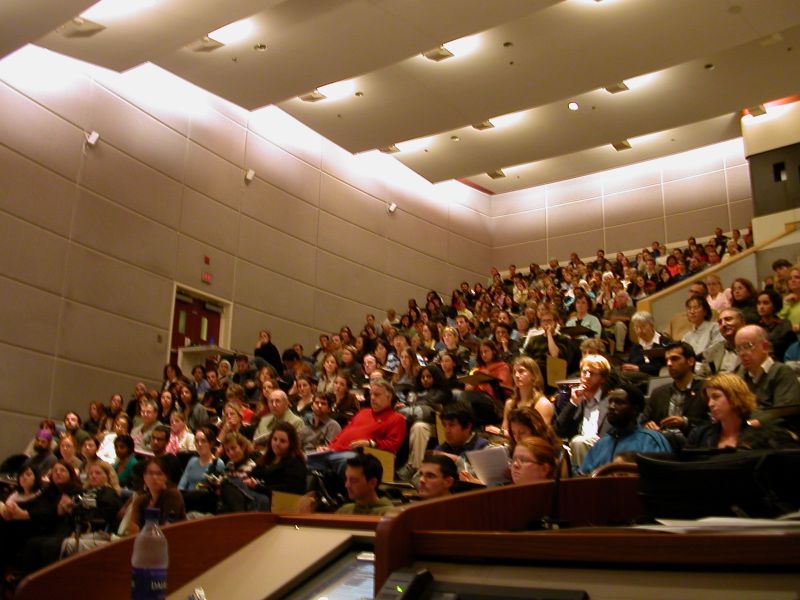
Sandel teaches political philosophy at Harvard, where Justice became one of the university’s best-known courses. Over two decades more than 15,000 students took it on campus, with hundreds of graduate students from philosophy, government and law departments working as teaching assistants.
How the lectures left the lecture hall
The route to a global audience ran through television first. Sandel partnered with PBS to film his Harvard lectures with multiple camera angles, professional audio and editing. That turned the Socratic exchanges he ran with hundreds of students in Sanders Theater into a broadcast series. That series, and its release online, is what drew the millions of viewers.
Sandel went on to build a public-facing career around the same material. His books, among them What Money Can’t Buy and a companion volume called Justice, tie political philosophy to current issues. On BBC Radio 4 he hosted The Public Philosopher, a series on the ideas behind the headlines. In 2015 he chaired a discussion on democracy in the Palace of Westminster with members of Parliament and the public. Harvard Business School’s videoconferencing technology later let him run the same format across countries at once. The BBC renamed the series The Global Philosopher for it.
The version that struggled
Justice also went onto edX, the online platform Harvard and MIT founded together, under the name JusticeX. That version did not simply repeat the television success. Boston Review reported that JusticeX consisted of the existing PBS recordings, cut into shorter segments, with multiple-choice quizzes added at intervals. Students got a syllabus and readings limited to public-domain texts. The discussion forum ran to one- or two-sentence posts with almost no replies from Sandel or his teaching assistants. Sandel appeared once, live, to take questions from JusticeX students, and the reviewer judged he had little to do with it otherwise.
Philosophy faculty at San Jose State University wrote an open letter declining to support JusticeX in their own department. They wrote that there was no teaching problem in their department that JusticeX solved. They added that buying a series of lectures offers nothing beyond assigning a book to read, and the Boston Review reviewer agreed. Boston Review’s review of the course agreed with the substance of that complaint: JusticeX did little to use the interactive tools edX made available, and amounted to old lecture footage with quizzes attached rather than a course built for the format.
Two different kinds of reach
The distinction is between a broadcast and a platform. The PBS series worked as television: professionally shot, edited for a home viewer, and it is the version that produced the tens of millions of views the BBC credits Sandel with. JusticeX worked as a delivery mechanism for that same footage rather than as a new kind of teaching, and that drew criticism.
The San Jose State letter widened its target beyond Sandel’s course alone. Its authors objected to MOOCs generally, on the grounds that platforms built by for-profit companies or by wealthy private universities would let public universities replace professors with cheaper teaching staff. They also warned that such platforms would privatise higher education and widen the gap between rich private universities and poorer public ones. Boston Review’s reviewer still saw a place for it. If the alternative is no philosophy class at all, something free, of whatever quality, beats nothing.
The course that turned Justice into a global phenomenon was the one built for a television audience, filmed once in Sanders Theater and then given away everywhere else.