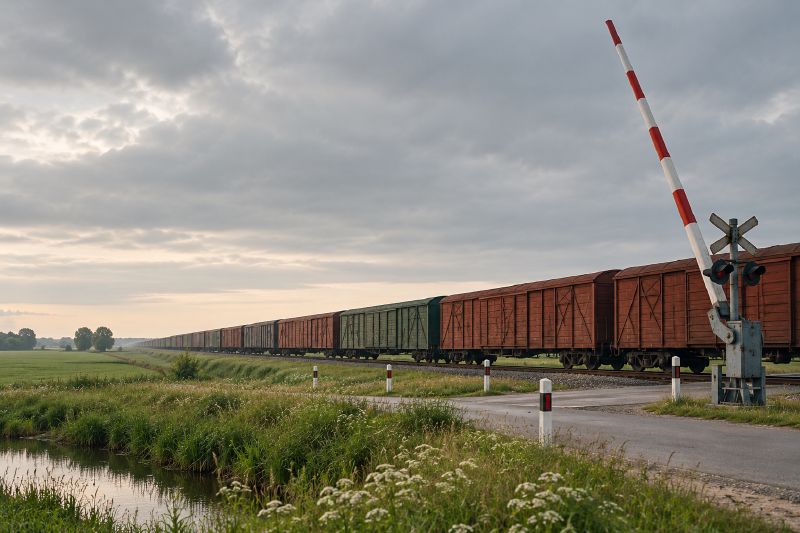
Russia’s land route to Kaliningrad crosses someone else’s territory. The exclave sits between Lithuania to the north and east and Poland to the south, about 1,300km from Moscow, and much of its supply arrives by rail. That rail traffic crosses Lithuania, an EU member, so EU sanctions apply to it.
How the EU lets goods through
EU law carves out an exception for the exclave. Because of its isolated position, Regulation (EC) No 798/2008 sets special conditions for some consignments travelling to and from Russia through Latvia, Lithuania and Poland. Those conditions add extra controls and require the consignments to be sealed.
The rules can stretch to new cargo. In 2013, after a request from Belarus, the European Commission allowed poultry meat from Belarus to cross Lithuania to Kaliningrad by rail or road, on the same terms.
What happened when Lithuania stopped some goods
In June 2022 Lithuania banned the transit of some goods across its territory to Kaliningrad. Moscow called the move “unprecedented”. Russia’s foreign ministry demanded that Vilnius reverse it and said Russia reserved the right to act if cargo transit was not fully restored.
Lithuania said it was applying EU sanctions imposed after Russia’s invasion of Ukraine. Its foreign minister, Gabrielius Landsbergis, said the state railway was enforcing a ban on steel and goods made from iron ore. The steel ban had come into force on 17 June. He put the share of transiting goods on the sanctions list at slightly under half, with some, such as oil, not covered until December.
The EU’s foreign policy chief, Josep Borrell, rejected the word blockade. He said land transit had not been banned, and people and unsanctioned goods still moved. Kaliningrad’s governor, Anton Alikhanov, pointed to a sea route instead. Two ferries were already carrying goods to St Petersburg, he said, and seven more would follow by the end of the year.
Why the route still worries both sides
The Guardian puts Kaliningrad’s population at about 500,000, but the exclave matters to Moscow for more. It hosts the headquarters of Russia’s Baltic Sea fleet. Its city is Russia’s only ice-free port on the Baltic, according to Wikipedia.
The fear of being cut off has not faded. At the Valdai forum, Vladimir Putin said Russia would put all its weapons on the agenda if Kaliningrad came under direct attack, nuclear arms included in the event of a blockade. NATO’s Mark Rutte said the alliance’s exercises posed no threat to Moscow.
Western officials worry about the opposite direction. The narrow strip between Kaliningrad and Belarus, the Suwalki Gap, is where they fear Russia could try to seize Lithuanian land.