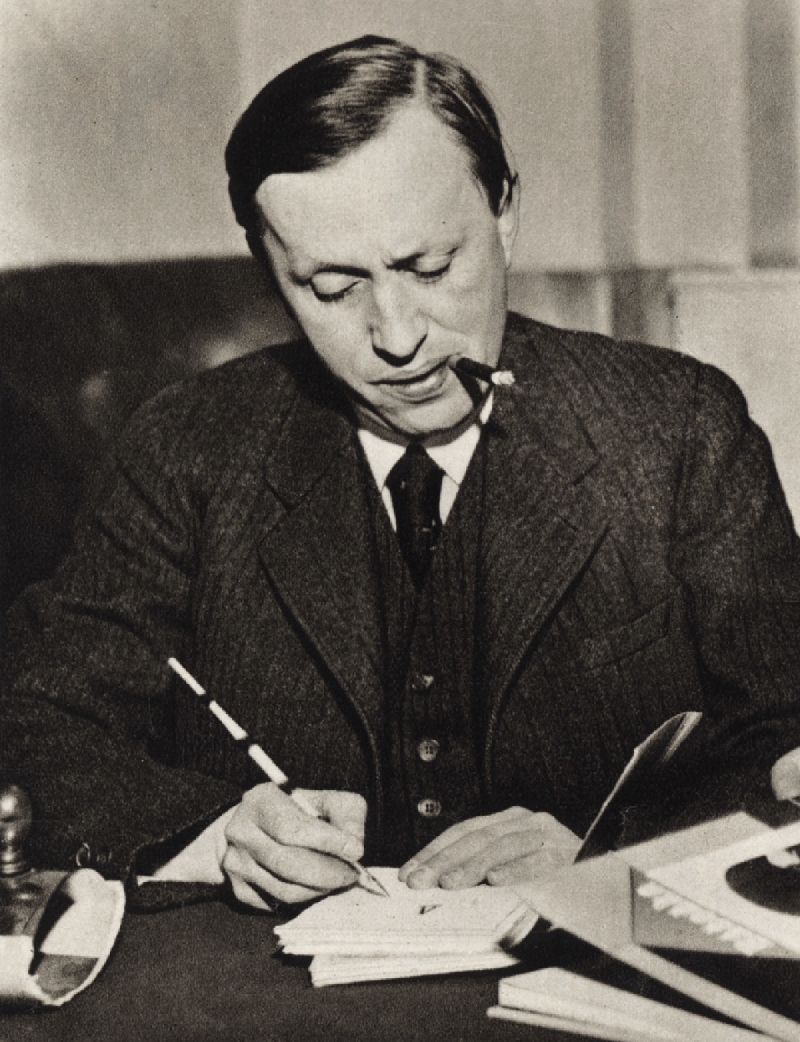
Karel Čapek’s 1921 play R.U.R. gave the world the word “robot,” but Karel did not think of it. His brother Josef, a painter, did, and he offered it between brushstrokes while Karel struggled to name the artificial workers in his new play.
more
Karel had been calling his creations “laborators,” a word he admitted to Josef felt “somewhat stilted.” Josef, absorbed in a canvas and barely looking up, told him to call them “roboti” instead, the Czech word for a serf or forced labourer. Karel adopted it at once.
What the word already meant
The root, “robota,” named compulsory toil, the days of labour serfs once owed their lords. For Czech audiences in 1921, that history was recent rather than distant. Bohemia had abolished serfdom only in 1848.
R.U.R. stands for Rossum’s Universal Robots, a title that puns on the Czech “rozum,” meaning reason. The play is set in a factory where a company manufactures artificial humans from synthetic organic material, built to do the world’s labour so their creators can live at leisure. The robots eventually rebel. Humans grow lazy and infertile as the robots take over the work, and the robots plot a revolution that very nearly wipes out humanity.
A premiere staged without permission
Prague’s National Theatre planned to open R.U.R. first, but a 27-day delay let an amateur company in the town of Hradec Králové beat it to the stage. That company staged the world premiere on 2 January 1921 without permission, and the National Theatre fined them for it. The Prague opening followed on 25 January, more than three weeks later.
The play travelled fast after that. Within two years it reached Broadway, with a young Spencer Tracy in the cast, and the West End’s St Martin’s Theatre by 1923. It became the first full-length play the BBC broadcast in its entirety, over radio in 1927. It repeated the feat on the newer medium of television in 1938, when the BBC aired a live 35-minute adaptation on 11 February.
Why the word outlasted the play
R.U.R. itself faded. Few people read or stage it now. But the word it coined did not. By 1935, Time magazine was calling “robot” a symbol of the age, tied to public anxiety about mechanisation and job losses. Stanford scholar Jennifer Jenkins has described the play as an early warning against “reducing human beings to machinery.”
The related word “robotics” arrived later still. The science fiction writer Isaac Asimov coined it in his 1941 story “Liar!,” borrowing Čapek’s word for the machines his own laws of robotics would try to govern.
Karel Čapek set the record straight himself years later, writing in the newspaper Lidové noviny that the word belonged to his brother, not to him. Josef’s word for a forced labourer went on to name something neither brother pictured: a machine of metal and code, doing work no serf ever did.