Keith Flint was the dancer who became the face of the Prodigy, the Essex band that grew out of the rave scene into the biggest dance act of the 1990s. He did not write the hits, but his look and his snarl on Firestarter turned a producer’s project into a band that rock crowds could follow. When The Fat of the Land reached No 1 in America in 1997, no British dance act had done that before.
more
What his music changed was the idea of who a dance act could put on stage. Most dance producers hid behind light shows. The Prodigy put a raving mate from Essex at the front, and he became, in the Guardian’s phrase, middle England’s nightmares come true.
How a roofer from Braintree found the rave
Keith Flint was born in Redbridge, east London, to Clive and Yvonne Flint. His birthday was 17 September 1969. In the mid-1970s the family moved to Springfield in Essex, and he went to the Boswells school in Chelmsford.
more
School went badly. He was dyslexic, he left at 15, and he moved to Braintree to work as a roofer. Matt Blake writes that he also worked as a butcher and as an investigative driller. As a boy he spent long hours with records by the Jam.
Engines came first, though. At 11 or 12 he rode a borrowed bike over builders’ spoil heaps on a patch of wasteland near home, and came back covered in bruises. At 15 he bought a crashed production-racing Yamaha RD400 and hid it in a garage he rented from an old lady on the estate, so his parents never knew.
Then he left. In the summer of 1988 he set off from Essex to travel the Middle East and Africa. The XL Recordings boss Richard Russell, who met him around 1990, remembered him back then as long-haired and half hippy, half punk.
The rave found him on his return. Back home, Flint heard someone talk about the acid house scene. He told Matt Blake the speaker showed “as much passion” as he himself would show talking about hitchhiking to Israel, and he “wanted a piece of that”. In the spring of 1989 he went to an outdoor rave in Essex where a little-known DJ called Liam Howlett was playing. “I loved his music and boom, I was in,” Flint said.
The Guardian’s obituary puts the meeting at the Barn, a rave club in Braintree where Howlett was the resident DJ. Flint heard Howlett’s mixtapes and some of his own songs, and liked them. Russell says Flint pushed Howlett to make more of his music, and that this was how the Prodigy began.
The first line-up had two dancers, Flint and Leeroy Thornhill, who made up moves to Howlett’s tracks. The MC Maxim Reality, born Keith Palmer, and a dancer and singer called Sharky completed it. Their first gig was at the Four Aces club in Dalston, east London. A demo of 10 Howlett songs got them signed to XL Recordings.
Flint was clear about who did what. “I was never the brains behind the band,” he said, “that was always Liam.” But he added that together they made “a complete package”.
How the dancer became the frontman
For five years Flint danced. Russell calls him a joyful, natural dancer. The Prodigy’s 1991 single Charly sampled the “Charley Says” cartoons the government’s Central Office of Information made in the 1970s. It reached No 3 in the UK.
Charly also made enemies. The clubbers’ magazine Mixmag famously said it “killed rave”. The Guardian’s Alexis Petridis calls it possibly the ground zero of novelty rave, because so many cheap copies followed it. The Guardian’s profile of Leeroy Thornhill says purists sniffed that the band were selling out. Yet those same purists sent the band’s anonymous white-label releases to No 1 in the dance charts, which the band found funny.
The debut album, Experience, came out in 1992. Constant touring sold 100,000 copies, and Flint’s frantic dancing was what audiences watched. Looking back in 2002, he called those early days “a time of ignorance, innocence and no concessions”.
By 1994 Howlett had moved on. Music for the Jilted Generation drew on hip-hop and punk as well as hardcore, and it went to No 1 in the UK. Howlett, bored of rave hits made to a formula, had started bringing in elements of rock.
Then came the problem every dance producer faced. Howlett was not a natural frontman, and acts such as the Chemical Brothers and Orbital solved that with huge light shows. Rave acts usually hired a few dancers to give a club crowd something to watch. The Prodigy’s were all men, Howlett’s raving friends from Essex.
In 1996 Flint was promoted to frontman, adding vocals to tracks for the third album. He cut his long hair, lined his eyes with kohl, and shaved the middle of his head, spiking and dyeing the two tufts left either side.
Asked by Hot Press whether he was nervous about singing on stage at first, he compared it to a parachute jump. He counted down the tracks until his turn, five, four, three, two, one. “No rehearsal, we never rehearse,” he said. Firestarter was written, and at the next show he performed it.
A year before the single, he had already shown what was coming. At Glastonbury in 1995 he rolled onto the stage in a giant hamster ball and climbed out with spiked hair.
Firestarter, and the records that followed
Firestarter was Flint’s first vocal for the Prodigy. It went straight to No 1 in the UK, and it went gold in the US, where British dance acts had struggled for years.
The Guardian ranked it eighth in its list of the 100 greatest UK No 1s. The riff is a squeal lifted from the Breeders’ SOS, and the “hey” comes from the Art of Noise’s Close to the Edit. Flint’s lyrics were about mental anguish and self-harm, delivered as a snarl.
The video mattered as much as the song. The band shot it in black and white in a disused tube tunnel, on a small budget, after spending £100,000 on a first attempt they hated. Flint wore a Captain America shirt and stared out through black-rimmed eyes. The BBC showed it on Top of the Pops, then banned it as too frightening for children. The Mail on Sunday ran the headline “Ban This Sick Fire Record”.
The timing helped. The Criminal Justice Act and a run of ecstasy-related deaths had made rave a folk devil in the British press. Petridis argues that Flint seemed happy to own that moral panic. Flint put it more bluntly to Q magazine: “We’re everybody’s dark side.”
Breathe followed, and also topped the UK chart. Firestarter and Breathe were the first two tracks with Flint on vocals.
The Fat of the Land arrived in 1997. It topped the charts in nine countries, the US among them, and sold 10m copies worldwide. The Hot Press interview puts the count of No 1s at 22 countries. Either way, it held three of the band’s biggest singles: Firestarter, Breathe and Smack My Bitch Up.
Smack My Bitch Up was the controversial one. Its vocal sample came from the hip-hop group Ultramagnetic MCs. Kool Keith and Ced Gee are credited as co-writers. Ced Gee said his share paid off an IRS levy of about $100,000 and left him $18,000 besides.
Flint’s punk was in the act, not the hair. He told Hot Press that his punk side came from walking on stage, taking a mic and shouting. Critics began calling the band’s sound “electronic punk”, and some heard Johnny Rotten in his raw, untrained voice.
The band put out four more albums:
- Always Outnumbered, Never Outgunned (2004), which did not feature Flint at all and sold noticeably less.
- Invaders Must Die (2009), which brought him back to the centre.
- The Day Is My Enemy (2015), the first album on which Flint and Maxim wrote music alongside Howlett.
- No Tourists (2018), the band’s seventh consecutive No 1 album.
On The Day Is My Enemy, Flint has writing credits on two tracks, including Nasty. The Guardian heard him yowl its title the way he once sang “I’m a firestarter”.
He also made music away from the band. He released a punk single under the name Flint, though the album that was meant to follow was cancelled. He formed a band called Clever Brains Fryin’, and he worked with Marilyn Manson and the dubstep producer Caspa. On Caspa’s track War he plays the ringleader of an underground resistance.
What the Prodigy were like live
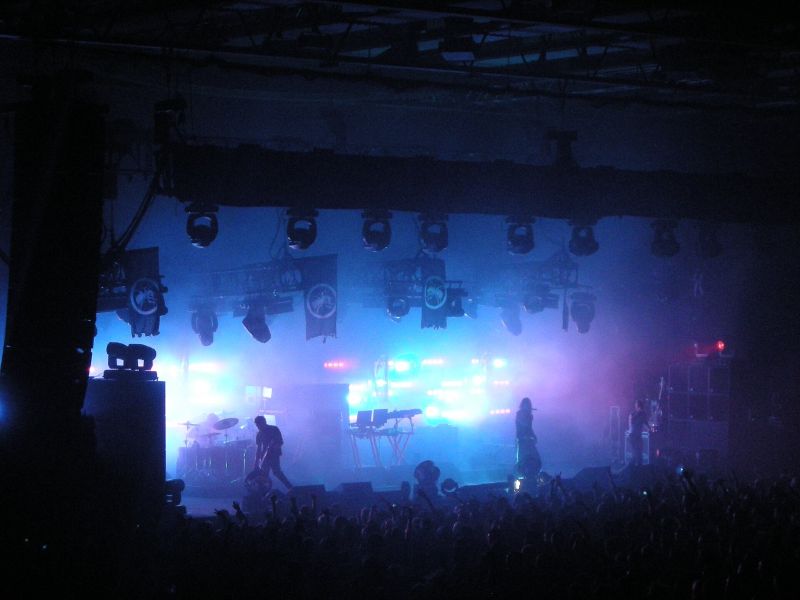
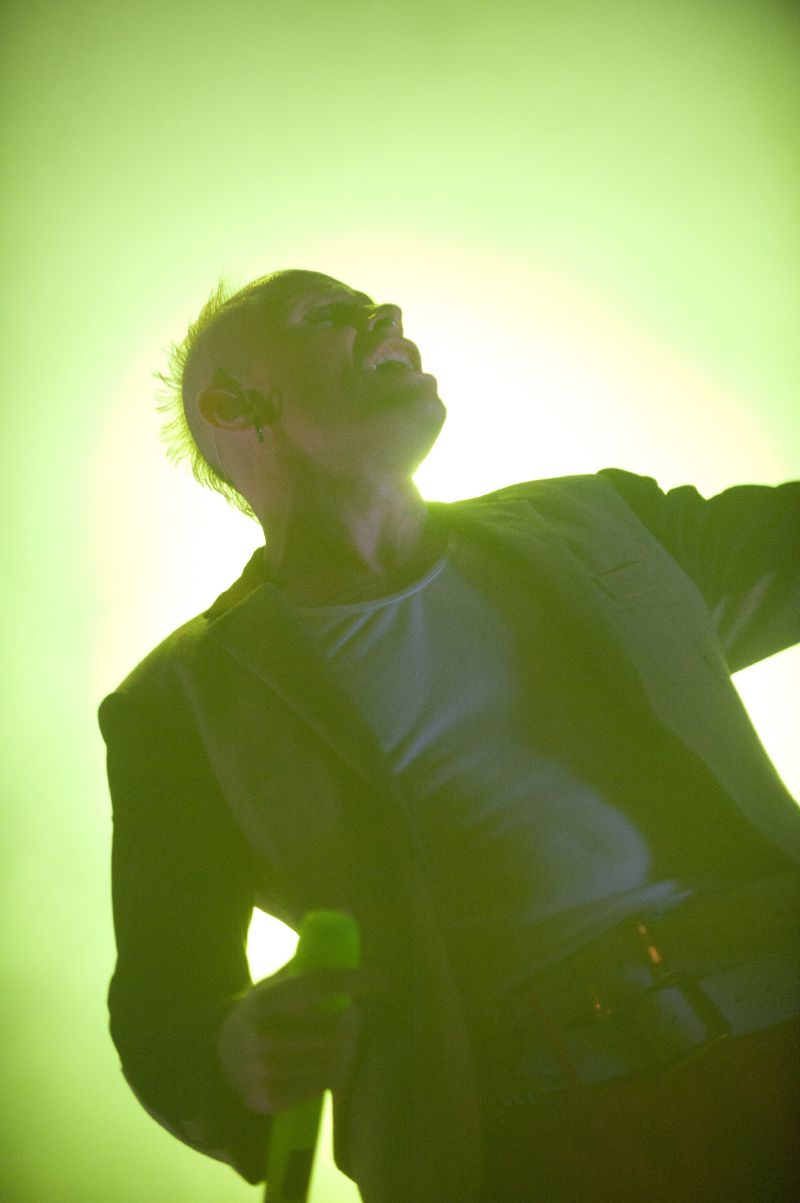
On stage, Flint was the reason people came. In August 1996 Oasis chose the Prodigy as main support at Knebworth, in front of about 150,000 people expecting Britpop. One reader who was there remembers the crowd turning as the first notes of Smack My Bitch Up rang out, ten months before the album came out.
more
After The Fat of the Land the band headlined Glastonbury, Reading and Leeds, and V festival. The Guardian picks out footage of Firestarter at the 1996 Phoenix festival in Stratford-upon-Avon. There Flint play-fights with Maxim and mouths orders at the crowd like a manic jester. Dave Jenkins of Crack Magazine first saw him on the Pyramid stage at Glastonbury in 1997, stalking it “like a possessed animal”.
Flint did not see it as a contest. “We never turn up expecting to blow the other bands away,” he told Hot Press. His reward, he said, was the sight of the crowd surging in waves in front of him. He had taken half a pill at the band’s first proper gig, at the Labyrinth in east London, and decided he did not need a false rush on stage.
The guitarist Gizz Butt, who had played in the punk bands the Destructors and English Dogs, joined for the stadium years. Flint said the band picked him because he was as much a performer as anyone else, not for his technique. “No glow sticks, no Vicks, people spitting everywhere – brilliant,” was how Flint described the crowds they wanted.
The fans were young. Thornhill says children of 13 and 14 would sleep under cars outside the band’s hotel just to meet them. Thornhill left the band in 2000. By the time of the last UK tour in 2018, Jenkins writes, the crowds ran from 15-year-olds to 50-year-olds.
The man behind the stage act
The people who knew him describe a gentle man. A reader who lived in Braintree told the Guardian that people who knew him better said he was “a gentle soul and nothing like his stage persona”. Even after Firestarter, that reader saw him going into Woolworths with his aunt.
The best-known story comes from the singer James Blunt. At the Q awards, Blunt said, Noel Gallagher, Paul Weller and Damon Albarn all shunned him in public. Then Flint came over, hugged him, and said how thrilled he was for Blunt’s success. Richard Russell said that what Blunt wrote about Flint after his death “speaks volumes”.
Fans have their own versions. Thornhill remembers sitting in Flint’s back garden when a stranger walked round the house with four children and pointed at him like an animal in a zoo. Flint went indoors to find photographs for the children to take home. “That’s what he was like, bless him,” Thornhill says.
Other musicians tell the same story. Ben Drew, who records as Plan B, was about eight when he saw the cover of Music for the Jilted Generation, and later called Flint the visual aesthetic of his youth. Dizzee Rascal thought Flint a lunatic when one of the band’s videos came out. Opening for the band at Wembley in 2009, he found him one of the nicest people he had met. The broadcaster Jo Whiley called him an “absolute sweetheart”.
He ran a pub in Essex, the Leather Bottle. One reader passes on a story that he kept a “FIRESTARTER” swear box on the bar. If anyone made the obvious joke while he tended the open fire, he made them put in a pound.
The musicians who followed the band found him generous. A musician remembered meeting him at V festival and finding him “gentle, sweet, encouraging”. He came down to the session for that band’s second record to cheer them on. When Jenkins interviewed him in 2009, Flint asked more questions than he answered.
He was a thrill-seeker too. He loved snowboarding, and Thornhill tells of a private flight on which the pilot let the band take the controls and Flint sent the plane climbing steeply.
Off stage he chased speed. He boxed, practised jiu-jitsu, and rode motorcycles, often with Lee Thompson from Madness. In 2007 he rode 1,500 miles across Europe to reach the Spanish grand prix at Jerez. He raced himself until a crash at Mallory Park in 1998. He had to play a gig on two swollen legs, and he decided music was the career he could not risk.
He came back to the sport as an owner. His team, Team Traction Control, raced in the British Supersport Championship and won two races at the 2015 Isle of Man TT. Crack Magazine describes its black and grey camouflage Yamaha livery as distinctive in the paddock as Flint was on stage. The team moved up to the British Superbike Championship in 2017.
At home he restored a listed Tudor manor house near Felsted, Essex, with 10 acres of land. For the driveway he bought the surface of a Bristol street, to get the right cobbles. Russell remembers him going home between tours to look after his animals. In 2006, in Felsted, he married the Japanese DJ Mayumi Kai. They later separated.
The band was his family, he said. “I think Liam is the only person I’ve ever loved,” he told Matt Blake, and he tied that to not having had a good family background. Russell knew he had a troubled side. In a 2015 interview with FHM, Flint spoke openly about a dark period of heavy drinking and drug use in the early 2000s. He said he reached the point where he had to stop.
What Keith Flint left behind
Keith Flint died at his home in Essex on 4 March 2019, aged 49. Liam Howlett said on Instagram that Flint had taken his own life. At the inquest, the senior coroner for Essex recorded an open conclusion.
Howlett and Maxim called him “a true pioneer, innovator and legend”, their brother and best friend. The band cancelled all their shows. Two days before his death he had run the Chelmsford Central parkrun, setting a 5km personal best of 21 minutes and 22 seconds.
His funeral at St Mary’s church in Bocking, Essex, on 29 March drew fans from around the world. The band asked them to line the route and “raise the roof for Keef”. One fan flew in from Prague, another from Australia, and a third from Germany. Festival flags flew, and one floral tribute took the shape of the band’s ant logo. Russell said many people came only to rave outside the church, which Flint would have loved.
The tributes in the Guardian keep returning to one image. A lifelong metal fan who saw them headline Download in 2012 called the Prodigy “punk rock for the rave generation”. One of the musicians the Guardian gathered tributes from called them the Who of the 90s onwards. He added that none of it could have happened without a frontman like Flint.
Petridis makes the commercial case. The album without Flint, Always Outnumbered, Never Outgunned, sold noticeably less. To a large share of the people who bought The Fat of the Land, he argues, Flint was the Prodigy. Kool Keith compared Flint’s place in the band to Michael Jackson’s in the Jackson 5.
The other legacy is on the dancefloor. Breathe and Out of Space are still dropped into DJ sets and remixed, the Guardian’s tribute notes. YouTube holds a number of tutorials on how to dance like Keith Flint.
Ahead of World Suicide Prevention Day, a mural of Flint by the street artist Akse P19 went up in Hackney, east London. It stands less than 100 yards from the site of the old Four Aces club, where the Prodigy played their first gig. The music and wellbeing festival Headstock raised more than £10,500 for it, to promote the text support service Shout 85258. Howlett’s verdict was short: “Akse has done Keef proud.”
The Prodigy dedicated an award from the magazine Kerrang! for best British band to him in 2019, according to the mental health site Our Mental Health. The same site says the NME Awards created a one-off Inspiration Award in 2020 to recognise his influence.
Russell had noticed Flint’s 50th birthday coming up in September 2019 and wrote it in his diary, meaning to mark it. “I think he would have been an amazing old man,” he said.
Starter guide
Hear these nine Prodigy records, in the order they came out. Each one has two trusted publications behind it.
- Charly (The Prodigy, 1991). NME counts it among the band’s 10 best songs, and Mixmag calls it a classic.
- Out of Space (The Prodigy, 1992). NME and Mixmag both put it first among the band’s best tracks.
- No Good (Start the Dance) (The Prodigy). It appears on NME’s 10 best Prodigy songs and Mixmag’s 31 best Prodigy tracks.
- Firestarter (The Prodigy, 1996). Flint’s first vocal is one of the Guardian’s 100 greatest UK No 1s, and NME counts it among the band’s 10 best songs.
- Breathe (The Prodigy, 1996). It appears on NME’s 10 best Prodigy songs and Mixmag’s 31 best Prodigy tracks.
- The Fat of the Land (The Prodigy, 1997). NME puts it among the 500 greatest albums of all time, and Mixmag calls it a seminal album.
- Smack My Bitch Up (The Prodigy, 1997). It appears on NME’s 10 best Prodigy songs and Mixmag’s 31 best Prodigy tracks.
- Omen (The Prodigy, 2009). NME counts it among the band’s 10 best songs, and Mixmag among its 31 best tracks.
- Ibiza (The Prodigy featuring Jason Williamson). NME counts it among the band’s 10 best songs, and Mixmag calls it an instant classic.
If you are in the UK and struggling, you can call Samaritans free on 116 123, at any hour of the day or night.