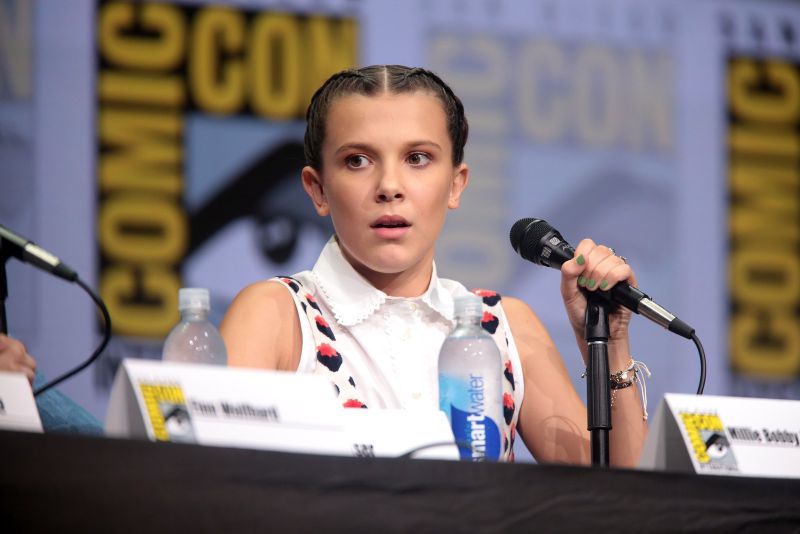
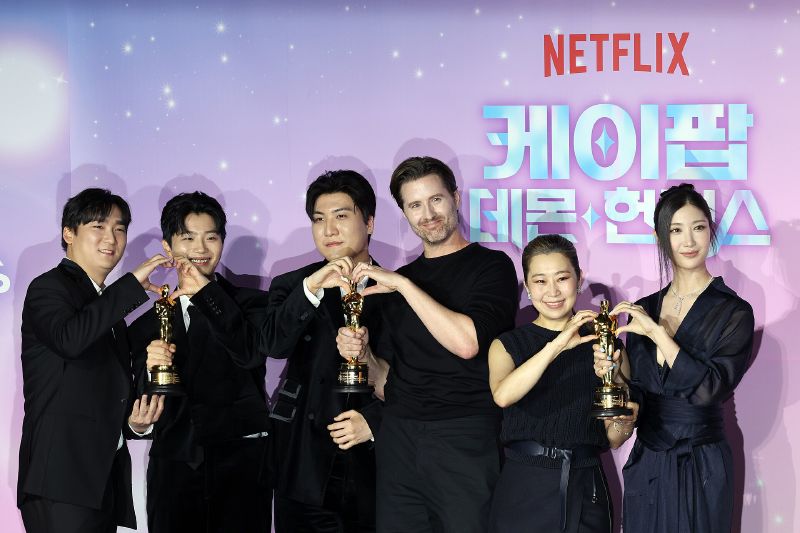
Maggie Kang, who directed KPop Demon Hunters, wanted her co-director to be another Asian woman. The search came up empty, and Sony Pictures Animation’s president, Kristine Belson, told her plainly that it was “gonna be a white man.” That man was Chris Appelhans, whose one previous feature as director was Wish Dragon, a fantasy comedy set in China. Together they made a film steeped in Korean myth and Korean pop, and it became the most-watched title Netflix has ever carried.
more
Nobody planned for that. The studio that built the film sold it before release for a capped fee. The toy companies arrived more than half a year late. Even Netflix’s own film chief, Dan Lin, said the audience grew far past the one the company had expected.
What the numbers came to
By October 2025, BBC News counted more than 325 million views, enough to pass Squid Game as the most-watched title in the service’s history. The film had opened quietly on June 20. Within two weeks it had drawn more than 33 million views and reached the top 10 in 93 countries, according to the BBC.
The music went further than the film. Its soundtrack became the first ever to place four songs in the US top 10 at the same time, a feat that eluded even Saturday Night Fever. “Golden,” sung by the fictional girl group Huntr/x, held the number one spot for eight weeks. That tied the record for an animated act, set by The Archies with “Sugar Sugar.”
Five months after launch, Animation Magazine reported, it was still in Netflix’s weekly top 10. By then it had spent 24 weeks there, longer than any other film.
A seven-year idea
Kang had spent more than 20 years in animation before this, and she was born in Korea. She wanted to see something in animation that celebrated Korean culture, and she started from there. She settled first on demonology, then on the people who hunt demons. That did not feel like enough, so she folded in K-pop. She told NPR that the pairing “felt weird but also really exciting.”
The demons came from her own childhood fears. The jeoseung saja, the grim reapers of Korean folklore who wear the wide-brimmed gat and the hanbok, frightened her as a girl. She doubted they belonged in a children’s film. Then her four-year-old niece saw Maleficent and said it was scary but that she had loved it. Kang took that as permission.
She told NPR that the film took seven years, almost to the day, from first concept to release. The Hollywood Reporter reported that she was working on it before Appelhans joined, and that she found parts of that stretch gruelling. “It’s really hard to stay motivated,” she said. At every stage, she said, they had to prove to the studio that they could direct the film.
The project gained weight when the pair dug into Korean shamanism. Kang told The Hollywood Reporter that the mythology let them show old Korea and root the film deeper in the culture than pop music alone could.
Who would own it
Sony Pictures Animation conceived the film and paid for it. It did not keep it. Under a 2021 output deal, Sony sold distribution to Netflix, and Puck’s Matthew Belloni reported that the deal capped Sony’s return at roughly $20 million. Netflix took control of sequels, spinoffs, and the music, though Sony kept the right to produce follow-up films.
The logic was pandemic logic. Cinemas were shut, Sony had no streaming service of its own, and Netflix was a guaranteed buyer. Sony had made the same kind of sale for The Mitchells vs. the Machines. Cartoon Brew noted that many insiders doubted an anime-style musical would have found a wide audience in cinemas anyway.
The Guardian’s critic thought the Sony origin helped. The film shares the loose, comic-book look of Sony’s Spider-Verse films, bathed in purple and pink. And it was neither a sequel nor an adaptation, at a time when Disney’s big autumn release was Zootopia 2 and DreamWorks had just released The Bad Guys 2.
Songs that had to carry the plot
Appelhans told Cartoon Brew that a pop song has to be hooky above all, while a film has to tell a story. Seven unconnected songs in a 90-minute film, he said, would lose an audience.
The first thing to prove was that a singing voice could work as a superpower. For that the directors found EJAE, a K-pop songwriter, who recorded early demos. Appelhans called those demos “fundamental in getting the greenlight.” EJAE went on to sing Rumi’s part, and IndieWire later named her the lead songwriter. After her came Ian Eisendrath as executive music producer, and a long collaboration with the Korean label Black Label.
Kang said at a Netflix press event that partnering with a Korean label mattered, because the music had to sit legitimately in the K-pop space. The BBC reported that the producers included Teddy Park, known for his Blackpink work, and Lindgren, a Grammy winner who has worked with BTS and Twice.
The songs changed as the story changed. Kang told Cartoon Brew that some went through almost as many versions as the storyboards, which surprised a few of the songwriters. “That’s not how we work in pop music,” some of them told her.
Making it look like Korea
The crew went to South Korea to research it. “We went to folk villages,” Kang said, and they studied the bricks and street layout of Myeongdong. The BBC counted the results on screen: Seoul’s ancient walls, a traditional medicine clinic, a public bathhouse, and Namsan Tower.
Kim Youngdae, a music critic and ethnomusicologist, told the BBC that K-pop had struggled for two or three decades to join the Western mainstream. “Animation is a very effective way to introduce unfamiliar cultures,” he said.
Kang was less sure of her own standing. She told IndieWire that, as a kyopo who grew up abroad, she had questioned whether she was the right person to make it. After release she found a queue out of the door at the National Museum of Korea in Seoul. She also learned that its tiger and magpie pins had sold out, because the film had cast both animals as spirits.
Why summer 2025 was the moment
The film landed in a bad summer for animation. The Guardian noted that it opened on the same weekend as Pixar’s Elio. Remakes of Lilo & Stitch and How to Train Your Dragon then beat Elio with family audiences. The same critic argued that the ideal moment for a K-pop film might have been around 2021, when this one was announced. They thought it worked anyway because it was pitched young, at children discovering music for the first time.
Those young fans did the marketing. Appelhans told BBC News that at 2am the night after release, he was reading TikTok comments that already traced Rumi’s arc. He told IndieWire that one fan compilation already had 700,000 likes. It felt, he said, like the start of something rather than its peak.
Kang placed the turn in the third week, when the viewing graph bent upward. She called the fan videos “kind of like free advertising.” Lin said it was one of the only Netflix films to grow its audience in its fifth and sixth weeks.
A night at the cinema
In August, Netflix did something it rarely does. It booked a sing-along version into cinemas for the weekend of August 23 and 24, in North America, the UK, Australia, and New Zealand. About 1,700 cinemas in the US and Canada signed up. AMC, the largest chain, stayed out.
Netflix does not report ticket sales, so the gross exists only as estimates. Variety put it at $18 million to $20 million. Screen reported about $18 million from rival studios. IndieWire heard $18 million to $18.8 million, and noted other reports of $19.2 million. Every estimate placed it above Weapons, Warner Bros.’ horror hit, which made about $15.4 million that weekend. That made it the first Netflix film to top the US box office.
David A. Gross, an analyst at Franchise Entertainment Research, told Variety that the screenings played to sold-out rooms of fans singing and dancing. Netflix’s aim, Variety reported, was to send those fans back to the platform to watch it again.
Who was not ready
Sony was not ready, and its $20 million cap left it little of the upside. Neither were the toy makers. Mattel and Hasbro unveiled their lines in January 2026, more than half a year after the film appeared. Cartoon Brew wrote that the delay showed how unprepared Netflix and its partners had been for the film’s reception.
The critics were ready. BBC News reported a 95% approval score on Rotten Tomatoes. In October 2025, Kang said there was “nothing official” to announce about more films. She added that any sequel would be “a story that deserves to be a sequel.”
Kang’s own verdict is the modest one. “I don’t think you can imagine any of this,” she told NPR, nine months after release. She had spent seven years inspiring hundreds of crew members that the idea was worth making. Throughout production, she told The Hollywood Reporter, the crew joked that the whole premise was “completely wackadoo.”