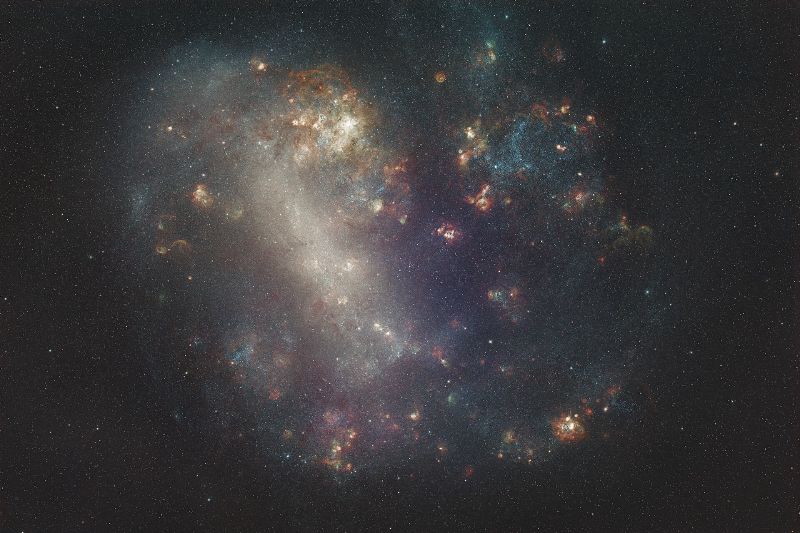
The Large Magellanic Cloud matters to astronomers because it puts a whole galaxy within reach of one telescope. At about 160,000 light-years away, it is the largest satellite galaxy of the Milky Way. It sits close enough for individual stars, nurseries and supernova wreckage inside it to be picked out one at a time. Together with the Small Magellanic Cloud, it has featured in more than 15,000 research papers.
more
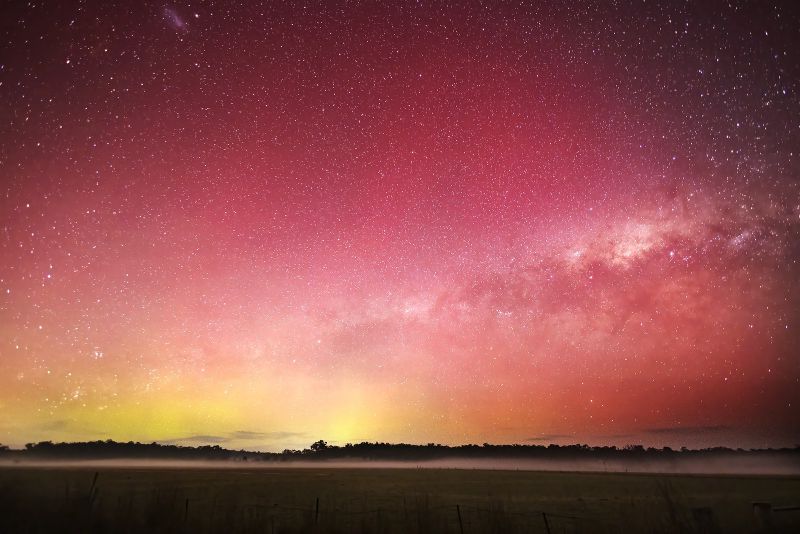
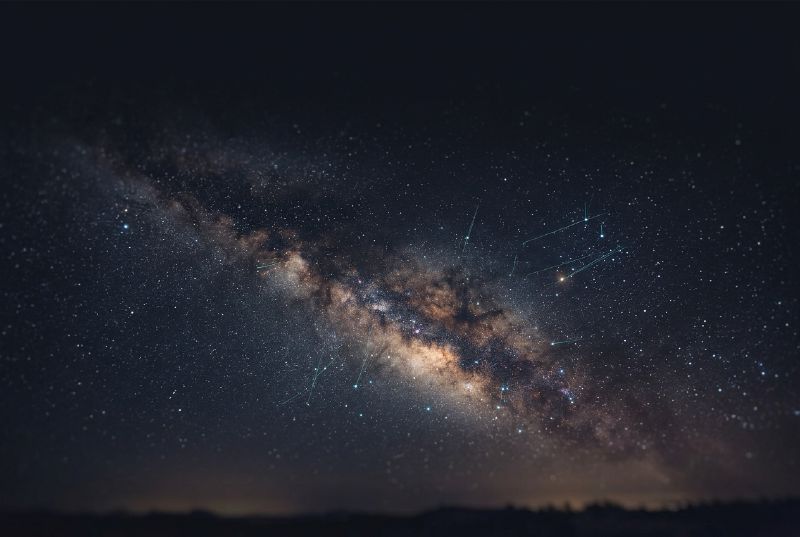
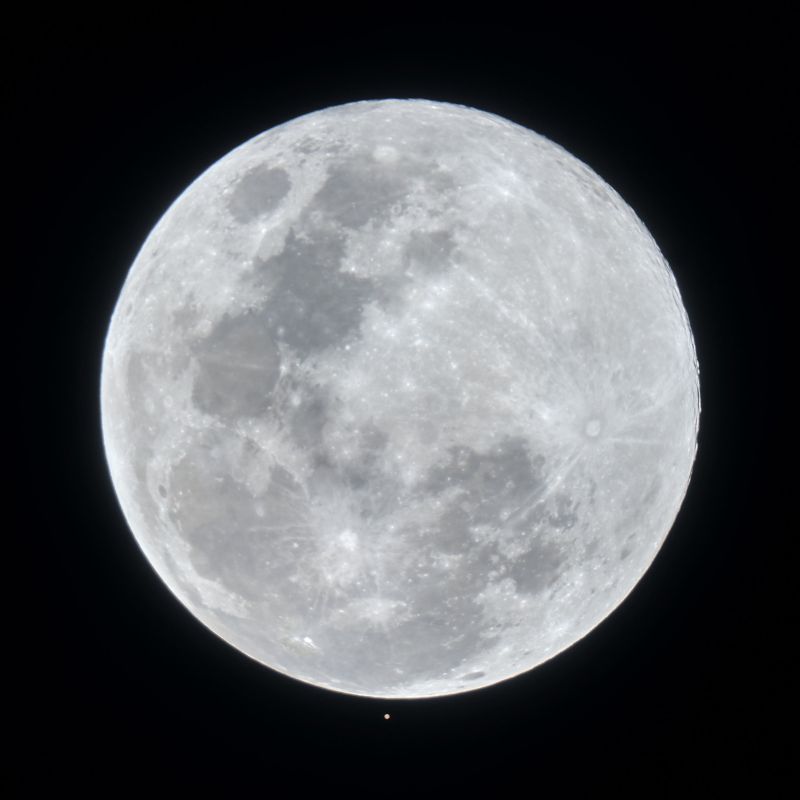
Seen from the Southern Hemisphere, it needs no telescope at all. It spans about 10 degrees of sky, some 20 times the width of the full moon, glowing across the constellations of Dorado and Mensa.
Close enough to resolve, far enough to measure
Proximity alone does not explain the appeal. A galaxy has to sit near enough to resolve, and far enough that its stars can be treated as roughly one distance from Earth. The Milky Way’s own stars fail that second test, scattered as they are through a disc an observer sits inside. At around 160,000 light-years for the Large Magellanic Cloud and 200,000 for its smaller neighbour, the Small Magellanic Cloud, both galaxies clear that bar.
That combination lets astronomers study the clouds in detail, since they are as near as galaxies get.
The stars that gave astronomers a ruler
Henrietta Swan Leavitt studied Cepheid variable stars in the Large and Small Magellanic Clouds. Her work led to the discovery that a Cepheid’s period, how long it takes to brighten and dim, is tied to its true luminosity.
The relationship gave astronomers a way to gauge distances across the nearby universe. Researchers have since used it to time the galaxy’s own Cepheids, putting the Large Magellanic Cloud at 49.59 kiloparsecs away, give or take half a kiloparsec. That converts to roughly 161,700 light-years. By comparison, the most distant globular clusters bound to the Milky Way sit as far as 300,000 light-years off, and the Andromeda galaxy, the nearest full-sized spiral, is 2.6 million light-years away.
A nursery busy enough to cast a shadow
Inside the galaxy sits the Tarantula Nebula, usually called 30 Doradus, the most active star-forming region anywhere in the Local Group. Moved to the distance of the Orion Nebula, a nursery for massive stars inside the Milky Way, the Tarantula would stretch across a fifth of the sky and cast shadows at night. At its centre sits R136, a dense star cluster under two million years old, packed with stars so young and so massive that even the largest have not yet finished their short lives.
The galaxy has also helped settle arguments about how stars die. In 2001, the astronomer Phil Massey set out to observe the Large Magellanic Cloud’s red supergiants, stars born with 10 to 25 times the Sun’s mass. He and Emily Levesque, of the University of Washington, later built a revised temperature scale for these stars from the resulting data, resolving a long-standing disagreement with the theoretical models. They also identified some with radii around 1,500 times the Sun’s, among the largest stars known. They put the same method to Betelgeuse, the red supergiant in Orion that famously dimmed by more than a magnitude, and found its temperature had barely shifted. The fading, they concluded, came from a cloud of dust the star had shed, not from cooling.
Red-supergiant spectra do double duty. How fast these stars orbit within the galaxy reveals how much unseen mass is pulling on them. Vera Rubin used that same technique on the Andromeda and Triangulum galaxies in the 1970s to build the case for dark matter. Astronomers have turned it on the Large Magellanic Cloud, to probe this galaxy’s own gravitational structure.
A supernova, and a question about its orbit
In 1987, a star in the galaxy exploded as a supernova bright enough to see without a telescope, the last one to manage that from Earth.
The Large Magellanic Cloud carries an off-centre bar and a single disrupted spiral arm. Astronomers think both are the wreckage of a barred spiral galaxy, pulled out of shape by gravity from the Milky Way, from the Small Magellanic Cloud, or both. That interaction has left a visible trail. The Magellanic Stream is a filament of gas linking the Milky Way to the Magellanic Clouds, and the Magellanic Bridge is a separate river of gas joining the two clouds to each other.
Whether the galaxy is actually bound to the Milky Way is still an open question. Hubble measurements of its motion, announced in 2006, suggested it might be moving too fast to be in orbit at all, which would make this its first close pass rather than one lap of many. Later Hubble observations, in 2014, timed its spin at a rotation period of about 250 million years. Whatever the relationship turns out to be, it will not last: current trajectories point to the two galaxies merging in roughly 2.4 billion years.
A name astronomers are still arguing over
The galaxy carries the name of Ferdinand Magellan, whose fleet reported seeing it during the circumnavigation that began in 1519, even though Indigenous peoples across the Southern Hemisphere had already known and named it. Magellan enslaved and killed Indigenous people on his voyages, and that record has drawn calls to rename the Magellanic Clouds. One proposal would call them the “Large and Small Meridional Clouds”, so astronomers could keep using the same LMC and SMC abbreviations. Any change would still need approval from the International Astronomical Union.
The galaxy has carried its current name for five centuries. Whether it keeps it for a sixth is a question the astronomers who study it have not settled.