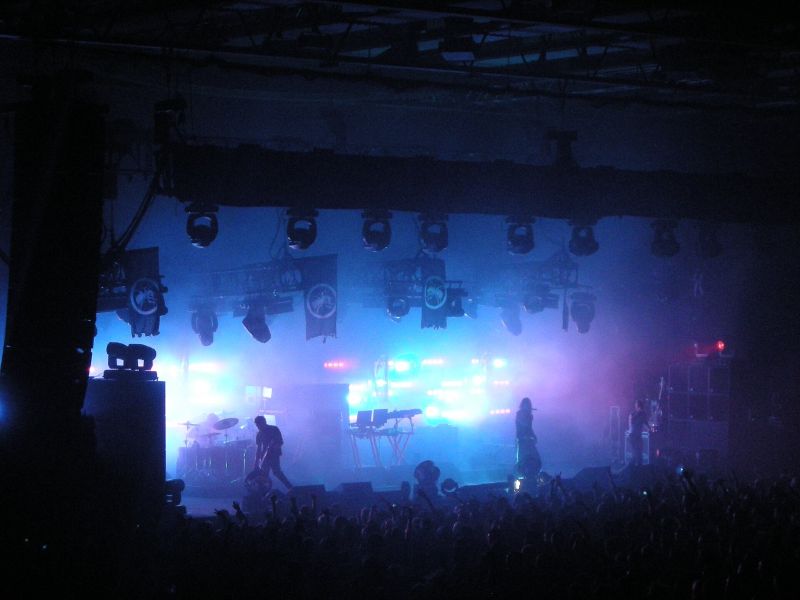
Deep house began in Chicago in the mid-1980s, when Larry Heard slowed the city’s new house music down and filled it with jazz chords. Mixmag credits him with starting the style, through records such as ‘Mystery of Love’ in 1985 and ‘Can You Feel It’ in 1986. The Guardian notes that he is known as the godfather of deep house. He was a drummer, frustrated that he never got to write the music. He recorded some of his first tracks on two cassette decks.
more
To see why his records sounded so different, start with the music they grew out of.
Where deep house came from
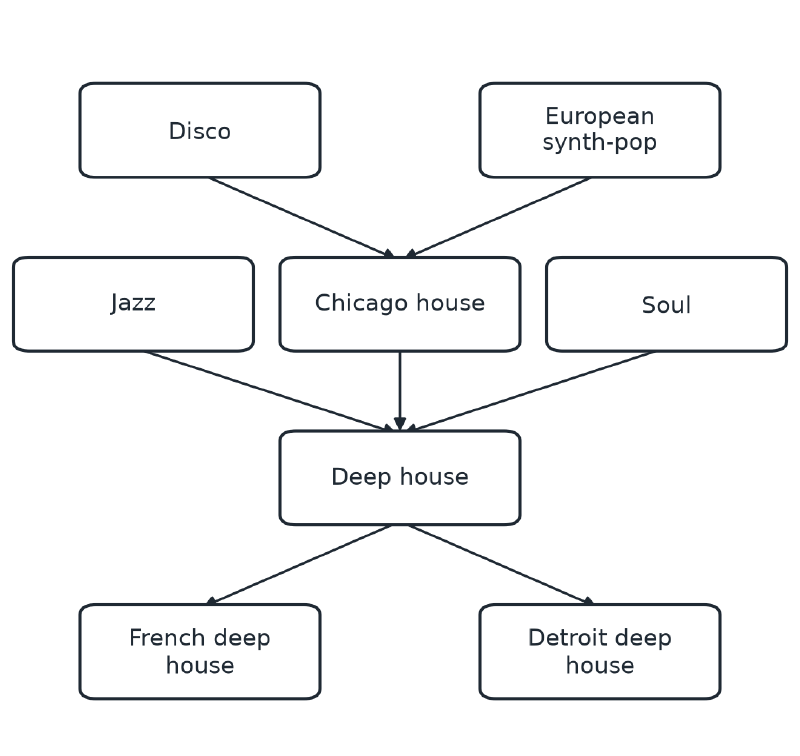
House itself was disco that refused to die. In 1979, anti-disco campaigners blew up records at a Chicago baseball game on Disco Demolition Night. Radio stations dropped the genre and the Grammys cancelled their disco category, so disco went back underground. The Chicago DJ Honey Dijon told Mixmag that down there it “rebirthed itself as house music”.
more
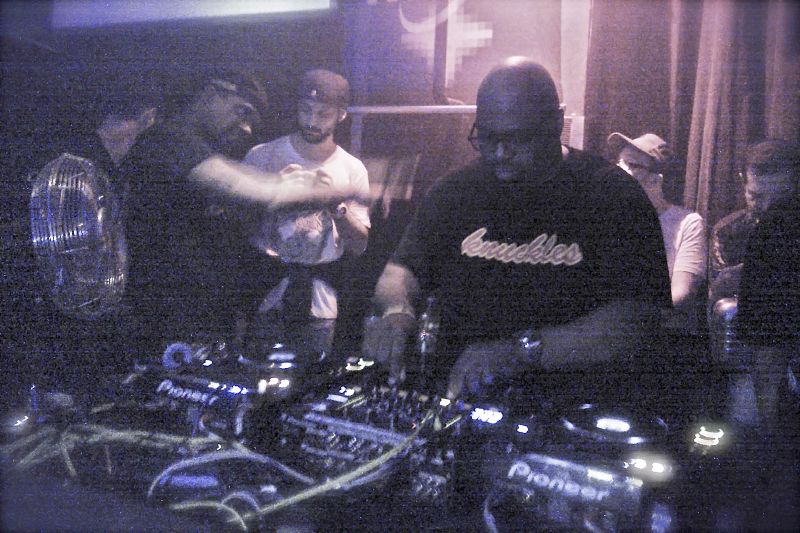
The room where that happened was the Warehouse. Frankie Knuckles played there from 1977 to 1982. He was a New Yorker who had learned his trade at the Continental Baths, alongside his friend Larry Levan. The club’s owner, Robert Williams, had brought him in as musical director when Knuckles was 22. His crowd was mostly Black, queer and Latinx.
When the disco backlash came, Knuckles kept playing the old sound and found ways to make it new. He spliced tape to stretch instrumental breaks and looped snatches of vocal. In the club he ran a drum machine under the records, first a home organ’s rhythm settings and later a Roland TR-909. One night in 1981 he drove past a bar with a sign in its window. It read: “We play house music.” A friend told him it meant the music he played at the Warehouse.
Chicago’s dancefloors took in far more than disco. Marshall Jefferson remembers parties where 5,000 Black teenagers danced to the B-52’s, Kraftwerk and Ian Dury alongside rap and disco. At the Muzic Box, Ron Hardy played heavier and faster than Knuckles did.
Then, in 1984, the DJ Jesse Saunders put out ‘On and On’, often called the first house record released to the public. Someone had stolen his copy of a bootleg disco medley from the Playground, the club where he was resident. So he and Vince Lawrence rebuilt it on a Roland TR-808. Jefferson thought it was a bad record. His verdict, he told the Guardian, was “We can do better than that.” Cheap synths and drum machines meant they could.
Larry Heard was one of the people who did. He was born in Chicago’s working-class Chatham district in 1960, and grew up on his parents’ big band and soul records. As a boy he taped the odd music played between Saturday B-movies on TV. It was prog and jazz fusion, by bands like Yes and Return to Forever. He learned the drums to play their awkward time signatures.
He drummed in R&B, rock and reggae bands from 1977 to 1984, mostly in soul clubs, so he missed much of the disco era. He quit the last band because nobody wanted a drummer’s ideas. He bought a keyboard and a drum machine, and made ‘Mystery of Love’ and ‘Washing Machine’. Resident Advisor notes that he made his early classics before he had even stepped inside a nightclub.
Heard took the tracks to Ron Hardy and Frankie Knuckles, and both started playing them almost at once. The first version of ‘Mystery of Love’, from 1985, ran at about 110 beats per minute.
What made it deep? Mixmag points to a slower tempo, borrowings from jazz and funk, lush chords and complex melodies over the four-to-the-floor beat. Resident Advisor puts it more broadly. Heard took the relentless, up-for-it tone out of house and added maturity, real musicianship, long improvisation and human feeling.
The name arrived quickly, and it arrived in Britain. Mixmag says the term was in use in the UK by 1988. That February, a Deep House Convention at the Empire in Leicester Square booked Kym Mazelle, Marshall Jefferson and Frankie Knuckles.
A Mixmag playlist hears brooding bass, minimal vocals and droning synths, with jazzier drums and chromatic shifts of key. Another Mixmag list adds that it owes more to jazz and soul than to the funk and disco of first-wave Chicago house. Heard himself shrugs at the analysis. “It’s more about feeling,” he told the Guardian.
The people who made house go deep
Heard did not work alone for long. In 1985 he formed Fingers Inc with the singers Robert Owens and Ron Wilson. Mixmag credits Owens with bringing gospel into the sound, which helped deep house produce real songs with painful lyrics. Heard kept a civil service job for years, and only went full-time at 27, once offers of gigs in the UK came in. “It was terrifying to leave a great government job,” he told the Guardian.
Fame in his own scene was a mixed gift. People turned up at his door with demo tapes, and he thinks one even went to his mother’s house. He moved to Memphis in 1997 to calm his life down. Over the years he recorded as Mr Fingers, The It, Gherkin Jerks and more. Much of it came out on his own label, Alleviated Records.
Heard and Owens also had a long fight with their old label. Trax Records, launched in 1984, issued early music by both men. Their lawsuit argued that Trax never paid them. In 2022 they won back the rights to their songs after a two-year lawsuit. Their complaint said Trax had released more than a dozen versions of ‘Can You Feel It’.
Marshall Jefferson is better known for the piano anthem ‘Move Your Body’, but he made deep records too. DJ Mag says two of his records equal the work of deep house masters such as Heard. One was ‘The Jungle’, made with Harry Dennis as Jungle Wonz in 1986, and the other ‘Open Our Eyes’ in 1988. He worked nights at the post office, and bought a sequencer, synths and drum machines on a $10,000 line of credit. He later made ‘We Are Unity’ with Roy Davis Jr in 1990, which DJ Mag calls a hugely affecting deep house cut.
The story of Eric Lewis and Merwyn Sanders shows how young this scene was. They started their first band at 12 and made their first house tracks at 14. Working as Virgo Four, they played their parts live into a four-track recorder rather than programming them. The Guardian notes they were plainly fans of Heard. After a couple more singles they disappeared, until a Dutch label reissued their album in 2010.
The second wave came from Ron Trent and Chez Damier. Trent wrote ‘Altered States’ at 14, according to Resident Advisor. Mixmag says his father ran a record pool in the late 1970s, so he grew up around records. Damier had helped found the Music Institute, a Detroit club he also managed.
The pair met in 1993 and were soon recording in Kevin Saunderson’s studio in Detroit. That year they founded Prescription, a label Mixmag says played a huge part in shaping deep house. Trent described its sound as drum-led Chicago rhythm tracks with a sparse melody. Resident Advisor hears hand percussion and deep sub-bass under jazzy pads and a dreamy haze. Trent said their records were “healing work”, and they printed messages on the back of the sleeves.
On the East Coast, Kerri Chandler learned from his father. He started warming up for him in New Jersey clubs at 13, standing on milk crates to reach the decks. Mixmag tells how his father caught him on the family turntables and set him a test. He passed, and got the early slot at his father’s club.
New Jersey’s sound favoured soul and gospel, and Club Zanzibar was its centre. Its resident, Tony Humphries, played Chandler’s tracks on his radio show. Chandler began making house after the death of his girlfriend, Tracy, and wrote ‘Get It Off’ to get it all off his mind. His first release, ‘Super Lover’ in 1990, was pressed in a run of 500 copies before Atlantic signed it. He set up his Madhouse label in 1992.
Detroit added its own grit. Moodymann, real name Kenny Dixon Jr, ran his own label, KDJ, and his records reached European shops in the mid-1990s. In the Guardian’s account, he turned the old split upside down. New York house was polished, Detroit techno was dirty, and Moodymann made house “that stank”. Mixmag says Detroit artists such as Moodymann and Theo Parrish refined deep house “into a swaggering, unpredictable beast”.
Roy Davis Jr, a Chicago producer who joined the acid group Phuture, did A&R work at Strictly Rhythm. Mixmag counts him among the people who brought deep house to prominence in the 1990s. In Britain, Pete Woosh helped found Nottingham’s DiY Collective in 1989, one of the UK’s first house sound systems. Mixmag called him a UK deep house pioneer when he died.
The records that set the template
‘Mystery of Love’ came first, and it is barely more than a loop. Billboard describes a programmed kick drum and a bass that keeps pace, tips over, tumbles forward and recovers. Heard told Billboard it behaves “like a cat” that keeps coming back through the door. Heard says reactions were so strong that Ron Hardy and Frankie Knuckles each claimed to have made it.
A second version for DJ International in 1986 added Robert Owens’ voice. It reached No 25 on Billboard’s Dance Club Songs chart that year. Thirty years later, Kanye West slowed its bassline down for his single ‘Fade’.
‘Can You Feel It’ followed in 1986. Mixmag says Heard invented the genre the moment he laid a Jupiter 8 chord over the bassline. The record also picked up a voice it never had at first. A preacher-like speech by Chuck Roberts, “In the beginning there was jack”, reached it through an unofficial remix. Mixmag says that version became as well loved as the original.
The Guardian ranks ‘Can You Feel It’, ‘Bring Down the Walls’ and ‘Mystery of Love’ among dance music’s greatest statements. ‘Bring Down the Walls’, a Fingers Inc single later reissued under Owens’ name, is stark and brutal by Mixmag’s account. Owens told Mixmag the walls were the blocks of negativity and separation in the city around him.
Not every founding record sounds deep on its own. Jamie Principle made ‘Your Love’, and Frankie Knuckles added the finishing touches. Mixmag names it among the proto deep house cuts that laid down the early template. Knuckles played it at the Power Plant, his own club, before the pair polished it in the studio. Its keyboard figure later turned up in the Source and Candi Staton’s 1991 hit ‘You Got the Love’, and in Animal Collective’s ‘My Girls’.
The Virgo album of 1989 may be the oddest classic of the lot. It was not really by Virgo, and it was not really an album. A UK label, Radikal, stuck two EPs by Lewis and Sanders together under a name Marshall Jefferson had also used. The Guardian hears the mood of 3am, not the peak of the night: wistful, contemplative and melancholy. Mixmag calls it one of house music’s greatest albums.
Knuckles’ own sound grew warmer and more soulful, according to Pitchfork. It says Beyond the Mix, his 1991 album, had a title that “captured the essence of deep house”. Its best-known track, ‘The Whistle Song’, began as a 20-minute sketch by the producer Eric Kupper, who drew on Erik Satie’s ‘Gymnopédie No 1’. Knuckles refused to put words on it. It reached No 17 in Britain in 1991, his biggest UK hit.
In the early 1990s, Ron Trent and Chez Damier took Heard’s template somewhere new. Their debut as Chez N Trent, ‘The Choice’, layered keys, a soulful vocal and heavy percussion over a bass closer to dub reggae. Resident Advisor counts it, with ‘Morning Factory’, among Prescription’s enduring classics.
Kerri Chandler’s 1993 ‘Atmosphere’ EP showed how hard deep house could hit. Its first track pairs a beat fit for techno with a slinky keyboard, a saxophone and, unusually, a harpsichord. Mixmag’s verdict is blunt: if you own only one Chandler track, it should be this one. The year before, his ‘A Basement, A Red Light And A Feeling’ EP had been, for Mixmag, a high point of New York house.
Moodymann’s 1996 track ‘I Can’t Kick This Feeling When It Hits’ loops two short Chic samples into a trance. On ‘Shades of Jae’ in 1999, he holds back the kick drum, house’s cue to dance, and brings it in only when he chooses. The Guardian says one bar of it is enough to send dancers wild.
French producers had joined in by then, and Pépé Bradock had a cult following. Pitchfork calls his ‘Deep Burnt’, from 1999, a second-wave deep house classic. It runs for a little over nine minutes on a string loop from Freddie Hubbard’s 1979 jazz piece ‘Little Sunflower’. DJs carried it from Detroit to Berlin.
How deep house left Chicago
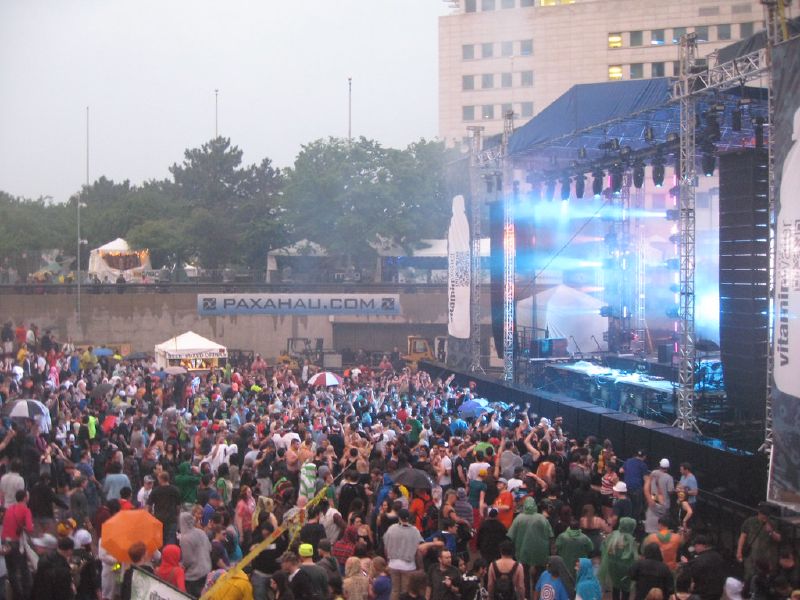
Britain heard Chicago before most of America did. London Records released three House Sound of Chicago compilations between 1986 and 1987. Early in 1987, Steve “Silk” Hurley’s ‘Jack Your Body’ topped the UK pop chart, the first house record to do so. Frankie Knuckles played a summer residency at the London club Heaven that year. A few months later Shoom opened, and his records suited its ecstasy-fuelled mood.
more
After the “Second Summer of Love” of 1988, Knuckles, Heard, Jefferson and others came to Europe and found fame. They had hit singles, remixed pop stars and signed major-label deals. Jefferson later moved to Britain, because 95% of his gigs were in Europe and he disliked long flights.
Success brought a narrower idea of what Chicago house was. The Guardian says the UK music press pinned the Chicago sound down until producers were pushed towards four-four dancefloor bombs. Jefferson made midtempo and slow songs, and told the paper that this “worked against me”. A home-grown scene grew anyway. Nottingham’s DiY Collective, founded in 1989, was one of Britain’s first house sound systems.
At home, house lost the argument. Kerri Chandler told the Guardian that hip-hop became the music he had hoped house would be in the United States. Europe took house in instead. Chandler moved to Italy, and Europe has kept him busy ever since. Paris’s Rex Club brought American pioneers over once house took off there in the 1990s.
France then made the sound its own. St Germain, the Parisian musician Ludovic Navarre, released Boulevard in 1995. The dance magazine Muzik named it album of the year. The Guardian says it took hip-hop, reggae and jazz and eased them into the deep house mould. Mixmag calls it New York deep house by way of France. His later album Tourist sold 3m copies worldwide.
New York pushed deep house towards Latin and African rhythm. Louie Vega and Kenny Dope, as Masters at Work, launched the Nuyorican Soul project in 1993. Its first single, ‘The Nervous Track’, brought congas, brass stabs and syncopated Latin swing into house. The Guardian calls its swinging bass, jazzy drums and short piano hook “a perfect example of the form”.
Two New York labels went further into African polyrhythm: Jerome Sydenham’s Ibadan, founded in 1995, and Joe Claussell’s Spiritual Life Music, in 1996. Chandler and Claussell’s ‘Escravos De Jo’ came out on Ibadan in 1997, built on marimbas, Latin rhythms and Spanish guitar. Around the turn of the century, South African producers began to mix kwaito with deep house and older African sounds. Mixmag traces Afro house to that mix.
The deepest change came in Germany, two decades after Heard’s first records. In 2007, Resident Advisor reported that DJs in the minimal techno scene were turning back to classic deep house. Labels such as Innervisions, Dial and Moon Harbour had kept the flame alive through the minimal years. Now Innervisions had grown into one of the biggest labels in techno. Kerri Chandler’s latest record was being played by Ellen Allien, among others.
Heard was part of that wave too. That year his ‘The Sun Can’t Compare’, sung by Mr White, became a club anthem. On some nights, DJs played it in three different rooms. Resident Advisor put it plainly: Heard had not come back to the clubs, the clubs had come back to him. The Guardian calls his Mr Fingers records obvious touchstones for deep house collectives such as Giegling and Innervisions.
Resident Advisor heard something new in the German revival. Deep house ideas were passing through minimal’s labels, clubs and DJs, and coming out as a hybrid of the two. Kristian Beyer of Âme said a copy “will never sound like the original”.
Detroit kept its own line going. Patrice Scott released his first record, the Atmospheric Emotions EP, on his Sistrum label in 2006. Resident Advisor called him a deep house don. He told RA his tracks usually ran at about 120 to 122 beats per minute. He signed producers from Italy, Ireland, Germany and Los Angeles rather than keeping the label local.
Why the name now covers so much
Success cost deep house its meaning. Mixmag says the name has been stuck on almost anything with a misty feel and a warm bass. The magazine ran a piece titled “Stop calling it deep house”. It said records by Bondax, George FitzGerald and Duke Dumont were not deep house at all. Another Mixmag list blamed misleading Beatport charts and badly chosen Spotify playlists.
Mixmag’s own test is stricter. Deep house, it says, is defined by a strong musicality with its roots in jazz, funk and soul. Its writer called it something you feel in your veins rather than in the sweat on your face.
In London the name stretched further still. In 2014 the Guardian reported on “deep tech”, a British strain of house that owed more to garage, grime and jungle than to disco. It grew out of a turn towards house in mostly Black London clubs after UK funky faded around 2009. The DJ Mark Radford began going to deep house nights in 2008 and hunted out tracks with bigger basslines. His label, Audio Rehab, put out a track in July 2012 that the Guardian says can claim to be the first home-grown UK deep tech track.
Other British acts stayed closer to the older sound. The Guardian called Belfast’s Bicep an analogue deep house duo when their debut album came out in 2017. The BBC says their single ‘Glue’ brought big-room dance music to a new crowd. It also helped Ross From Friends and Mall Grab break through.
The founders, meanwhile, kept working. Heard revived Mr Fingers with the Outer Acid EP in 2016, his first new tracks under the name since 2005. He also had to stop DJing in 2011 because of a problem with his hearing. He still played live, and at Croatia’s Dimensions festival in 2016 the Guardian found him “utterly spectacular”.
The 2022 settlement with Trax gave Heard and Owens control of their old songs. They can now reissue the recordings themselves if they choose. That spring Heard released a new Mr Fingers album, Around the Sun Pt 1, on Alleviated.
Kerri Chandler has outlasted most of his early peers. In 2022 he released Spaces and Places, 24 tracks recorded in 24 clubs. They include Printworks in London, Watergate in Berlin and Output in New York. The same year Beyoncé’s Renaissance and Drake’s Honestly, Nevermind both turned to a four-four beat. Chandler welcomed the attention without accepting the rescue story. Many in the scene, he told the Guardian, feel that “house music never left”.
The line carries on. Mixmag names DJ Heather, Theo Parrish, Glenn Underground, Moodymann and Kerri Chandler among those who kept it going with Damier and Trent. It adds later arrivals such as Fred P, Ash Lauryn, Space Ghost and LADYMONIX.
Chicago itself marked 40 years of house music in 2024 with festivals, exhibitions and a parade. At that year’s ARC festival, Carl Cox and Green Velvet closed the weekend with Joe Smooth’s ‘Promised Land’. Mixmag counts that song among the proto-deep house records that set the early template.
Heard shrugs off the title of icon. Such titles, he told Resident Advisor, “end up being put on you”. Ask him what matters instead, and he comes back to the same idea. Music, he told the Guardian, is a blanket you wrap round yourself, not a dictionary you open.
Starter guide
Hear these nine records first. Each one has two trusted publications behind it.
- Mystery of Love (Mr Fingers, 1985). Billboard puts Heard’s first record among the 100 best dance songs of all time. Mixmag calls it a seminal track of deep house.
- Can You Feel It (Mr Fingers, 1986). Mixmag names it as the second of those seminal tracks, and the Guardian counts it among dance music’s greatest statements.
- Your Love (Frankie Knuckles featuring Jamie Principle, 1986). Billboard calls it one of the essential documents of Chicago house, and Mixmag includes it in its 30 best Chicago house tracks.
- Bring Down the Walls (Fingers Inc). The Guardian ranks it among dance music’s greatest statements, and Mixmag includes it in its 30 bona fide Chicago house classics.
- Virgo (Virgo, 1989). The Guardian calls it an introspective dance music classic, and Mixmag calls it one of house music’s greatest albums.
- The Whistle Song (Frankie Knuckles, 1991). Pitchfork places it among the 250 best songs of the 1990s, and Billboard among the 100 best dance songs of all time.
- The Choice (Chez N Trent). Resident Advisor counts it among Prescription’s enduring classics, and Mixmag includes it in its 30 bona fide Chicago house classics.
- Rain (Kerri Chandler, 1998). Rolling Stone puts it among the 200 greatest dance songs of all time, and Mixmag calls it one of Chandler’s influential garage tracks.
- Deep Burnt (Pépé Bradock, 1999). Pitchfork calls it a second-wave deep house classic, and Resident Advisor calls it a classic anthem.