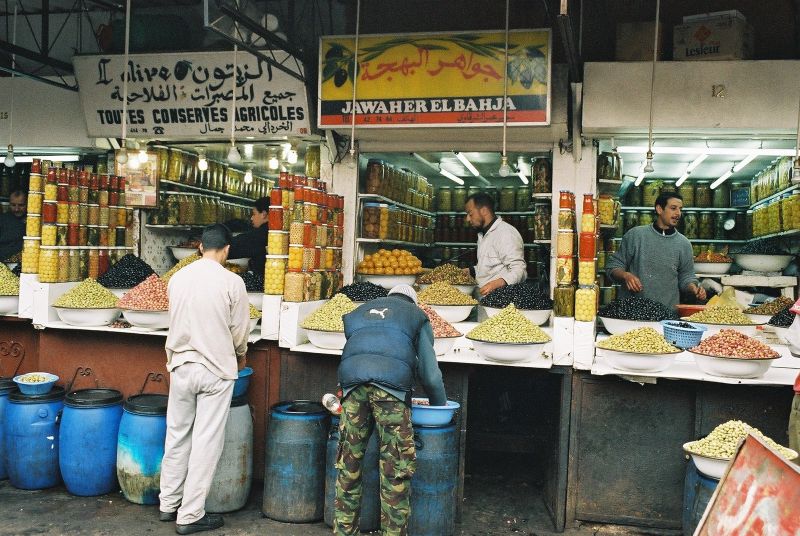
In a Moroccan souk, the final price comes out of conversation. BBC Travel, writing with Lonely Planet, says everything in the souks is negotiable except the pleasantries. A shopper who takes time over friendly banter gets a warmer welcome and probably a better price.
more
So the talk is part of the deal. It is not a delay before it.
Why the small talk comes first
The traders of Marrakech treat a customer as someone they will see again. In the leather and slipper quarter, a passer-by who mentions a favourite footballer or hobby gets a nickname on the spot. Return customers get warm greetings and hot tea.
Buy or not, the shopkeeper will remember you the next day and greet you with “Labes?”, which means “Happy?” Some carpet shops serve a ceremonial glass of mint tea, and artisans will show how a piece is made. A price reached after all that belongs to a relationship, not a single sale.
Who else is standing at the counter
A guide changes the maths. The BBC piece warns that a hired guide costs a shopper most of the fun and all the deals. The reason it gives is plain. The guide may well be related to the shopkeeper or take a commission on what you buy.
Its advice is to go alone. A shopper should never be too proud to bow out of a bargaining session, or to walk back the way they came.
A tour built without the commission
In 2020 the Guardian joined a pilot that tried to strip the guide’s cut out of the deal. The Swedish startup Local Purse and the travel company Intrepid ran a livestreamed walk through the Marrakech souks. The camera belonged to Redouane El Mouatasim, who runs Intrepid’s local operations and holds a Marrakech guide’s registration.
The paid version, planned for January 2021, let a viewer point at an item while the guide helped them haggle. The guide would then pack the purchase and post it home. Each private tour was to cost €60 to €120 plus the goods, with free shipping.
The tour’s design answered the BBC’s warning directly. Its guides worked without commission, and no shop or artisan paid to appear on the route. Nobody at the counter had a stake in which way the number moved.
Shoppers were under no obligation to buy. Local Purse’s founder, Lola Akinmade Åkerström, billed the format as experience first and shopping second. The first stop on the pilot was Al Nour, a cooperative of disabled women who embroider linens and kaftans, and a share of the tour’s proceeds was set aside for it.
What is on the table
The haggling covers a long list. In Fez, the BBC piece names babouche slippers, silver Berber jewellery, blue-glazed Fassi ceramics, argan oil, saffron, brassware and carpets as the best buys. In Marrakech, each craft has its own quarter. Lute makers work in the Instrument-makers’ Souq, and dyed wool hangs to dry in the Dyers’ Souq.
Fez’s medina runs through some 3,000 winding alleys, and the BBC says even locals get lost in them.
Why the souks needed shoppers at all
The pilot grew out of a slump. Morocco’s Department of Studies and Financial Forecasts put tourism losses in the first seven months of 2020 at £1.52bn, a 44% fall in revenue. It expected about half of those working in tourism to lose their jobs that year. Zina Bencheikh of Intrepid said she had heard of Marrakech guides begging in the streets.
Åkerström said people were four times more likely to buy through live video than through ordinary online shopping. Part of the pull, she said, is looking at the person who gets your money.