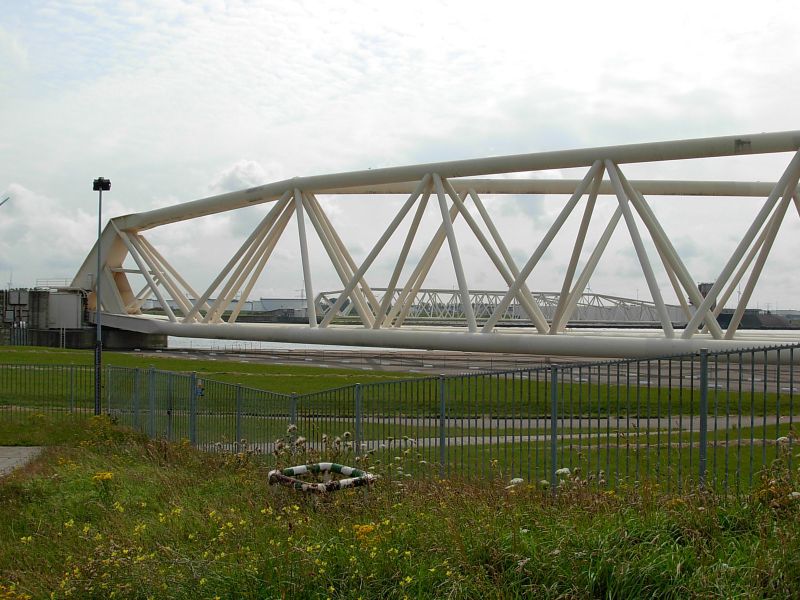
The Maeslantkering closes by swinging two doors out from opposite banks of the Nieuwe Waterweg until they meet across a channel 360 metres wide. The first time it did so for real, the doors took half an hour to come together, the BBC reported. For that half hour and the hours after, nothing sailed in or out of Rotterdam, the largest port in Europe.
more
That is the barrier’s whole design problem. It guards a shipping lane, so it must stay out of the way almost all the time. Then, on the night a surge comes, it has to shut.
The night it closed
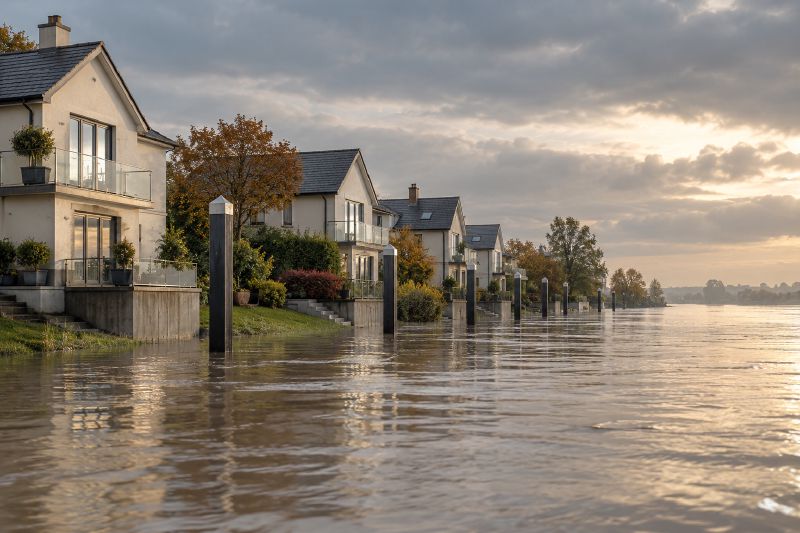
The first closure came during a North Sea storm surge that also struck eastern England. The Dutch authorities closed the barrier for the first time since it was built in the 1990s. The port stayed shut until 1700 GMT the following day, a spokesman said.
The Dutch transport ministry said it was the first time since 1976 that the whole of the country’s North Sea coast had been on alert. Across the water, thousands of people in England left their homes, and the UK Environment Agency issued eight severe flood alerts for parts of Norfolk, Suffolk, Kent and Essex.
What a surge does to the sea
A surge starts with the wind. Strong winds push water towards the coast, while low air pressure lets the sea surface bulge upwards, and the wind drives that bulge ashore.
The BBC put numbers on it. Sea level rises by about a centimetre for every millibar the pressure falls. A depression around 50 millibars below average can lift the sea by about half a metre on its own. If that lands on a high tide, the waves can breach even sound defences.
The flood that built the Delta Works
The Maeslantkering belongs to a family of Dutch defences born of one night. On January 31, 1953, storm-force winds and a spring tide drove a surge into the Rhine-Meuse-Scheldt delta. High water lasted more than 24 hours on islands such as Goeree-Overflakkee and Schouwen-Duiveland, which sit on average below sea level. The Institution of Civil Engineers puts the Dutch death toll at 1,835, with 2,070 square kilometres of land devastated.
The danger was known. In the late 1930s the Rijkswaterstaat, the Dutch ministry for infrastructure and water management, commissioned studies showing the delta’s sea defences could not survive a major surge. Engineers proposed damming every river mouth and sea inlet, but the scale of the job and then the Second World War stalled it. By 1953 only two river mouths had been closed.
Within nine months of the flood, workers had repaired the last breached dike, on Schouwen-Duiveland. The following year the Rijkswaterstaat began the Delta Works, a programme of dams, storm surge barriers and dikes. Its final barriers were finished in 1997.
Why shorten the coast
The idea was to shorten the Dutch coastline, so fewer dikes had to be raised when a flood threatened. The works cut the total length of flood defences by 700 kilometres. ICE names Johan van Veen as the project’s engineer.
The stakes remain high. About 4 million people in the South Holland coast region live below normal sea level, and North Sea storms usually give little warning. ICE notes that evacuating that many people across flat land is not a realistic option. The barrier has to work instead.
A barrier built to stay open
The biggest structure in the Delta Works is the Oosterscheldekering, nearly 8 kilometres long with 3 kilometres of barrier that opens and closes. It stands on 65 prefabricated concrete pillars with 62 steel slides between them. It has closed fully 29 times since 1986.
It too closes only in extreme weather. That keeps the tide running for the estuary’s mussel and oyster growers and its wildlife. The Maeslantkering keeps its channel open for a different reason: the ships bound for Rotterdam.