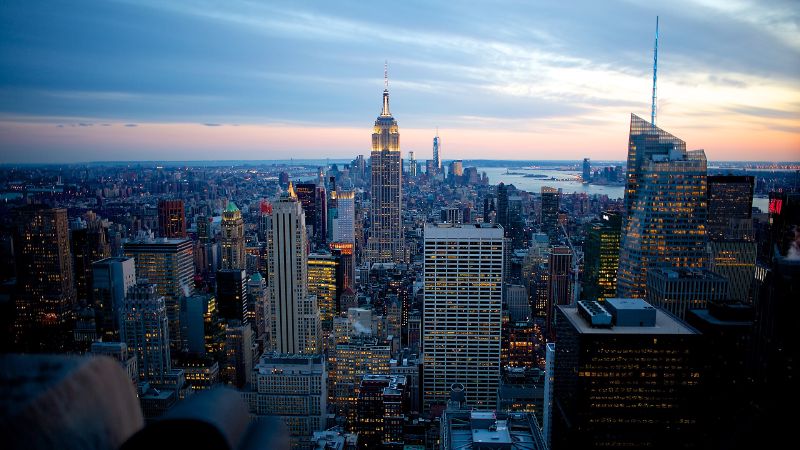
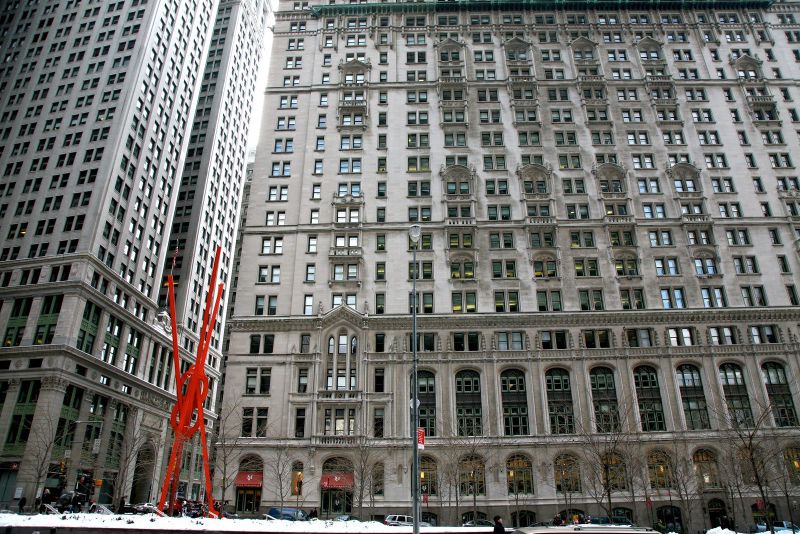
Many Manhattan towers have a plaza out front because the city paid for it in floor space. New York’s 1961 zoning law created privately owned public spaces, or POPS. The Department of City Planning defines one as an amenity a developer builds and maintains for public use, in exchange for extra floor area.
more
How much space the deal produced
Jerold Kayden, a Harvard professor of urban planning and author of a book on New York’s POPS, has tracked them for decades. By 2017, Metropolis reported, his research counted almost 540 of them covering more than 80 acres. That is about a tenth of Central Park.
Most sit in Midtown, the Upper East Side and the Financial District. A POPS need not be a plaza. Outdoor and indoor plazas count, and so do covered arcades and open-air concourses.
Trump Tower’s public lobby
One disputed example is on Fifth Avenue. In 1979, Donald Trump and the company that runs Trump Tower received 105,436 extra square feet of development space in return for its public areas. Michelle Young, founder of Untapped Cities, put that bonus at about $530 million in profit in today’s dollars.
The public space covers the main lobby, the lower concourse and two landscaped terraces. Inside, it comes to 6,626 square feet, with another 6,336 on the terraces. A bench across from the main lifts is meant for public use.
Metropolis reported that private security and NYPD officers once tried to stop a climate teach-in from entering those areas. The event went ahead only after a civil rights lawyer read the zoning code aloud.
Where the bargain falls short
The city has not always got what it paid for. A 2000 study by Kayden, the Department of City Planning and the Municipal Art Society found much of the space was poor. It judged 41% of the spaces to have no real use. In the late 1990s, about half of the buildings had at least one POPS that appeared out of compliance.
The city has since tightened its design rules. A new space should be open to the sidewalk, accessible and safe, with seating, trees and good lighting. Those rules mostly cover new or upgraded spaces, not the older stock.
Who sets the rules
The deeper tension is ownership. The RIBA Journal notes that a private owner has the same rights as any property owner. It can bar protest, skateboarding, collecting signatures or sleeping. That becomes a problem when people do not know they have crossed onto private land.
The same piece warns against treating public as good and private as bad. Publicly owned spaces have rules too, it argues, and many are so poor that they damage the reputation of public space itself.
The practical test in New York is whether a plaza’s owner honours the deal. The city granted the floor area long ago. The public side still has to be claimed.