Google’s nap pods were never Google’s alone. The same MetroNaps pods sat in other tech offices, and then spread to firms with no tech culture at all. Fast Company listed Google, Cisco and the Huffington Post among the employers giving staff a pod to nap in. By 2017 the Financial Times found the same pods in a Washington law firm.
more
The pods come from one company. Christopher Lindholst and Arshad Chowdhury founded MetroNaps in 2004. It began in retail and later turned to making pods and advising employers on napping. Each pod cost about $13,000.
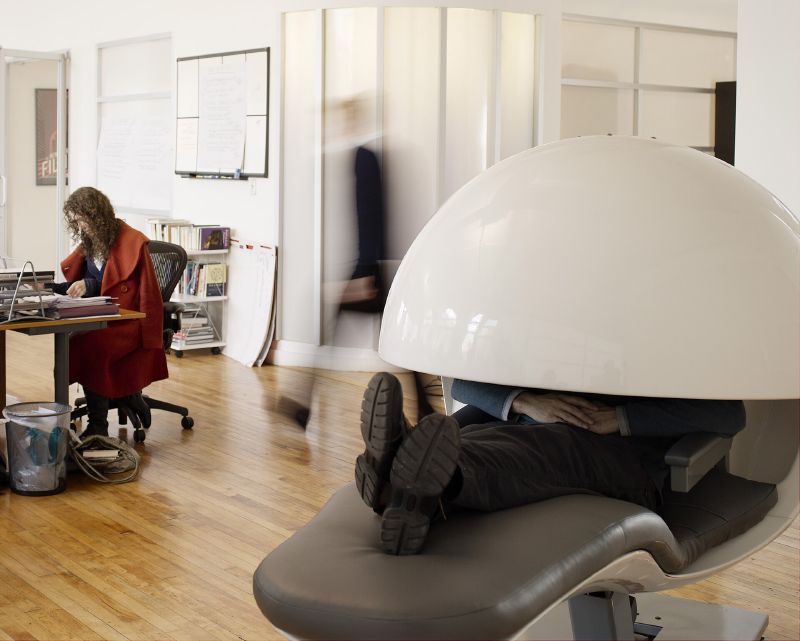
What a pod does
A pod pairs a reclining chair with a round visor about four feet across. The visor wraps round the upper half of the sleeper. The recline follows NASA research on a “gravity neutral” position, with the feet and knees raised. Fast Company notes that astronauts wait for launch in the same pose.
A timer nudges the sleeper to stop at 20 minutes. Lindholst told Fast Company that a longer nap reaches deep sleep and leaves the sleeper groggy. He put the best window for a nap at 1pm to 4pm.
How the pods left Silicon Valley
The FT reported that pods had been appearing in Silicon Valley for close to ten years. MetroNaps’ client list by then ran well beyond tech. It included NASA, Samsung, JetBlue and Zappos. It also took in PwC, KPMG and the law firm White & Case.
Lindholst gave the FT a plain reason. He said the buyers were anyone competing to attract and keep good staff. He told Fast Company that interest rose as the economy recovered after 2008 and employers turned to retention.
White & Case shows how it happened in practice. Younger associates in its Washington office asked for pods during a renovation. The office bought two for its 300 staff. Partner Francis Vasquez said they were used five to eight times a day.
Why sleep joined the wellness plan
Office wellness schemes once left sleep out. Lawrence Epstein of Brigham & Women’s Hospital told the FT that they tended to cover diet, weight, exercise and smoking instead. He put the cost of insomnia in the US at over $100bn once lost output is counted.
Ana Krieger of Weill Cornell Medicine blamed smartphones and constant contact with the office for rising sleep disorders. She said sleep problems count as critical for pilots and firefighters. Her question was where to draw the line for a tired banker whose bad call costs jobs.