On 21 February 1952, police in Dhaka shot into a crowd of students who had broken a government ban on public meetings to demand recognition for the Bengali language. Pakistan’s refusal of their demand pushed many Bengalis toward the independence campaign that ended Pakistani rule over the region in 1971.
more
Where the dispute began
East Bengal held 44 million of the 69 million people counted in the new Dominion of Pakistan after the 1947 partition of British India, and Bengali was the language most of them spoke. Despite that, the government named Urdu the country’s sole state language in 1948. Pakistan’s government, civil service and armed forces were staffed mainly by officials from the country’s western wing.
The shooting in Dhaka
The government had already banned public assembly when Dhaka University students marched anyway. Firing on the crowd killed several of them, among them Abul Barkat, a politics student, and Rafiq Uddin Ahmed, hit outside the medical college hostel. A government clerk named Abdus Salam died in the same volley, and Abdul Jabbar, a bystander who had joined the march, was shot too. Bangladesh remembers its dead as the Bhasha Shaheed, the language martyrs.
From protest to independence
The deaths did not end the campaign. Civil unrest spread through East Bengal, and Pakistan’s government relented in 1956, giving Bengali equal status with Urdu. The Awami League, led by Sheikh Mujibur Rahman, won Pakistan’s 1970 general election, and when West Pakistan refused to accept the result, protests escalated across the east. Sheikh Mujibur addressed crowds in Dhaka on 7 March 1971. War followed, and it ended with Bangladesh’s independence from Pakistan later that year.
How does Bangladesh mark the day now?
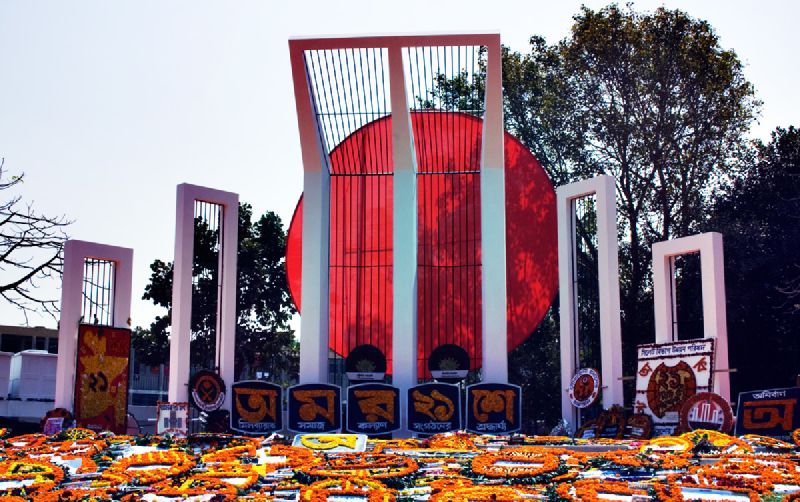
Bangladesh built the Shaheed Minar monument near Dhaka Medical College to remember them, and a replica of it stands in Altab Ali Park, in London’s Whitechapel. Every year at midnight on 21 February, thousands walk to the Dhaka memorial barefoot and dressed in black to lay flowers. One marcher, Mohammed Mofizuddin, said he came to honour the movement’s “language day martyrs.” Bangladesh later persuaded UNESCO to mark the anniversary worldwide. The organisation declared 21 February International Mother Language Day in 1999, and countries around the world have marked it every year since 2000.