The first point-and-click adventure game was Enchanted Scepters, which Silicon Beach Software released for the Apple Macintosh in 1984. Ars Technica gives the real innovation to ICOM Simulations, whose mystery Déjà Vu dropped typing altogether a year later.
more
In 1986, Ron Gilbert and Gary Winnick wrote a proposal for a Lucasfilm game that showed every available command on screen, and their interface became the pattern for the genre. Rock Paper Shotgun still fills the top of its list of the 25 best adventures with LucasArts games, because in its view LucasArts made the best ones.
Where point-and-click adventures came from
Adventure games began as words. Kotaku lists Pyramid 2000, Adventure and Zork among the text adventures that taught players to imagine, to think and, as its writer puts it, to type. Ars Technica says Ken and Roberta Williams found a version of Will Crowther’s Adventure by accident while coding on a mainframe from a distance, and it gave them the idea for their own.
In 1980 the couple made Mystery House for the Apple II. It was a text adventure with one selling point, which was a monochrome line drawing beside the words, and it sold out wherever it was stocked. A second game, Wizard and the Princess, added colour. The Williamses then moved their company, On-Line Systems, from consulting into games.
The pictures did not change how you played. PC Gamer points out that before Maniac Mansion, adventure games and text adventures were close to the same thing, and even the so-called graphic ones, such as Mystery House and the early King’s Quest games, were text adventures at heart. Players still typed commands like “walk to” or “pick up” and guessed which words the game understood.
A mouse, a Mac and eight verbs
King’s Quest came out of a deal. In 1983 IBM offered Sierra $700,000 to build a game that would show off its coming PCjr. The PCjr failed. The game became a bestseller, the first to use 16-colour EGA graphics and the first to let a player’s character walk in front of and behind objects. It also exposed the problem. The parser punished a player who called a rock a stone, and a character moving through fake 3D space was easy to walk off a cliff.
The Macintosh supplied the missing piece. Apple released it in January 1984 with a mouse and a graphical interface, and Ars Technica says a few developers saw a way to bring that ease of use to games. Silicon Beach Software’s Enchanted Scepters used drop-down menus for actions. ICOM Simulations went further a year later with Déjà Vu, a mystery with no typing at all. You dragged objects into your inventory, chose one of eight verbs from Examine to Consume, and then clicked the thing you meant.
Ars Technica calls Déjà Vu an instant classic, and it later reached the Nintendo Entertainment System. The MacVenture games that followed, including Shadowgate and Uninvited, never matched the popularity of Sierra’s Quest series. Typing-free play had to wait.
The programmer who loved King’s Quest
It waited for a Lucasfilm programmer who loved King’s Quest and disliked its parser and its habit of killing you. Ron Gilbert wrote the Script Creation Utility for Maniac Mansion, known ever since as SCUMM. It put every verb and the inventory along the bottom of the screen while the scene played out with moving characters.
The idea arrived whole. Gilbert and the artist Gary Winnick wrote a proposal in 1986 that described the finished interface, down to a promise that the player would always see “all the buttons ever used in the game”. PC Gamer says it did not evolve gradually. It was fully formed at the concept stage.
Part of the reason Lucasfilm made it at all was a licence it could not have. Atari held the exclusive video game rights to Star Wars through the 1980s and early 1990s. Gilbert believes that restriction led indirectly to original games like Maniac Mansion and Loom. Without it, Retro Gamer quotes him as saying, Star Wars games were “probably all we would have done”. The same piece records that the Lucasfilm Computer Division began with two halves. The games department became LucasArts, and Steve Jobs bought the graphics department and turned it into Pixar.
Within a few years nearly every adventure had dropped the typed command for what PC Gamer says came to be called “point ’n’ click”. Sierra, LucasArts’s main rival, used it for Gabriel Knight.
Who made the first great adventures
Ken Williams was 25 when he founded Sierra in 1979. In Vice’s phrase, he built the body and Roberta gave it breath. He had hacked the Apple II to draw the line art in Mystery House. When a glitch in that work produced colour, he exploited it. Roberta’s Mystery House and King’s Quest set the course for the company as the leading developer of adventure games, in Vice’s account.

more
Roberta also steered the business. Vice quotes a colleague, Bowerman, saying that when Ken wanted to sleep on a decision, it meant he was going home to talk it over with her. Around 1984 she ended a merger with the educational firm Spinnaker by arriving late to the meeting and announcing that “these guys are a joke”.
A man in a leisure suit
In 1986 Ken Williams asked Al Lowe to rebuild Softporn, an older text adventure. Lowe kept its puzzles and invented Larry Laffer, a lovable 38-year-old loser. Lowe told MEL Magazine, as PC Gamer relays, that he drew Larry from hustlers he had watched in bars as a working musician, and from a Sierra colleague who bragged about his sales trips. The leisure suit came from a quip at the pitch meeting, where Lowe said a game so out of touch ought to wear one.
Larry sold 4,000 copies in its first month. Within about a year it was the third best-selling computer game in America. Millions of pirated copies circulated as well, and Lowe says that at one point Sierra sold more hint books than games. A Russian consultant told him Larry was so common there that it seemed to be part of DOS.
The pirated copies carried viruses. The Financial Times reported in 1988 that banks in Switzerland, Germany and England had lost data after staff tried to play infected Larry bootlegs at work, and Activision, which distributed the game, put out a statement saying the game itself was clean.
The studio nobody told what to make
At Lucasfilm Games the mood was different. Retro Gamer quotes Daron Stinnett saying that George Lucas gave staff complete creative freedom, even on Star Wars games, and wanted them to invent their own stories. Gilbert told Kotaku that working there felt like “a creative Cambrian explosion”. He also recalled Lucas’s rule of thumb, which was to be the best, stay small and lose no money.
Gilbert’s own rule was gentler on the player. He pushed for designs that did not punish curiosity or send them back to an early point when they missed an item they needed, which had been the norm. Tim Schafer and Dave Grossman joined him for The Secret of Monkey Island, and Schafer remembers writing about a third of the dialogue on the Monkey Island games while “secretly” wanting to write all of it.
The crew worked with their hands, too. Grossman recalls that when Monkey Island was finished, the factory could not fill the first orders, so developers spent a night in a warehouse riveting code wheels and shrink-wrapping boxes. Steve Purcell’s Sam and Max began as characters for testing animation software inside LucasArts and then became a strip in the company’s quarterly newsletter. In 1991 Michael Land and Peter McConnell built iMUSE, an audio system that let the music change smoothly as the player acted. None of LucasArts’s rivals had anything like it.
Writers who wanted something darker
Other pioneers pulled the genre away from fairy tales. When designer Jane Jensen pitched a steamy voodoo mystery called Gabriel Knight, Ken Williams told her nobody wants to play something dark and depressing on a computer, but he trusted her enough to approve it. In Britain, Revolution Software’s Charles Cecil and Steve Ince gave Broken Sword what Rock Paper Shotgun calls a distinctly British tone and sense of humour. Over at Sierra, Police Quest was written by Jim Walls, a real-life policeman.
The games that set the rules
Maniac Mansion gave the genre its grammar. You could switch between several characters, the game had more than one ending, and its puzzles came dosed with B-movie humour. Ars Technica says its lasting legacy was the SCUMM engine, which went on to build 13 original LucasArts titles over the next decade. PC Gamer adds that 80 per cent of SCUMM’s code survived untouched between 1987 and 1997, when The Curse of Monkey Island became the last SCUMM game.
The engine came with a trick. Instead of a flat refusal, LucasArts games answered a wrong move with a varied, witty reply. PC Gamer reads those replies and the silly red herrings as a way to make small 2D worlds feel larger than they were.
Insults instead of swords
The Secret of Monkey Island (1990) put that template on a pirate island. Guybrush Threepwood never swings a cutlass at anyone he meets. He duels by trading insults, in an encounter Polygon compares to a Pokémon battle that Monkey Island got to first. You can only choose a comeback once an opponent has used it on you, and the game holds 16 insult and comeback pairs in all.
Gilbert told Retro Gamer that he disliked mechanics built on fast reflexes, because adventure games are about logic, so “the sword fighting became puzzle-solving”. He had also noticed that pirates in old films spent more time trading barbs than fighting. Ars Technica adds that the silliness reached the puzzles too, from a rubber chicken with a pulley in the middle to one built around a real red herring.
Rock Paper Shotgun takes a contrarian line on the series. It calls the Monkey Island games the best-known adventures of the 1990s and says that fame has led people to mistake them for the best. It finds the first game short and dull, and it ranks the sequel, Monkey Island 2: LeChuck’s Revenge, seventh. Retro Gamer says that sequel was the first game to ship under the LucasArts name. Polygon reports that Industrial Light & Magic also worked on an animated Curse of Monkey Island film, with Steven Spielberg linked to it as a producer, before Lucasfilm cancelled it.
The game that won the war
Day of the Tentacle, Schafer’s 1993 sequel to Maniac Mansion, sends three characters across 400 years. Hoagie sits 200 years in the past, Laverne 200 years in the future and Bernard in the present, and a change in one era pays off in another. Rock Paper Shotgun’s examples are redesigning the American flag in the past to get a tentacle costume in the future, and leaving a jumper in a tumble dryer for 400 years so it shrinks enough to defrost a frozen hamster.
Rock Paper Shotgun puts it first on its list of the 25 best adventure games and calls it the decisive win in the war between Sierra and LucasArts. It also calls it the textbook every adventure designer should study before conceiving a puzzle.
One cursor, then a darker mood
The interface kept changing. In Sam & Max Hit the Road (1993), Ars Technica says, the list of verbs gave way to several cursor modes and the inventory moved off screen, so more of the world stayed visible. The dialogue menu used only icons, so a player could not read a joke before hearing it. LucasArts was not first. Dynamix released Rise of the Dragon with a contextual cursor in 1990, and Rock Paper Shotgun notes that Sierra had hidden its verbs behind the cursor by 1991.
Sierra went somewhere else with Gabriel Knight: Sins of the Fathers (1993), which follows a struggling novelist through a real-life murder mystery. Ars Technica says many regard it as one of the best-written games of all time. Rock Paper Shotgun sees it as the moment adventures turned grim and serious, and it adds that a lot of copycat dross followed.
Games that earned their rank
Grim Fandango (1998) was LucasArts’s penultimate adventure, and Eurogamer’s retrospective says it may well be the best LucasArts adventure. It replaced SCUMM with a 3D engine called GrimE, which drew characters on top of pre-rendered backgrounds, and it sent a travel agent named Manny Calavera through a mix of Mexican folklore and film noir. Schafer wrote all 8,000-plus lines of dialogue and says he stole phrases from the crime writers Raymond Chandler and Dashiell Hammett. Tony Plana, a native Spanish speaker, played Manny and asked to swap in words such as carnal and hermano. Polygon calls the game the arguable apex of a genre.
Revolution Software, from Britain, built Beneath a Steel Sky in 1994, a cyberpunk story set in a dystopian version of Australia. Its next game, Broken Sword: The Shadow of the Templars, followed an American tourist named George Stobbart who survives a café bombing in Paris and starts his own investigation. Rock Paper Shotgun says the series never improved on that first game, although it concedes that the Goat Puzzle in it is still a bad one.
Rock Paper Shotgun ranks Indiana Jones and the Fate of Atlantis fourth, above Grim Fandango. It lets you choose Wits, Team or Combat, which means puzzle-heavy play, a one-player co-op mode, or fistfights where brains might otherwise work.
How adventures boomed, crashed and survived in Europe
For a few years the genre sat at the top of the charts. Ars Technica says graphic adventures topped sales lists year after year, then suffered an equally steep fall about a decade after the climb began. The climb ran on technology. Sierra swapped its AGI scripting language for SCI in 1988, and King’s Quest IV became one of the earliest PC games to support sound cards. King’s Quest V (1990) added an icon interface and 256-colour graphics, and a 1992 CD-ROM edition gave it full voice acting. Vice adds that Sierra adopted sound cards and compact discs early, and both translated into lavish production values on screen.
more
What Myst did
Then Cyan’s Myst reached the Mac in 1993, with what Ars Technica calls purportedly photorealistic 3D graphics and a minimal point-and-click interface. It dropped players on an empty island with no instructions beyond what they could see. It dominated the charts, became the biggest-selling computer game of all time until The Sims, and helped push the CD-ROM drive into homes.
The same article argues that Myst’s success hurt the genre more than it helped. The market bottomed out as dozens of broken clones flooded in, and publishers pushed for the same graphics and puzzles until consumers lost faith. Rock Paper Shotgun notes that Under a Killing Moon arrived on four CD-ROMs in 1994. Sierra’s Phantasmagoria needed seven in 1995, was banned in Australia, and still ranked among the year’s best sellers.
The slide
The first-person shooter did the rest. Ars Technica says adventures no longer sat at the front of gaming technology and could not match a shooter’s immediacy, so players drifted to hybrids such as Tomb Raider, Resident Evil and Metal Gear Solid. Grim Fandango won wide praise for its story, art and sound and still sold fewer than 100,000 copies in North America. Schafer says the game made a profit, though Polygon adds that it became an argument against making more.
LucasArts released Escape from Monkey Island in 2000, then cancelled sequels to Sam & Max and Full Throttle. Schafer left in January that year to found Double Fine. Mary Bihr, a LucasArts vice president, later told Kotaku that the company had at one point mostly given up on adventures, wondering whether the old ones sold at all.
How Sierra ended
Sierra’s end was messier. CUC International announced in February 1996 that it would buy the company for $1.06 billion in CUC stock, and the deal closed in July. Ken Williams lost executive control for the first time in the company’s history. On April 15, 1998, the parent company, Cendant, said it would revise its 1997 earnings down by about $115 million, and its share price fell from $36 to $19 the next day. Vice reports that Williams says the company was “killed”.
Under the new owners the old formula wobbled. King’s Quest: Mask of Eternity reached shops in December 1998 and tanked commercially and critically. Roberta Williams told Vice that her team had redesigned the interface until it looked like an RPG with experience points, and that she kept telling them it was an adventure game. Havas, owned by Vivendi, bought Cendant’s software studios for $1 billion in cash in November 1998, and three months later most of Sierra’s staff lost their jobs. Ars Technica puts the closure of the original Oakhurst studios on February 22, 1999, with more than 250 people out of work.
The lifeline across the Atlantic
While the genre bled in the United States, Europe kept buying. Adventure Soft’s Simon the Sorcerer games put a British spin on the LucasArts comedy formula, and the Norwegian studio Funcom’s The Longest Journey arrived in 2000. Ragnar Tørnquist, its designer, told Game Developer that translation into 13 languages was part of the reason it sold so well, and that it sold something like 20,000 to 30,000 copies in Poland alone. Péndulo Studios’ Runaway sold in huge numbers across Europe but took two years to find a US publisher.
Tørnquist did not believe a traditional adventure could survive on a big scale. For Dreamfall, the sequel, he moved to full 3D with stealth and some combat, and he said that to a publisher the word adventure was like garlic to a vampire. “Adventure games as we knew them are dead,” he said, though he argued that adventure ideas lived on in other games.
In 2006 Telltale Games began releasing Sam & Max in episodes. Ars Technica says it did what Gilbert had done with SCUMM, by replacing the least accessible part of adventures, which was the puzzle logic, with something that did not frustrate players. Rock Paper Shotgun says Telltale’s later hit The Walking Dead was about conversation and decisions rather than puzzles and inventory items.
Where adventure games stand now
Phones gave the genre a second life. The Independent traced a revival to the Nintendo DS touchscreen, the Wii remote and then the iPhone, and it asked Charles Cecil of Revolution Software why. Cecil said touch screens let point-and-click games play better than ever, and that Apple let developers keep 70 per cent of each sale with no publisher in the way. His company released Beneath a Steel Sky: Remastered for £2.99, with animated scenes by Dave Gibbons, the co-creator of Watchmen.
LucasArts came round to the same view. Kotaku reported a deal to sell classic LucasArts games on Steam, alongside a reimagined Secret of Monkey Island and an episodic sequel from Telltale. Mary Bihr, the vice president Kotaku quoted, said the company wanted to reach people who had never played an adventure game. The reimagined Monkey Island arrived on July 15, 2009.
Fans with a Kickstarter page
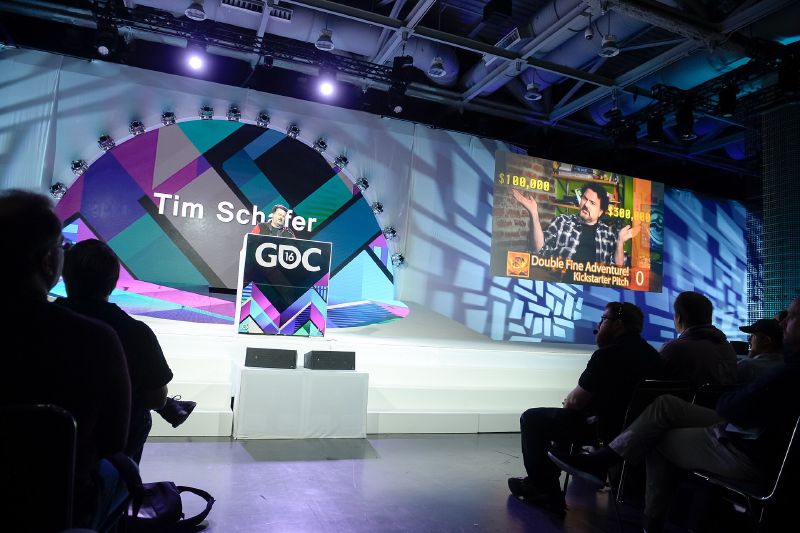
Money came from fans too. Schafer’s Broken Age shattered Kickstarter records when it launched on the platform in early 2012. Rock Paper Shotgun notes that Kentucky Route Zero began as a Kickstarter that asked for $6,500 and raised $8,583. Ron Gilbert went back to 1987 with Thimbleweed Park, which Eurogamer describes as his throwback to the point-and-click games of that year. Rock Paper Shotgun calls Dave Gilbert the king of independent adventure development, and says his Blackwell series, built on the Adventure Game Studio engine, earned him that reputation.
The pirate returns
Return to Monkey Island came out on September 19, 13 years after Telltale’s 2009 Tales of Monkey Island. Ron Gilbert and Dave Grossman came back. Schafer did not. Polygon’s reviewer found the new look, which resembles a living map of hinged paper dolls, less dated than the series’ earlier 3D models. The review also praises the returning composers and voice cast. The same review says the game shows little interest in evolving, and that watching Guybrush stroll after your cursor is as much of a chore as in the first game. It still recaptured the joy the series gave the reviewer in their youth.
What counts as an adventure now
The label has stretched. GamesRadar’s list of the best console adventures includes Tales from the Borderlands, Until Dawn and Firewatch, and the site says the field now runs from cursor-based, item-combining purity to more directed interactive stories. Ars Technica adds that hidden-object games, often sold as adventures, make it harder for deeper games to get noticed. It also credits adventures with the rewind mechanic later used in Braid and Prince of Persia: The Sands of Time, and with the embedded movies that turn up across games.
How close it came to being lost
The rescue of Grim Fandango shows how near the old games came to disappearing. Disney bought Lucasfilm for $4 billion in October 2012, and in April 2013 it announced it would close LucasArts’s game development arm. Double Fine and Sony’s Adam Boyes were chasing the same licence without knowing it, and Schafer says that when they met, they chose to be friends rather than go to war. Grim Fandango Remastered came out on January 27, 2015. Double Fine also hired a Grim Fandango modder, Tobias Pfaff, to add point-and-click controls, and it announced Day of the Tentacle Remastered with Sony in December 2014.
Double Fine’s producer Matt Hansen drove to Lucasfilm and left with a tub of old media. Much of the data sat on Digital Linear Tape, and nobody had a drive to read it. Jory Prum did. The sound designer, who had worked at LucasArts in 1999 and 2000, had pulled a DLT drive from the top of a dumpster about a decade earlier and stored it without ever plugging it in. He worked through 13 tapes, spent about nine hours a tape on the ones he restored, and called the job an adventure game puzzle that nobody else could solve for him.
Starter guide
Play these first. Each has two trusted publications ranking it among the best games or the best adventures, or calling it a classic.
- Monkey Island 2: LeChuck’s Revenge (Ron Gilbert, 1991). Rock Paper Shotgun puts it on its list of the best adventure games, and IGN puts it on its staff list of the 100 best games of all time.
- Indiana Jones and the Fate of Atlantis (LucasArts). Rock Paper Shotgun puts it on its list of the best adventure games, and Polygon puts it on its list of the 500 best games of all time.
- Day of the Tentacle (Tim Schafer, 1993). Rock Paper Shotgun puts it at the top of its list of the best adventure games, and Polygon counts it among the now-classic adventures that made Schafer’s name.
- Sam & Max Hit the Road (LucasArts, 1993). Rock Paper Shotgun puts it on its list of the best adventure games, and Polygon puts it on its list of the 500 best games of all time.
- Full Throttle (Tim Schafer). Rock Paper Shotgun puts it on its list of the best adventure games, and Polygon counts it among Schafer’s now-classic adventures.
- Grim Fandango (Tim Schafer, 1998). Rock Paper Shotgun puts it on its list of the best adventure games, and Polygon puts it on its list of the 500 best games of all time.
- The Walking Dead (Telltale Games, 2012). Rock Paper Shotgun puts it on its list of the best adventure games, and Polygon puts it on its lists of the 500 best games of all time and the 100 best games of the decade.
- Kentucky Route Zero (Cardboard Computer, 2013). Rock Paper Shotgun puts it on its list of the best adventure games, and Polygon puts it on its list of the 100 best games of the decade.