The printmaker José Guadalupe Posada (1852–1913) gets much of the credit for the skeletons of Mexico’s Day of the Dead. A 1792 novel holds some of the earliest examples.
more
What Posada drew
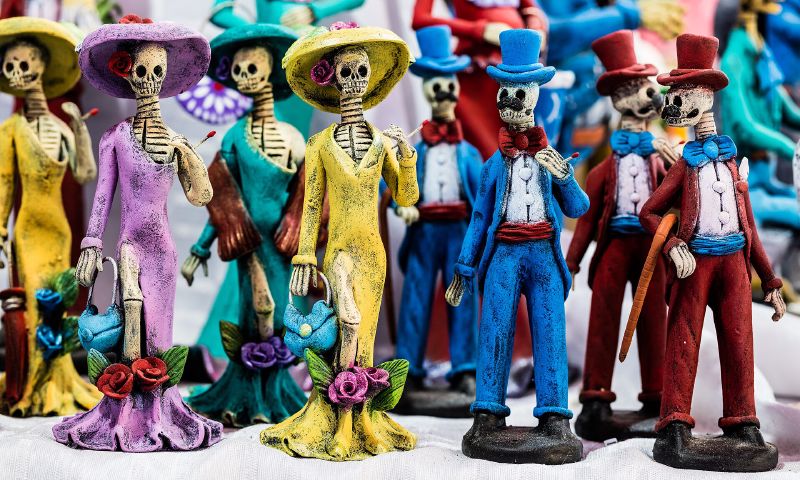
Posada used skeletons for satirical commentary on the politics of his day. In the early 1900s, the political cartoonist made a satirical etching of La Calavera Catrina, a female skeleton in a flowery hat.
La Catrina has since become a prominent symbol of death in Mexico. She inspires a lot of Day of the Dead makeup and costumes. People make figurines of her from clay, wood or papier-mâché, and she often dances in parades.
BBC Bitesize says she reminds people to remember the dead with good humour and warmth.
What came before
The book is La portentosa vida de la muerte, or The Astounding Life of Death. Joaquin Bolaños, a Franciscan priest from Zacatecas, wrote it in 1792. It is one of the first Mexican novels.
Its 18 illustrations show Death as a bony baby, a bride and a triumphant ruler, among other roles. The Mexican engraver Francisco Agüera Bustamante made them. He produced no other illustrations like them.
Rick Stattler, a director at Swann Auction Galleries, told Hyperallergic that Posada gets much of the credit. He added that Agüera is credited with the foundation.
The Inquisition censored the book for its irreverent treatment of death, and copies were burned. Hyperallergic reports that these early skeletons set precedents for the literary magazine El Calavera, founded in 1847, and for Posada’s caricatures.
Where Agüera found his skeletons
Researcher Elizabeth C. DeRose suggests Agüera may have drawn on European “Dance of Death” prints. Hyperallergic says Mexican funerary sculpture was a more likely source, and many ancient Mesoamerican cultures also showed skeletons and skulls.
Stattler says the book was seen as an oddity in its own day. Zacatecas launched a Day of the Dead festival honouring Bolaños and his book in 2011.