On November 17, 2020, a sensor buoy off Ucluelet, British Columbia, measured a wave 58 feet tall. Scientists call it the most extreme rogue wave ever recorded, according to Smithsonian Magazine. Its authors described it in the journal Scientific Reports.
more
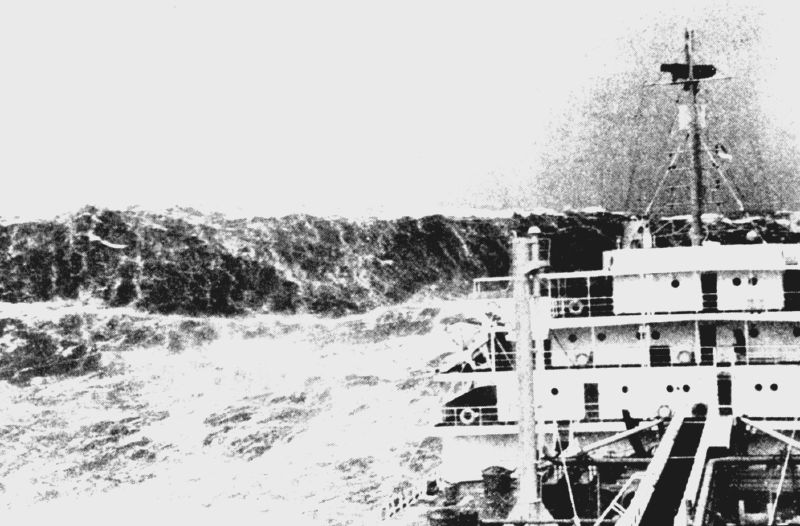
The wave stood three times as tall as the waves around it. By contrast, the first rogue wave ever detected, off Norway in 1995, reached 84 feet but was a little over twice as tall as its neighbours.
What counts as a rogue wave
NOAA sets the bar at more than twice the height of the surrounding waves. NOAA adds that such waves can arrive from a direction other than the wind and waves that prevail.
The BBC reports an estimate of one in every 10,000 waves. Johannes Gemmrich, an oceanographer at the University of Victoria and lead author of the Ucluelet study, put the chance of seeing that particular wave at once in 1,300 years.
What builds one
Smithsonian reports that researchers still do not know why or how rogue waves form. They suspect that ocean swells, winds and currents meet and reinforce each other.
A 2026 paper in Ocean Science looked at buoy records for a warning sign. Rogue waves were usually preceded by a sharp fall in a measure called crest-trough correlation, then a quick rise. The authors read that as a sign that wave energy was focusing. They found the measure alone was a poor indicator. Its change over time was more useful.
Professor Meric Srokosz of the UK’s National Oceanography Centre told the BBC that the picture is complicated. Waves interact with currents, and currents are changing as the planet warms, so he said no single factor explains the trend.
Are they getting worse
The BBC reported a study of 20 years of buoy data from the US west coast. Between 1994 and 2016, rogue waves became slightly less frequent but taller. Their height rose by about 1% a year, and they were more extreme in winter. The team said the findings could apply only to the area it studied.
Gemmrich said a ship’s operator has little warning of such a wave and no time to change course. The Ucluelet wave did no damage because it was far from shore.