If every plank of a ship is swapped out, is it still the same ship? Philosophers have argued about that since the ancient Greeks, and, as David Papineau wrote in The Philosophers’ Magazine, they have not agreed on an answer.
more
Where the puzzle comes from
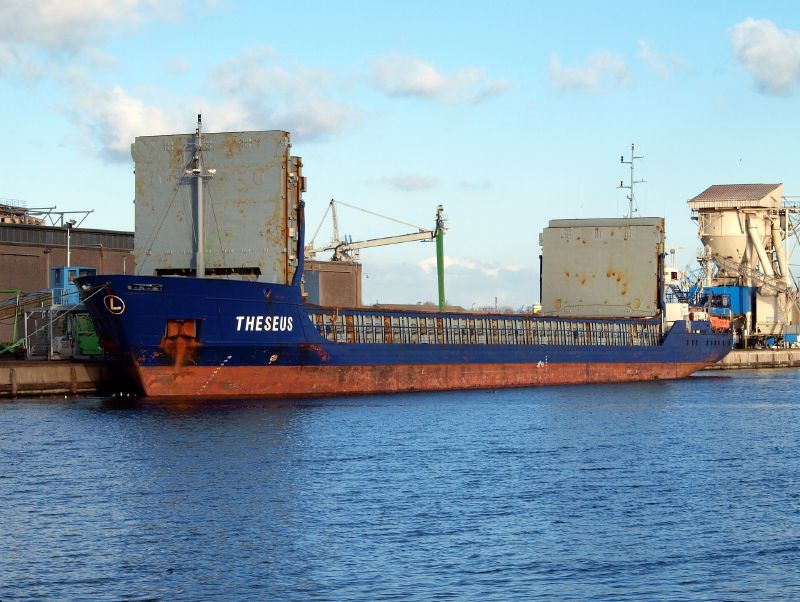
Theseus was a legendary king, honoured as one of the founders of Athenian society. Plutarch records that the ship he and his crew sailed across the Aegean had its planks replaced one at a time. In the end the whole ship had been renewed, which left open whether it was still the same vessel.
The first instinct says yes. Papineau puts it plainly: you do not destroy a ship by changing its planks.
The twist that makes it hard
The trouble starts with the old planks. The BBC credits the British philosopher Thomas Hobbes with the version of the question it uses in its school assemblies. In that version someone keeps the discarded timber and builds a second ship from it.
Papineau imagines a smart Athenian doing the same, tidying the planks and putting them together again. That ship would look the same and be made of exactly the original wood, so it seems to have the better claim. Yet if it is the original, the repaired ship cannot also be. Two different ships cannot both be the same ship.
The BBC’s assembly retells this for children with a wooden ship called the Theseus. A shipyard swaps its wood for metal until the ship is entirely metal, and then a second wooden Theseus arrives. Pupils are asked which one is the real ship: one, both or neither.
From ships to people
The same question applies to a body. Philosophy Now’s Michael Allen Fox points to work by the Swedish neurologist Jonas Frisén, whose carbon-14 technique gave the first accurate estimates of how long body parts take to regenerate. By those estimates:
- the gut lining is replaced every five days
- the outer layer of skin every two weeks
- red blood cells every 120 days
- bones every ten years
- the muscles between the ribs every 15.1 years
Fox lays out the two camps in the long debate. One says you stay the same person because your body has changed only bit by bit. The other says personality traits and dispositions carry you forward. He argues that the ship seems to sink the physical theory, because a thing that changes gradually can still end up changed completely.
Papineau poses the mental version. If Alzheimer’s disease wore away his memories and character, would he still be there? And if a future technology copied those memories into a new, healthy body first, which one would be David Papineau? Some philosophers pick the depleted body, he writes, some the copy, and some say the original stops existing.
The BBC assembly ends on the same turn, asking children whether they are the same person they were at birth, and if so, what makes them themselves.
It even applies to cricket teams
Papineau’s own example is a sports club. He played for years for a touring cricket side, the Old Talbotians, started by journalists on a short-lived news magazine that the financier James Goldsmith founded in 1979. By the time he retired, about fifteen years after joining, none of the magazine’s old hands remained.
Teams can also move, split or merge. The Los Angeles Dodgers were once Brooklyn’s team. The Balmain Tigers merged with Western Suburbs in 1999 to form Wests Tigers. Fans keep their loyalty through all of it, and Papineau asks whether that loyalty makes sense.
Part of the problem, he suggests, is method. Most philosophers test their theories against gut reactions to clever cases. The ship has given them a very old one, and the gut has never settled it.