Where shoegaze came from
more
Shoegaze began as an insult. British journalists coined the word for bands that seemed to study their effects pedals instead of the audience. A second nickname, “the scene that celebrates itself”, was no kinder. The musicians did not like the term at first, but they have gradually reclaimed it.
more
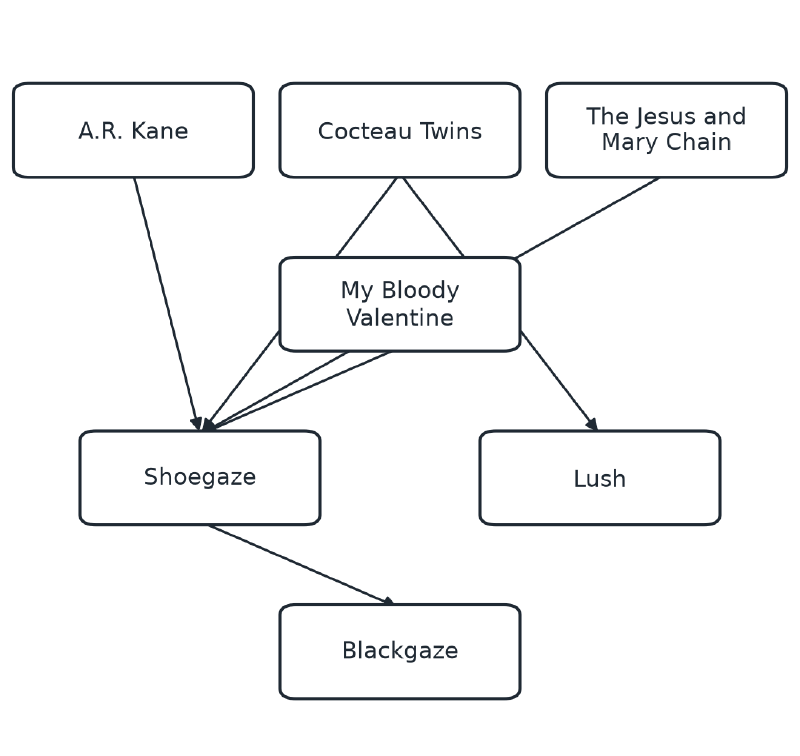
The sound had older parents. Digs credits Cocteau Twins, The Cure, The Jesus and Mary Chain, A.R. Kane and most of the 4AD roster of the late 1980s with laying the groundwork: droning guitars, heavy effects and vocals buried in the mix. Far Out Magazine hears a proto-shoegaze soundscape in Cocteau Twins’ second album, Head Over Heels (1983), where Elizabeth Fraser’s wistful voice floats over the guitars. Slowdive’s Neil Halstead told the documentary Beautiful Noise that he needed several listens to work out what he was hearing, because Fraser was singing in no words he could recognise.
Other people were building the same sound far from Britain. In Raleigh, North Carolina, the brothers Daniel and Danny Chavis of The Veldt found Cocteau Twins’ Treasure and stitched its chorus-soaked haze onto the Southern gospel, blues and 1970s Quiet Storm R&B they grew up on. The interview site Tape Wounds dates that to 1985 and says the band shared stages with The Church, Cocteau Twins and The Jesus and Mary Chain. Daniel Chavis traces his taste to his grandfather, who kept a house full of blues and soul singles. One day the old man came home with a 45 of Blondie’s “Heart of Glass” because he thought the boys would like it.
Many of the fans who became bands learned the sound at gigs. Chapterhouse went to Cocteau Twins and Jesus and Mary Chain shows before they wrote songs of their own, and ScreenRant argues they may be the purest shoegaze band of all. ScreenRant hears the feedback of Psychocandy and the dreamy vocals of Heaven or Las Vegas in their debut, Whirlpool.
In London, Creation Records became the centre of gravity. What’s Spinning says the label lacked deep pockets but had the production ambition, and it names My Bloody Valentine, Ride and Slowdive among the bands that made their records there.
By the early 1990s the music had reached its peak. Digs lists Ride’s Nowhere, My Bloody Valentine’s Loveless and Slowdive’s Souvlaki as the touchstone records of that moment. No Ripcord calls the three bands the shoegaze holy trinity.
Loveless was also where the bill came in. The record took two years and an estimated £250,000 to finish. The Guardian reported in 2009 that it used 19 studios and almost bankrupted Creation. Island Records then took the band on and, by Kevin Shields’s account, spent another half a million on a follow-up that never arrived.
Then the weather turned. Grunge and Britpop swept in during the mid-1990s, and shoegaze slipped from the charts. Consequence puts the end at 1998. By then My Bloody Valentine had split, Slowdive had made the mostly panned Pygmalion, and Lush had left the genre behind.
The bands who built the sound
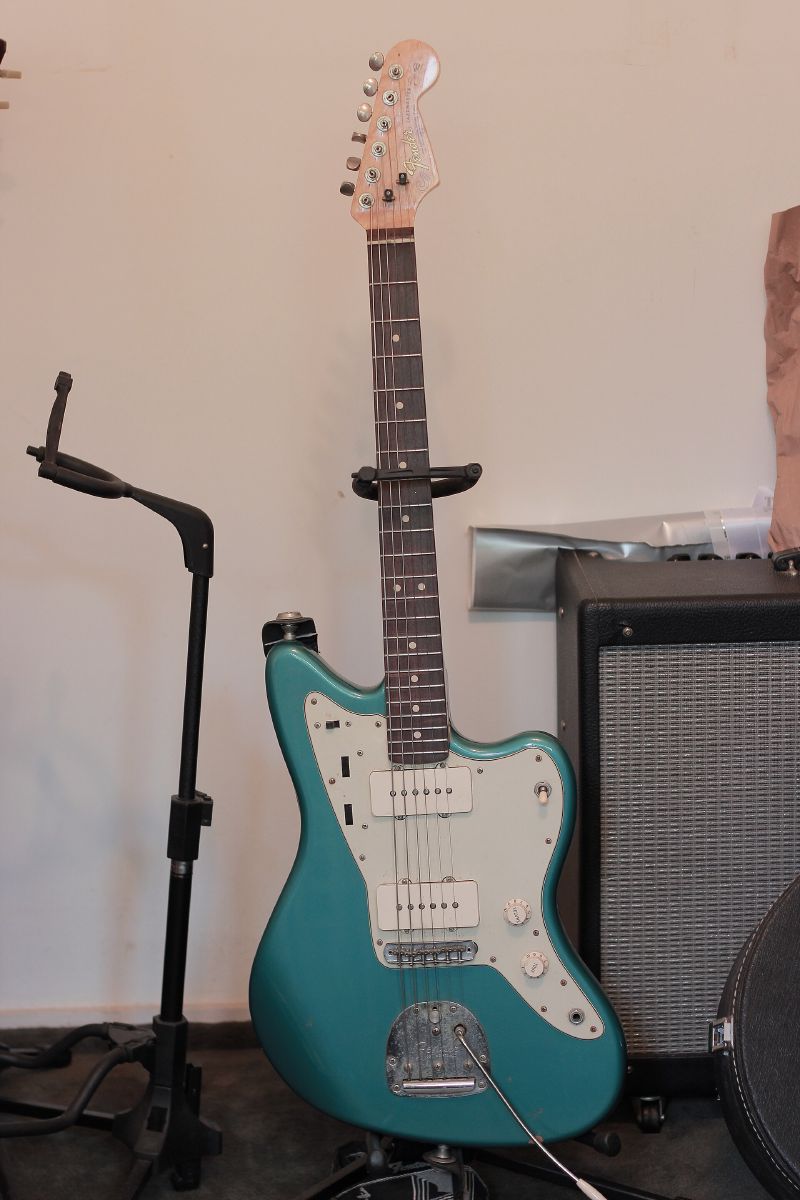
My Bloody Valentine are credited with inventing shoegaze. Asked how he got that woozy guitar sound, Kevin Shields offers only a loosely taped tremolo arm on a Fender Jazzmaster, open chords and a few effects. The rest, he says, “just happens”. He calls himself patient rather than stubborn and says he will wait ten years to make something he knows is good.
more
The band is Irish-English. Bilinda Butcher sings and plays guitar beside Shields, Debbie Googe plays bass and Colm Ó Cíosóig drums. The Guardian’s review of their November 2025 show in Manchester notes that every ticket holder got earplugs, and that it was their first tour in seven years. Shields dedicated Soon to the late Stone Roses bassist Mani, who loved it. The power failed during the song, and it failed again when the band restarted it.
Ride’s debut arrived in 1990. What’s Spinning says Nowhere, recorded with producer John Leckie, sounded clean and enormous at once, and that Andy Bell’s bass gave Vapour Trail and Seagull their weight even on modest speakers. Bell later admitted to Louder that the leap in songwriting from Ride’s second EP to the album was a big one. He eventually joined the Gallagher brothers in Oasis. Ride’s second album, Going Blank Again, reached number five in the UK and went gold.
Slowdive took the hardest knocks. Pitchfork says critics derided Slowdive and their label dropped them a week after Pygmalion arrived in 1995, which made them the scene’s most famous flameout. Louder says the press battered them, and finds it nonsensical, 30 years on, that anyone derided them so gleefully. The band named their second album Souvlaki after a Jerky Boys prank call, and Digs says it came from heartbreak, because Neil Halstead and Rachel Goswell had recently ended their relationship.
Lush brought a brighter palette. Emma Anderson and Miki Berenyi shared guitar and vocals, and Pitchfork says together they set a template for the wistful musings the genre became known for. Soon after Spooky came out, Lollapalooza’s Perry Farrell invited the London four-piece to play the festival’s main stage. Robin Guthrie of Cocteau Twins had produced their debut EP and Spooky as well. Digs hears the blend of Guthrie’s touch and their own songs getting close to the Twins’ sound.
Not every pioneer sounded like a cloud. Catherine Wheel came from Great Yarmouth, a town Pitchfork calls depressed and short on musical heritage. Singer Rob Dickinson was a cousin of Iron Maiden’s Bruce Dickinson, and drummer Neil Sims had worked on an oil rig. Their sound leaned towards riff rock, and Pitchfork admires their piled-up choruses. Louder adds Swervedriver to the list of first-wave bands that brought muscle and riffs to dreamy songs.
The Veldt belong in this story too. Tape Wounds calls the Chavis brothers pioneers by every measure of influence and innovation. Daniel Chavis says critics found their album Afrodisiac too soulful and too mixed in style, and he describes gatekeeping that he says continues today. He also says Capitol denied the band a German tour with Lush, and that Polygram denied them a 1994 European tour with Cocteau Twins. Still, he values the chance they had to play with so many of their influences.
Pitchfork also credits A.R. Kane as proto-shoegazers and calls Pale Saints’ 1992 album In Ribbons a classic. Far Out Magazine praises Pale Saints’ debut, The Comforts of Madness (1990), as a soul-stirring dream pop and shoegaze classic.
The records that defined shoegaze
The sound arrived on a single, from a band that thought it had finished. In early 1988 My Bloody Valentine had been a Dublin post-punk band, a gothic one in Berlin and a self-styled conceptual one in London, and none of it had landed. Kevin Shields says the verdict was that they were a poor copy of The Jesus and Mary Chain. They set out on what they meant to be a last tour, playing fast and loud, “like a band killing their own songs”.
Alan McGee, who ran Creation Records, had thought them close to a joke. At that tour he found himself swearing in surprise at the volume, and afterwards he offered them a deal. Shields then borrowed a friend’s guitar and found that a digital delay, with the tremolo arm held down, gave a woozy and disorientating sound. The single You Made Me Realise, with a burst of howling noise and no drums halfway through, was both praised and widely copied. A year later there were enough imitators to need a subgenre, and the name was a mockery.
Shields kept moving. Isn’t Anything (1988) opened with Soft as Snow (But Warm Inside), which shows the influence of hip-hop. The Glider EP of 1990 stirred in dance music, and the 1991 EP Tremolo drew both Brian Eno’s praise as a new standard for pop and a stream of buyers returning it to shops, sure it was faulty. The Guardian ranks To Here Knows When, from Tremolo, as the band’s best song and still baffling and magical.
Ride answered with a different idea. Nowhere (1990) pairs expansive, oceanic songs with pure pop sense, in Louder’s account, and helped set what the sound could become. No Ripcord points to the duelling guitars of Andy Bell and Mark Gardener as a way in for fans of traditional rock. MyFavoriteBands calls Vapour Trail one of the genre’s perfect singles.
Then came Loveless (1991). Digs describes the opener, Only Shallow, as four snare hits followed by a wall of sound more elephantine than a guitar. Bilinda Butcher’s voice sits snug inside the mix, as another instrument, and Shields played nearly everything himself. MyFavoriteBands credits the “glide guitar” technique, a tremolo-arm trick that makes a pitch-shifting wash. Louder says grunge has Nevermind and shoegaze has Loveless, then allows that it may overstate the case slightly.
Slowdive’s Souvlaki (1993) met a harder reception. Pitchfork’s Ned Raggett prizes it as a second album that kept its debut’s quality without repeating it. The band had thrown out an earlier batch of sessions, and the American release came out heavily delayed. It also carries two collaborations with Brian Eno. Melody Maker’s writer Dave Simpson said he would sooner drown in a bath of porridge than hear it again. Alison, the album’s one single, mixes soft vocals, crunchy riffs and looped sound, ScreenRant says.
Others filled in the map. Cocteau Twins’ Heaven or Las Vegas (1990) was the band’s commercial peak, reaching number seven in the UK and number 99 on the US Billboard 200. Lush’s Spooky (1992) peaked at number seven in the UK too. Chapterhouse’s Whirlpool (1991) laid down an early and lasting model, with the effects-driven guitars of early My Bloody Valentine and the acid-tinged dance feel of the Stone Roses. The Boo Radleys named their 1993 album Giant Steps after John Coltrane’s record, and Pitchfork hears psychedelia, guitar pop, jazz and dub in it. Pitchfork says a good half of the songs on Catherine Wheel’s Ferment are enduring shoegaze-disco classics, and that the seven-minute Black Metallic has a strong claim to be the genre’s Stairway to Heaven.
How shoegaze spread, vanished and came back
Shoegaze never stayed in London for long. Pitchfork says Lush’s Lollapalooza slot helped them break through in the United States, even though Spooky leans on intricacy more than noise. Boston’s Swirlies formed in 1990 and answered the British bands with lo-fi sound bites, noise guitar and relentless drumming, according to Far Out Magazine. Far Out calls their album Blonder Tongue Audio Baton (1993) full of endless charm. What’s Spinning adds Drop Nineteens to the American bands that brought their own version of the sound. In 2012 Treble reported that Captured Tracks planned to reissue the first two albums by Medicine.
The British bands were already drifting. Catherine Wheel’s Chrome (1993) pushed shoegaze textures towards cleaner, metallic guitar tones and clearer song structures. Treble says the Boo Radleys sat midway between their early My Bloody Valentine sound and the bright, jangly pop band they became. The Guardian’s 2013 review argues that Loveless effectively killed the movement it had inspired, because the bands that followed shrugged and either vanished or tried something else.
The press was less patient. Pitchfork dates the UK backlash against anything shoegaze to mid-1993. Digs says grunge and Britpop did the rest in the middle of the decade, though it insists the genre’s influence never faded. By the century’s end, Shfl writes, shoegaze looked finished, with the first-wave British groups mostly broken up and My Bloody Valentine in deep hibernation.
Yet pockets held on. Shfl names the American label Clairecords as a standard bearer and the Italian fanzine Losing Today as the print champion. My Bloody Valentine kept vocal fans too, from Bob Mould in his work with Sugar to the Smashing Pumpkins and Daft Punk.
The comeback had no single start. Pitchfork points to 2003, when Kevin Shields helped pick the music for the Lost in Translation soundtrack and M83 and Ulrich Schnauss added electronic interpretations. Schnauss’s second album, A Strangely Isolated Place (2003), became a foundational electrogaze release in Shfl’s view, blending blissed-out synths with pulsing beats. Pitchfork notes that The Guardian proclaimed the genre’s official return in 2007, and that The New York Times announced a new revival a decade later, sparked by reunions of Slowdive and Ride.
New scenes grew in clubs and on small labels. Shfl says the UK’s Sonic Cathedral and Club AC30 labels both grew out of increasingly popular club nights. Sonic Cathedral’s Cathedral Classics Volume One (2009) gathered its first run of seven-inch singles and showed that younger bands had picked up the sound. In New York, A Place to Bury Strangers made a monster-sounding debut in 2007, and Far Out Magazine says they earned the title of loudest band in the city. Oliver Ackermann, the group’s lead figure, also runs the pedal company Death By Audio. Meanwhile Pitchfork hears Asobi Seksu’s Citrus loaning some sunshine to shoegaze years before the wider revival that begat DIIV and Ringo Deathstarr.
Old bands came back as well. Treble listed Ride, My Bloody Valentine, Swervedriver and Chapterhouse among those that had embarked on reunion tours by 2012. The Guardian reported in 2021 that the band reformed for live shows in 2008, which pushed Shields to return to the unfinished follow-up to Loveless. The result, m b v, appeared in 2013 with almost no warning. The band’s redesigned website crashed under the demand, and a person in Indiana filed a petition on the White House website asking the Obama administration to make it work again. The Guardian said m b v often seemed as unprecedented in 2013 as the single You Made Me Realise had back in the late 1980s.
Where shoegaze stands now
Shoegaze has found a young audience, and much of it arrived through a phone. Pitchfork reported in December 2023 that Slowdive had nearly twice as many monthly Spotify listeners as My Bloody Valentine, and that the #slowdive hashtag had 235 million views on TikTok. Their 2023 album, everything is alive, was softer and more contemplative than before. SEE ROCK LIVE adds that it debuted at number nine on Spotify’s global chart of top debut albums, and that the band now sells more records than at any earlier point.
The scene had already gone global before the clips. In 2014 The Guardian found a Russian band, Pinkshinyultrablast, and a Tel Aviv band called Vaadat Charigim, and declared it a good year for the genre. It also noted that Slowdive had reformed and finally got their due after years of derision. Slowdive’s self-titled 2017 album followed a 2014 comeback tour.
Then came Wisp. SEE ROCK LIVE tells it this way: in early 2023 an 18-year-old student who did not play guitar sang over a shoegaze instrumental a friend had sent, and posted the clip to TikTok. The first video reached 100,000 views overnight, and she signed to Interscope Records before releasing a second song. Stereogum’s Eli Enis, quoted by the site, called that outcome virtually unheard of in the genre’s history. Her debut EP, Pandora, came out in 2024 and her first album, If Not Winter, in August 2025.
The figures behind the surge come from Spotify data shared with Stereogum, as SEE ROCK LIVE reports them. Shoegaze streams rose 50 percent in a year, daily searches for the genre rose more than 220 percent worldwide, and the Shoegaze Now playlist grew 800 percent. Gen Z listeners made up more than 60 percent of plays for the biggest artists in the genre. Many of the artists driving the numbers were teenagers working alone in bedrooms, some of them without a guitar, using audio workstations and sampled guitars in place of pedalboards.
The older bands took part too. Pitchfork lists Drop Nineteens’ Hard Light, released 30 years after their last album, and a solo debut from Lush’s Emma Anderson among the year’s returns. Pale Saints reissued In Ribbons for its 30th anniversary, and A.R. Kane released a sprawling box set, which also brought their albums to streaming services for the first time.
Newer bands keep stretching the idea. Pitchfork says Pittsburgh’s Feeble Little Horse caught the sweetness of My Bloody Valentine’s Only Shallow on their album Girl With Fish. Sam Fenton of the UK trio Bar Italia says they wanted to use guitars but would not call it guitar music. Jane Remover and quannnic, in Pitchfork’s reading, restored some of shoegaze’s crystalline detail through digital production. The same piece notes that vintage shoegaze tended to favour women’s voices and a certain gender fluidity.
The sound also keeps moving across genres. Consequence says the black metal bands Deafheaven and Alcest helped popularise shoegaze fundamentals in a heavy metal setting, and that emo acts now reach for reverb pedals they once avoided. The Guardian hears echoes of My Bloody Valentine in electronica and the more abstract fringes of hip-hop.
The newest wave is rougher than the last. SEE ROCK LIVE says the version of shoegaze now reaching Billboard is heavier, murkier and less polished than the studio albums of the years before, closer to the tape-hiss records that first defined the sound. It cites Rolling Stone’s look at the scene, which names Julie, whose 2024 album My Anti-Aircraft Friend pulled the sound somewhere new.
Starter guide
Hear these eight records first, in the order they came out. Each one has two trusted publications behind it.
- Isn’t Anything (My Bloody Valentine, 1988). It appears on Pitchfork’s 50 best shoegaze albums of all time and NME’s 10 best shoegaze albums ever.
- Nowhere (Ride, 1990). Pitchfork counts it among the 50 best shoegaze albums, and NME among the 10 best.
- Loveless (My Bloody Valentine, 1991). Pitchfork calls it the defining statement of shoegaze, and NME puts it among the 10 best shoegaze albums ever.
- Just for a Day (Slowdive, 1991). It appears on Pitchfork’s 50 best shoegaze albums and NME’s 10 best.
- Going Blank Again (Ride, 1992). Pitchfork counts it among the 50 best shoegaze albums, and NME among the 10 best.
- Souvlaki (Slowdive, 1993). It appears on Pitchfork’s 50 best shoegaze albums and NME’s 10 best.
- A Storm in Heaven (The Verve, 1993). Pitchfork counts the Verve’s debut among the 50 best shoegaze albums, and NME among the 10 best.
- m b v (My Bloody Valentine, 2013). Pitchfork counts it among the 50 best shoegaze albums, and the Guardian named it one of the best albums of 2013.