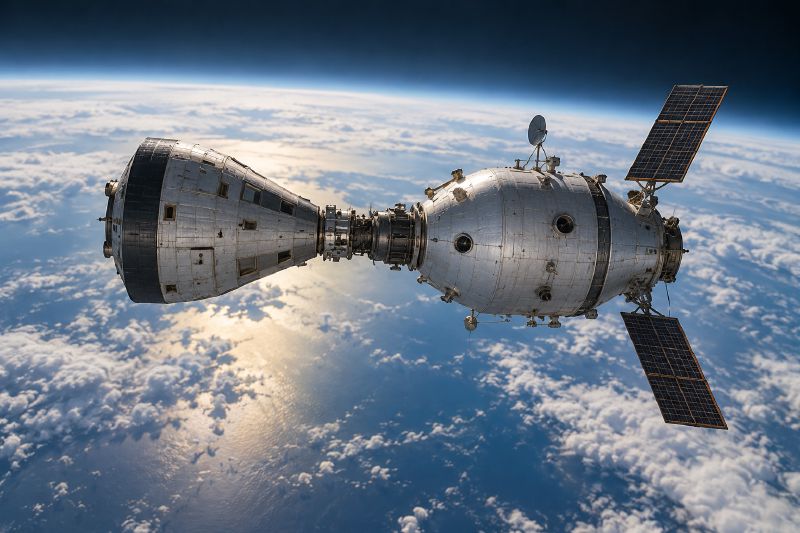
NASA built Skylab out of hardware the Moon programme no longer needed. When the Apollo landings were cut short, surplus Saturn V rockets became available, and that made a heavier, better-equipped station possible. The main living and working space, the Orbital Workshop, was a converted Saturn upper stage. NASA calls the result America’s first space station.
Where the idea came from
NASA centres had floated station ideas for years, but the race to the Moon came first, according to Space.com. As Apollo wound down, NASA set up the Apollo Applications Program to fly unused Moon hardware. Wernher von Braun, the Apollo rocket engineer, proposed building a station from an empty rocket stage, and the design shifted over the years as funding shrank.
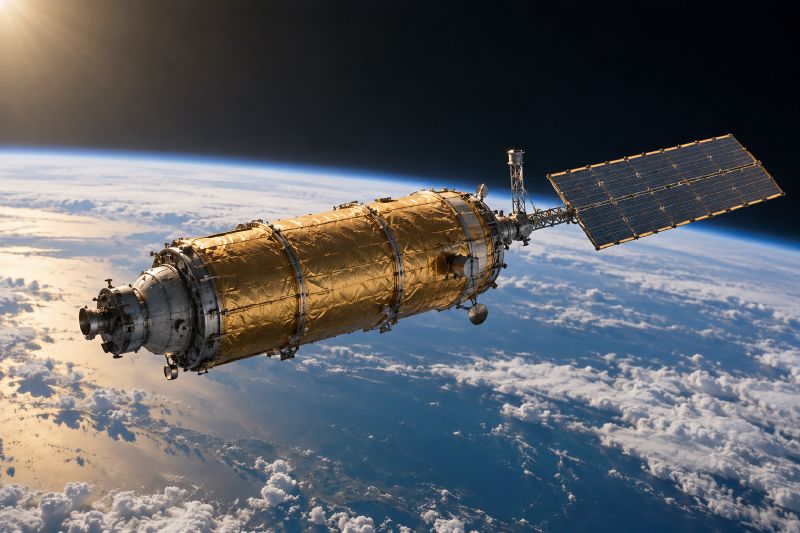
The stage that became the workshop was a modified Saturn 4B, fitted out to keep three people alive for up to 84 days at a time, according to the NASA catalogue entry that Astronautix reproduces. It held exercise gear, a galley and a large share of the experiments. Bolted to it were an airlock for spacewalks and a docking adapter with two ports. The spare port meant a rescue capsule could dock if the crew’s own spacecraft failed. On top sat the Apollo Telescope Mount, a solar observatory that also pointed the whole cluster.
The launch that almost ended it
A two-stage Saturn V lifted the uncrewed station into orbit on May 14, 1973. About 63 seconds in, the shield meant to guard against micrometeoroids and to keep the station cool came loose. It tore away with one solar array, and the other array jammed. The remaining arrays produced only 25 watts at first, NASA reported.
Without the shield, temperatures inside climbed to 52 degrees Celsius. Engineers spent ten days working out how to make the workshop habitable. The first crew launched on May 25, 1973, and put up a substitute shield of mylar.
What three crews did up there
Three crews of three visited between May 1973 and February 1974. Their missions ran 28, 59 and 84 days, according to NASA’s HEASARC archive. Space.com gives the middle mission as 56 days. The 84-day stay was an American record until the shuttle era.
The crews ran about 270 experiments, from solar astronomy to the body’s response to long weeks in weightlessness. The German Aerospace Center counts more than 177,000 solar telescope images and more than 46,000 pictures of Earth. The last crew also observed Comet Kohoutek.
How it came down
NASA planned to boost Skylab higher on the third space shuttle flight. The shuttle ran late, and the atmosphere dragged harder than expected. Skylab fell on July 11, 1979. Debris landed in the Indian Ocean and across thinly settled parts of Western Australia.