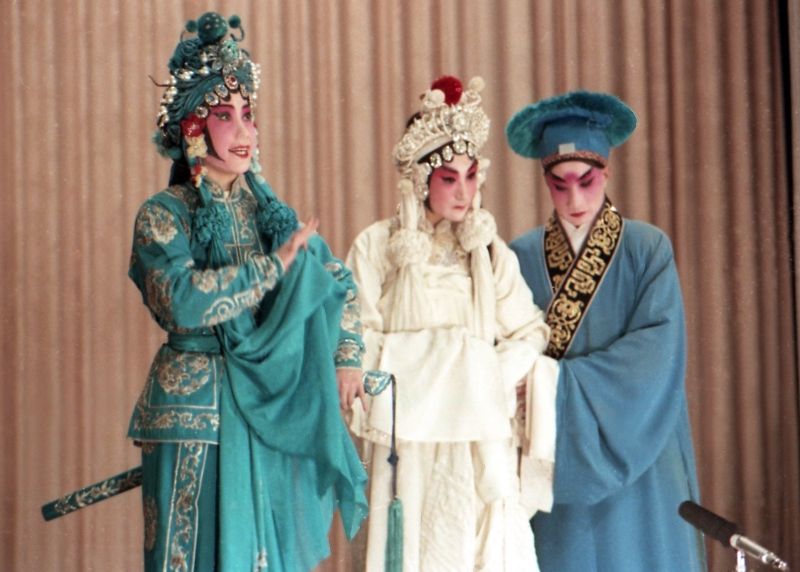
Where the musical came from
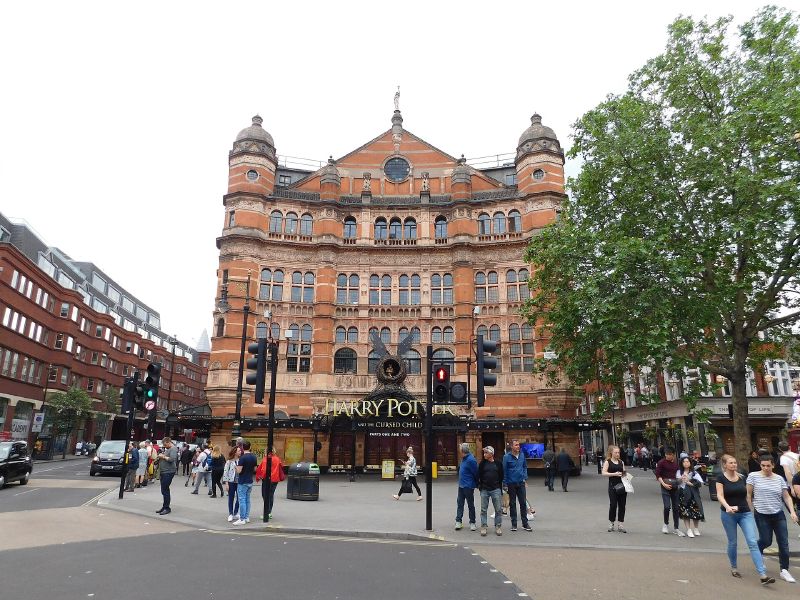
more
No one person made the stage musical, but two men started it. Jerome Kern and Oscar Hammerstein II gave Broadway a show with real characters and a plot, at a time when revues were the norm. Playbill starts its list of Broadway’s most-revived musicals with Show Boat, which opened on December 27, 1927. Playbill says many credit it with creating modern musical theatre.
Before it, Broadway ran on lighter fare. Ben Rimalower, writing for Playbill, describes vaudeville-style revues with little in the way of characters or plot. Playbill also notes that Gilbert and Sullivan once dominated early Broadway, often in several productions at once, because no copyright law stopped bootleg stagings.
The 1920s are now remembered for jazzy musical comedy. The historian Todd Decker points to George Gershwin’s tunes for Fred and Adele Astaire in Lady, Be Good! of 1924 and Funny Face (1927). Yet the longest runs of that decade belonged to operettas, sung by performers with trained voices.
The boat that carried both traditions
Jerome Kern and Oscar Hammerstein II built Show Boat from Edna Ferber’s novel, and it opened at the Ziegfeld Theatre. It follows Cap’n Andy’s troupe of river performers: his daughter Magnolia, her gambling husband Gaylord Ravenal, the mixed-race actor Julie, and the stevedore Joe. Playbill says it fused musical comedy with operetta to make the first true dramatic piece of musical theatre.
The subject was racism, and Rimalower credits Show Boat as the first Broadway musical where Black and white performers shared the stage. It ran for 572 performances, closing in 1929.
You can hear the two traditions side by side in the score. Kern and Hammerstein wrote Ol’ Man River for Paul Robeson, who first turned the part of Joe down. Jules Bledsoe introduced the song on stage in December 1927, and Robeson played Joe in London within months. Meanwhile the romantic lead, the operetta star Howard Marsh, sang at least three high B-flats a night, each one followed by a blackout meant to cue applause.
Helen Morgan, a Prohibition nightclub singer, played Julie. Her number Bill was a Kern song from 1918, revised to suit her. It became so famous that ticket buyers at the Ziegfeld box office were known to ask whether this was the show where she sang about her poor Bill.
A score you could take home
Show Boat also changed how a musical reached people who never saw it. In 1932, the year of its first Broadway revival, the Brunswick label issued four specially recorded 78s of its songs, conducted by Victor Young. Decker calls it the first time a Broadway score became a unified album for home listening. Between 1949 and 1966, at least 20 studio-cast Show Boat albums came out in the United States and Britain.
Rivals from Europe and the opera house
Other models were arriving too. The Threepenny Opera, Kurt Weill and Bertolt Brecht’s reworking of John Gay’s 1728 The Beggar’s Opera, opened in Germany in 1928. Its first Broadway run, in 1933, lasted 12 performances. It only found its American audience in 1954, when Marc Blitzstein’s adaptation played off-Broadway and turned Mack the Knife into a standard.
George Gershwin’s Porgy and Bess, billed as a folk opera, opened on Broadway in 1935 and had a short run. Summertime caught on at once, though the full work took decades to win its place. Houston Grand Opera’s 1976 production restored the complete score, and Porgy and Bess now leads Playbill’s count of Broadway’s most-revived musicals, with seven revivals.
Show Boat kept coming back as well. Its original orchestra parts were lost for decades until they turned up in a Queens warehouse in the early 1980s. Hal Prince’s 1994 revival won six Tony awards in 1995 and ran for 947 performances.
The people who taught songs to tell the story
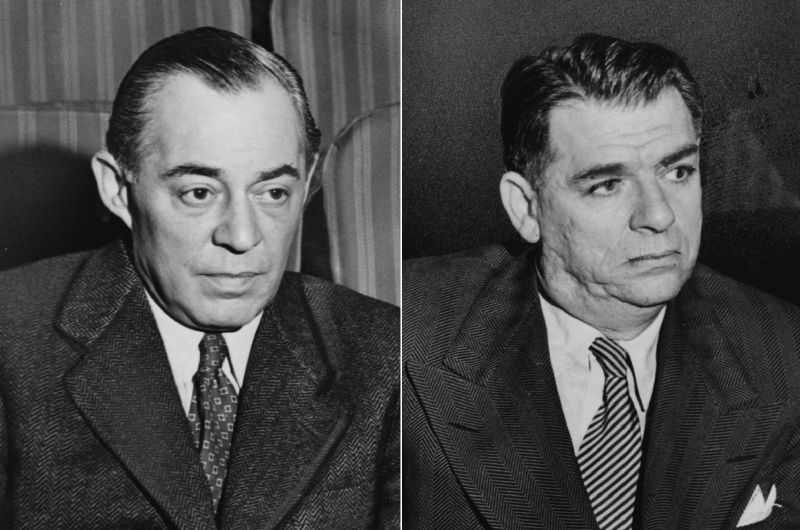
If Show Boat opened the door, Richard Rodgers and Oscar Hammerstein II walked through it. Oklahoma! opened on Broadway on March 31, 1943, as their first major collaboration, and ran for more than 2,000 performances. Cary O’Dell of the Library of Congress counts it among the first musicals whose songs drove the plot rather than decorating it.
more
Playbill puts the change in plainer terms. Every number in Oklahoma! either moves the story on or shows who a character is. There are no “cigarette songs”, the old filler numbers during which you could step out for a smoke and miss nothing. Agnes de Mille’s choreography, which O’Dell calls landmark, carried the story into dance as well.
The record that made the cast album
Oklahoma! also gave Broadway its permanent souvenir. Until then, nobody in America had recorded a show’s entire original cast, chorus and orchestra under its own conductor. Jack Kapp, the founder of Decca, did exactly that, and the first set of six 78s came out on December 2, 1943. It sold well enough to reach Billboard’s best-sellers chart, and the state of Oklahoma adopted the title song in 1953. O’Dell credits the set with making the original cast album the norm.
Goddard Lieberson, the Columbia Records producer, took the idea further. On South Pacific in 1949 he reshaped the show for listeners. He replaced its silent final image with a sung exchange from the first act. Laurence Maslon, writing for the Library of Congress, calls Lieberson the most admired producer of original cast albums.
Hammerstein’s pupil
Hammerstein’s most lasting student was Stephen Sondheim. After his parents divorced, Sondheim’s mother moved them near the Hammersteins’ farm in Pennsylvania. The teenager came to treat Oscar as a substitute father. He showed Hammerstein a musical he had written called By George. Hammerstein told him it was terrible but talented, then showed him where he had gone wrong.
The Guardian records one lesson Sondheim said Hammerstein taught him. Because music is so rich an art already, a lyric should underwrite rather than overwrite. Sondheim went on to see himself as Hammerstein’s heir.
The West Side Story team
Jerome Robbins first imagined a modern Romeo and Juliet in 1949. The early version set Jewish and Gentile gangs against each other on the East Side. By the time it opened on September 26, 1957, the feud belonged to the Puerto Rican Sharks and the white Jets. Arthur Laurents wrote the book, Leonard Bernstein the music and Sondheim the lyrics, and the show ran for more than 700 performances.
Sondheim was 27. Robbins’s dances asked something new of the company. There was no separate dancing chorus, so the leads had to act, sing and dance.
Two years later most of that team made Gypsy for the producer David Merrick. Laurents wrote the book, Jule Styne composed the score with Sondheim’s lyrics, and Robbins directed. Merrick wanted only Ethel Merman as Mama Rose, and the show took only four months to write. It opened in New York on May 21, 1959. Walter Kerr of the New York Herald Tribune called it “the best damn musical I’ve seen in years”.
Prince and Sondheim
Sondheim met the director Hal Prince at the premiere of South Pacific. Between 1970 and 1979 they made Company, Follies, A Little Night Music, Pacific Overtures and Sweeney Todd, all directed by Prince. Thomas Kail, who later directed Hamilton, looks back on that decade and says it is never happening again.
Unlike the old teams of Rodgers and Hart or Lerner and Loewe, Sondheim wrote words and music himself. Sondheim died in November 2021, aged 91. Andrew Lloyd Webber called him “the musical theatre giant of our times”.
The shows that rewrote the rules
A handful of shows changed what a musical could be. In 2014 Ben Rimalower picked the Broadway musicals that shaped the art form for Playbill. His list runs from Show Boat and Oklahoma! to Cabaret, Company, A Chorus Line and In the Heights. Each one did something its predecessors had not.
When songs became scenes
After Oklahoma!, Rodgers and Hammerstein took the next step with Carousel and blurred song and dialogue in long stretches of music, lyric and speech, above all the 12-minute “bench scene”. In Rimalower’s reading, the songs there are the show’s most dramatic moments rather than breaks between them.
Cole Porter’s Kiss Me, Kate came from an unlikely place. In the early 1940s Porter suffered severe pain from a 1937 riding accident, and his agent said people now saw him as “old fashioned”. The producer Arnold Saint Subber got the idea from a married couple, Alfred Lunt and Lynn Fontanne. He watched them bicker offstage while starring in The Taming of the Shrew. Bella and Sam Spewack wrote a play-within-a-play around it, and Porter wrote the score.
It opened on Broadway on December 30, 1948. In 1949 it won five Tony awards, including the first ever Tony for Best Musical. Lynn Laitman Siebert, writing for the Library of Congress, calls it one of the finest musical comedies ever written.
The long-playing record
Kiss Me, Kate also arrived just as the record business changed. In June 1948 Columbia’s engineers produced the 12-inch long-playing disc, which held up to 22 and a half minutes a side. The Kiss Me, Kate cast album sold more than 100,000 copies in its first month, Columbia’s best seller to that date. South Pacific followed in 1949, and its cast album held the number one spot for 63 weeks. Maslon says no other release did more to bring the LP into American homes.
The concept musical
Oklahoma! started a generation of book musicals, in which songs advance the plot, and Cabaret broke the pattern. Rimalower calls it the first post-book musical, built around a central metaphor rather than a plot that songs push along. The numbers in its Kit Kat Club stand apart from the plot and comment on it. He notes earlier examples, The Threepenny Opera and Lady in the Dark, but credits Cabaret with making the form dominant.
Company pushed the idea to its limit. Rimalower calls it the ultimate concept musical, because there is no plot to advance. It opens and closes on the same moment, Robert’s 35th birthday. Company and Follies, which opened in New York a year apart, are counted among Sondheim’s best.
A Chorus Line, in 1975, turned the form inside out. Rimalower notes that it stripped away almost all scenery and costumes. It grew from a workshop that drew on dancers’ own lives, and it offers a glimpse at the audition process.
Hits, jukeboxes and corporations
Not every turn was artistic. Rimalower traces the jukebox musical to Ain’t Misbehavin’, which began in a small cabaret space with five performers singing Fats Waller songs. He calls Evita the first British mega-musical: its 1978 West End staging was copied for Broadway and then for productions all over the world. Disney’s Beauty and the Beast, in 1994, began an era of corporate producers.
He ended his list on In the Heights, which won the 2008 Tony award for Best Musical as Broadway’s first hip-hop musical. In 2025 the Library of Congress added the cast album of Lin-Manuel Miranda’s Hamilton to its National Recording Registry. Released on September 25, 2015, the album had sold 10 million copies by 2023.
An older family tree
Behind all of it sits a Victorian partnership. The lyricist Johnny Mercer once wrote “We all come from Gilbert”. Composers from Noël Coward and Ivor Novello to Sondheim and Lloyd Webber have acknowledged Arthur Sullivan’s influence. Even Hamilton carries a nod to “A modern Major General”.
Audiences have their own canon. When WhatsOnStage readers voted for their favourite musicals in 2023, Sondheim had more shows in the top 100 than anyone. He had nine as composer and lyricist and two more as lyricist, and Lloyd Webber came next with eight.
How the musical crossed the Atlantic and changed its sound
For its first decades the musical travelled mostly on records and in cinemas. From Oklahoma! onwards, Maslon writes, Rodgers and Hammerstein’s songs were pure gold for the record industry. Bing Crosby and Frank Sinatra were among the singers who covered them. Oklahoma! toured the United States, went abroad and became a hit film in 1955. The 1961 film of West Side Story produced a soundtrack that spent 54 weeks at number one.
Its song Somewhere outgrew the show. Renée Fleming, Tom Waits, the Pet Shop Boys and Barbra Streisand are among those who have recorded it. O’Dell notes that people who have never heard of West Side Story still know the song.
The argument over Rodgers and Hammerstein
Success brought an argument that still runs, and a 2021 Guardian essay set out both sides. David Hajdu argued that Rodgers did his best work with Lorenz Hart, and that anyone tempted to dismiss Rodgers as “theme-park Americana” is thinking of the Hammerstein shows. Mark Steyn called Carousel, Oklahoma! and South Pacific “radical, revolutionary, trailblazing”. The essay judges the early shows pioneering, but finds that The King and I (1951) and The Sound of Music (1959) lost their edge.
It was not always obvious they would win. The producer Mike Todd’s verdict on Oklahoma!, “No girls, no gags, no chance”, now reads as one of show business’s worst predictions. The writer finds the pair’s real legacy in their belief that a score should hang together as a whole. That idea, the essay argues, passed to writers as different as Sondheim and Lloyd Webber.
The British invasion
In the 1980s the traffic reversed. The Phantom of the Opera opened on Broadway in 1988, already a hit in London. When it closed in New York in 2023, after 35 years, no show had run longer on Broadway. More than 140 million people have seen it worldwide, and it has grossed more than $6bn.
Lowell Hershey played trumpet in 10,059 of its Broadway performances. He credits its producer, Cameron Mackintosh, with changing how Broadway sells shows. He also suggests the “British invasion” turned a struggling Broadway into a tourist destination. Critics were less kind. Frank Rich of the New York Times called the score “so generic” that most songs could be swapped between characters. The author Ben West calls the production “a Harold Prince triumph first and foremost”.
Les Misérables began the same way. It opened at the Barbican in London in October 1985, jointly produced by the Royal Shakespeare Company and Mackintosh. The Guardian’s critic reviewed it badly at the time. It has since been seen by more than 130 million people in 57 countries and 22 languages. Mackintosh says its seed was his revival of Oliver!, and that Alain Boublil thought of the street urchin Gavroche while hearing the Artful Dodger sing Consider Yourself.
Sondheim, meanwhile, often found London kinder than Broadway. The revue Side by Side by Sondheim was a big West End hit in 1976. English National Opera staged Pacific Overtures in 1987, and Covent Garden staged Sweeney Todd in 2003. British critics, the Guardian’s obituary notes, said he had created “the intelligent musical”.
New sounds
In New York, the next shift came from a downtown writer. Jonathan Larson’s Rent opened off-Broadway in 1996. Larson had died of an aortic aneurysm the night before, aged 35. Rent ran on Broadway for 12 years and took more than $270m. Lin-Manuel Miranda saw it as a teenager and told the Guardian it was when he first believed he could write a musical.
His Hamilton opened in 2015. It won 11 Tony awards and a Pulitzer prize and took more than $850m. The Guardian’s review of its London opening found that rap, hip-hop and R&B suited a story about the birth of a nation. The review also heard Sondheim in it: The Room Where It Happens refers to Someone in a Tree from Pacific Overtures. Thomas Kail, Hamilton’s director, goes further and says there would be no Hamilton without Sweeney Todd.
The sound kept widening. A 2020 WhatsOnStage round-up of mould-breaking shows ran from grime in Poet in Da Corner to the folk of Anaïs Mitchell’s Hadestown. It also took in the Afrobeat of a show about Fela Kuti. Richard Hawley’s songs for Standing at the Sky’s Edge tell the story of a Sheffield housing estate.
Where the musical stands now
The musical today runs on two tracks: new shows chasing new audiences, and old shows staged as if for the first time. Revivals alone are a steady trade. Cabaret’s 2024 Broadway revival was its fourth, and Oklahoma!, Guys and Dolls and Fiddler on the Roof have each had five.
more
Old shows, new readings
Directors now take the classics apart rather than dusting them off. In 2018 Marianne Elliott staged Company in the West End with its lead rewritten as a woman, Bobbie, with Sondheim’s approval. The Observer’s critic called it a remaking rather than a revival, and gave it five stars. Patti LuPone sang The Ladies Who Lunch.
Daniel Fish went further with Oklahoma!, in a 2019 production at New York’s Circle in the Square, set in a small-town community centre. The audience ate chilli at the interval. When it reached London’s Young Vic, the Guardian’s reviewer found the score sounded as if it had been written yesterday. Fish and Jordan Fein did it without changing a word, by making the audience watch and listen to scenes usually hurried past.
Revivals keep finding new meaning in single songs too. In Manchester, Sarah Frankcom gave Somewhere to Anybodys, the tomboy on the edge of the Jets. Ivo van Hove’s Broadway version of West Side Story kept the song but cut the ballet that goes with it.
Back from lockdown
As British theatres reopened after the pandemic, the Observer predicted that musicals would dominate. Nica Burns co-owns six West End theatres. She told the Observer that musicals let people sing and dance round their kitchens, which a play cannot do. She believes this is a golden age, led by a new generation of writers. Six, a modern feminist retelling of Henry VIII’s wives, toured the UK as venues reopened.
Ryan McBryde of the Mercury theatre in Colchester traces the boom back further. He credits Rob Marshall’s 2002 film of Chicago with proving that musicals could make money, and Glee with reaching teenagers. Giles Terera, the first London Aaron Burr, says Hamilton challenged everyone to rethink how they tell stories.
The gains are uneven. Data from 2016 showed casts and audiences still lacked diversity. Miranda apologised after critics said the film of In the Heights under-represented dark-skinned Afro-Latino actors.
A life on the line
A Chorus Line shows how much and how little has changed for the people on stage. Its stories came from real Broadway dancers, recorded by Michael Bennett in late-night sessions. Nikolai Foster revived it at Leicester’s Curve in 2021. His Zach, Adam Cooper, had spent the shutdown on universal credit. Pay still differs across the Atlantic. The dancer Ashley Andrews says a Broadway ensemble member in a long-running show might earn $2,700 a week, against £700 in London.
What the audience chooses
When WhatsOnStage readers ranked musicals in 2023, the results spanned the whole history. West Side Story placed fifth, and Hamilton entered the list for the first time at fourth. The Phantom of the Opera came second, and Come From Away reached ninth.
The editors admitted the list follows the news, so a recent revival lifts a show. The editors suggest Company rose because of Sondheim’s death and its West End reimagining.
The Playbill critic who listed the shows that shaped the musical ended on a question in 2014. He wondered whether hip-hop, a form built for storytelling, would find a home on Broadway. Hamilton opened the next year.
Starter guide
Each of these eight shows has two trusted publications calling it a classic, a landmark, a masterpiece or one of the greatest. See or hear them first.
- Oklahoma! (Richard Rodgers and Oscar Hammerstein II, 1943). A Guardian essay calls it a landmark in musical theatre, and a Library of Congress essay calls it a classic musical.
- Kiss Me, Kate (Cole Porter, 1948). A Library of Congress essay calls it Porter’s acknowledged masterpiece, and WhatsOnStage calls it a classic.
- West Side Story (Leonard Bernstein and Stephen Sondheim, 1957). A Library of Congress essay calls it a landmark show, and the Guardian counts it among Broadway’s theatre classics.
- Gypsy (Jule Styne and Stephen Sondheim, 1959). Variety calls it one of the greatest theatre masterpieces of the 20th century, and the Guardian counts it among Broadway’s theatre classics.
- Fiddler on the Roof (Jerry Bock and Sheldon Harnick, 1964). The Guardian calls it a musical classic, and WhatsOnStage counts its 2024 London revival among the revivals of classic American musicals.
- Company (Stephen Sondheim, 1970). Variety calls it one of the 20th century’s greatest musicals, and the Guardian names it among Sondheim’s masterpieces.
- Sweeney Todd (Stephen Sondheim, 1979). The Guardian calls it possibly the greatest stage musical of the 20th century, and Variety calls it Sondheim’s masterpiece.
- Hamilton (Lin-Manuel Miranda, 2015). Variety called it a true landmark on its Broadway opening, and the Guardian calls it probably the greatest musical of the 21st century so far.