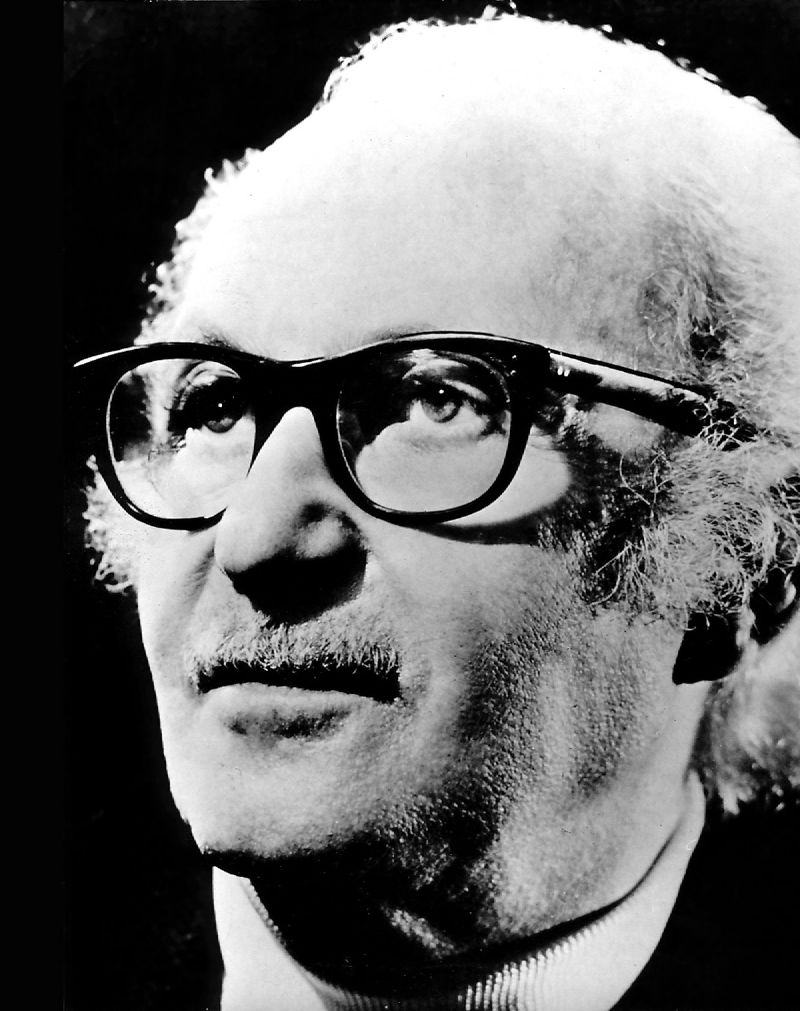
Lee Strasberg took Konstantin Stanislavski’s system for building a character and narrowed it to a single tool: emotional truthfulness. Strasberg, who taught Marlon Brando, Montgomery Clift and John Garfield, coined the phrase “the Method” for his version of it.
more
Stanislavski, a Russian actor, director and theorist, had spent his working life refining a much broader system for psychological realism on stage. Born Konstantin Sergeievich Alexeyev, he changed his name to spare his wealthy merchant family the disapproval a career in theatre might have brought them. With Vladimir Nemirovich-Danchenko, he founded the Moscow Art Theatre after a single meeting between the two men that lasted 18 hours. Stanislavski kept refining his ideas about acting until his death in Moscow in 1938, by which point he was, in Callow’s words, “weighted down with international honours”.
Strasberg’s version, the theatre critic Simon Callow has written, elevated one part of that system, emotional truthfulness, into the whole theory, ignoring the constant development that had preoccupied Stanislavski for decades. Callow calls it a “crude reduction” of the original.
Two teachers, one studio
The Actors Studio, run by the director Elia Kazan, became the base for this American version of Stanislavski’s ideas. Stella Adler, another teacher there who followed Stanislavsky closely, is credited with pioneering “method acting” in the US, paving the way for actors including Paul Newman, Robert De Niro and Dustin Hoffman.
Brando trained under Adler at Kazan’s studio after leaving small-town life behind. He was born in Nebraska in 1924 and had already been expelled from several schools and a military academy before he arrived in New York. He made his screen debut in 1950, playing a paraplegic veteran in The Men, a role he was reported to have prepared for by spending a month lying in bed at a veterans’ hospital.
A year later he played Stanley Kowalski in Elia Kazan’s film of A Streetcar Named Desire, a role he had already performed on Broadway in 1947. It earned Brando the first of four consecutive best actor Oscar nominations. He won his first Oscar in 1954, for On the Waterfront, in which he played a washed-up boxer, Terry Malloy. He moved on to riskier parts, such as the 1955 musical Guys and Dolls, where he sang, and 1958’s The Young Lions, as a Nazi officer, which brought a fifth nomination. His career hit a low with the 1962 remake of Mutiny on the Bounty, which ran over budget partly because of his behaviour on set.
Why “the Method” stuck to American film
The popularity of 1950s film stars trained this way, Brando, Clift and Garfield among them, gave wide currency to Strasberg’s reduced version of Stanislavski’s system.
Stanislavski’s influence had already reached British theatre by a separate route, taught in drama schools from the 1920s and embraced by actors including John Gielgud, Peggy Ashcroft and Michael Redgrave. Paul Scofield took up the same approach after the Second World War. Laurence Olivier, notably, did not.
But it was Strasberg’s compressed, single-idea version that carried the name “the Method”. Brando himself, decades into his career, said an actor owes the public one thing only: not to “bore them”.
Brando’s own career kept testing that idea long after Streetcar and Waterfront. He won a second Oscar in 1972 for The Godfather, playing Don Corleone. He sent an actress to the ceremony in Native American dress to refuse the award, in protest at Hollywood’s treatment of Native Americans. He went on to demand large fees for supporting roles rather than lead parts, taking a small part in 2001’s The Score for a $3m payday.