Where survival horror came from
more
Survival horror is the genre that makes you weak on purpose. When Capcom released Resident Evil in 1996, the new PlayStation and Saturn were selling the bright arcade rush of Daytona and Tekken, and games were about power. Resident Evil was about vulnerability. Thirty years on, IGN calls survival horror the dominant format for anyone looking to be scared by a game.
IGN boils the genre down to four conditions:
- the balance of power favours the enemy
- you explore maze-like spaces and solve puzzles
- resource management that often puts you at risk
- a pursuer or an oppressive place keeps up the pressure
None of that arrived in one piece. It came from a film, a Famicom cartridge, a French adventure game and a Japanese stalker with a pair of shears.
A haunted house on the Famicom
The story starts in 1989 with Sweet Home, a Japanese horror film in which a documentary crew visits an old mansion and finds a terror rooted in a family tragedy. Capcom made a role-playing game of it the same year for the Famicom, the Japanese version of the Nintendo Entertainment System. Its players searched a haunted mansion for valuables belonging to a mysterious artist. It did modest business in Japan and never came out anywhere else.
Tokuro Fujiwara directed it, and he never let the idea go. Alex Aniel, who wrote the Resident Evil history Itchy, Tasty, told the Guardian that Fujiwara believed horror could become a game genre of its own. He was not satisfied with how crudely Sweet Home had shown it, so he waited for hardware good enough to try again. The original PlayStation was that chance. Aniel puts it plainly: “We have Tokuro Fujiwara to thank for the existence of Resident Evil.”
How much of Sweet Home reached Resident Evil is disputed. The Guardian argued in 2016 that Resident Evil is widely seen as a 3D adaptation of Fujiwara’s design. The criss-crossing map, the puzzles and characters who can die after one wrong decision all carried over, and Chris and Jill’s lighter and lock pick nod to it. A GamesRadar retrospective disagrees. It says little beyond the mansion setting survived, and that a French game mattered more.
The French game in the attic
That game was Alone in the Dark, made by Infogrames and released in 1992. It began as an adaptation of Chaosium’s Call of Cthulhu tabletop game, but the licence was revoked before release and the name changed. You play Emily Hartwood or Edward Carnby, exploring the Derceto mansion after a death by hanging there in 1924.
Its supplies are thin. The whole game holds two guns with two dozen bullets between them, plus a couple of first-aid kits. Monsters even crash through the windows, years before Resident Evil’s zombie dogs did the same. Shinji Mikami, who would direct Resident Evil, played it and fell for its fixed camera angles. He told Le Monde in 2014 that without it, Resident Evil would probably have become a first-person shooter.
Clock Tower and the thing that follows you
One more ancestor came out a year before Resident Evil. Clock Tower was a 1995 Super Nintendo game, released only in Japan. You play Jennifer, a teenage orphan stranded in a manor, pointing and clicking through its oppressive rooms. Hunting her is Scissorman, a murderous child carrying a pair of shears.
IGN thinks Clock Tower perhaps left a bigger mark on the genre than Sweet Home, because it gave survival horror the stalker: an enemy you can barely slow down, who is always somewhere nearby. The stalker became a fixture of the genre, from Resident Evil’s Nemesis to Alien: Isolation’s xenomorph. The Guardian’s pick of its scares is Scissorman leaping out of a swimming pool seconds after a girl drowns.
The designers who built the haunted house
In 1993 Capcom put a young producer named Shinji Mikami in charge of a horror project inspired by Sweet Home. He kept the haunted mansion and swapped its ghouls for zombies, mutants and monsters. For those he drew on George A Romero’s Dead trilogy and on Alone in the Dark. His heroes were an experienced Swat team, sent to investigate disappearances at a rural mansion owned by a sinister company called Umbrella.
more
When word of the game, called Biohazard in Japan, began to spread in 1995, games journalists noticed how far it sat from the trends of the day. The Guardian’s 1990s list credits Mikami with merging exploitation cinema, expressionism, psychology and sharp puzzle design into one package.
Mikami, the quiet one
Mikami has a reputation as a hard interview. When the Guardian met him in 2014, its writer described him as quiet and understated rather than rude, with short answers that leave reporters hunting for survival horror’s origins frustrated. In his own studio, near the end of a four-year project, he was open and friendly.
He had firm views on what the genre needs. Co-operative play was the fashion of 2014, and Mikami thought it a separate experience from horror. “Horror games are most scary when you’re by yourself,” he said. As a boy he wanted to be a Formula One driver, and he once worked on a Capcom F1 game that was later cancelled. So the Guardian suggested a survival horror driving game, where petrol is the scarce resource rather than bullets. Mikami thought about it and replied that the Colin McRae rally games on the PlayStation had already come close to that structure.
Kamiya and the sequel
Hideki Kamiya directed Resident Evil 2 and Resident Evil Zero. Aniel says Kamiya’s biggest inspiration came from Alien, and above all from its sequel, Aliens. Aniel’s example is Resident Evil 2’s G-virus, which plants a parasite inside its victims that later tears its way out. The Guardian found his game lusher and more cinematic than the first, with well-directed cutscenes and nods to the Alien and Die Hard films. Kamiya went on to lead Devil May Cry, Viewtiful Joe and Bayonetta.
Konami’s answer
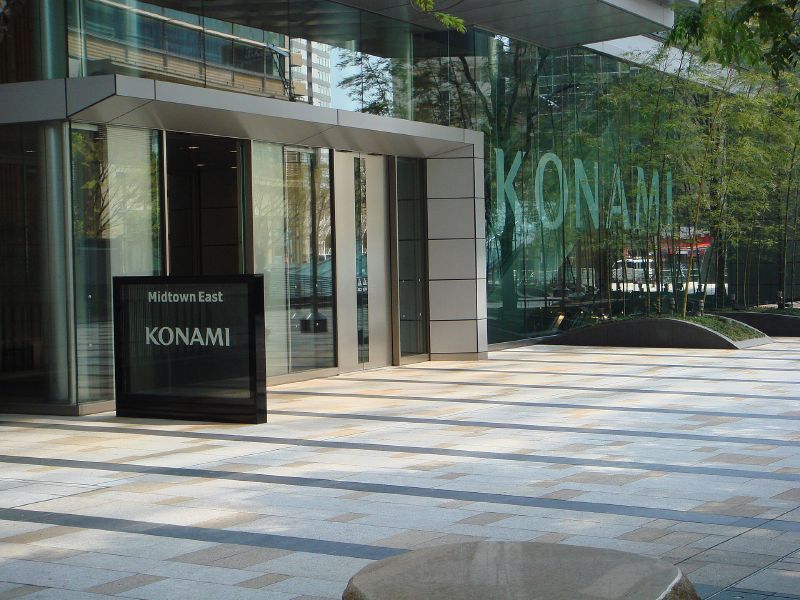
Konami’s first attempt at the genre went somewhere else entirely. Where Capcom made campy zombie horror, Silent Hill made dread. Its hero, Harry Mason, is an ordinary man searching a fog-filled town for his missing adopted daughter.
Silent Hill gave players a true 3D town where Resident Evil used static, pre-rendered backdrops. The hardware of the day struggled to draw distant scenery, so the town was buried in thick fog to hide the limit. IGN calls that fog perhaps the best match of technology and tone it has seen in a game, and it became the series’ signature look. Both series were third-person survival horror from Japanese studios, so players have treated them as rivals since the original PlayStation.
Its sequel, Silent Hill 2, came from Konami’s Team Silent around the turn of the millennium. Silent Hill pioneered the genre’s psychological corner, and its sequels and remakes count among the most haunting games ever made, by IGN’s reckoning.
The games that wrote the rules
Critics still disagree about which of the early games is best, and even IGN’s two rankings crown different games: Resident Evil 2 on one, Silent Hill 2 on the other.

more
Resident Evil, 1996
IGN puts it bluntly: without Resident Evil, the genre would not exist. Isolation, scarce supplies, constant dread and the jump scare all came from it, by IGN’s account. Clock Tower and Sweet Home sketched the blueprint first, but Resident Evil carried the idea to a mass audience. The Guardian ranks it 12th among the greatest games of the 1990s.
The star was the house. The Guardian’s 2016 reading of the first game is that the mansion mattered more than the panicking Stars officers inside it. It was built for reuse, so players crossed it again and again and opened up new rooms as they went. That solved a technical problem at a time when 3D spaces were new and expensive to draw.
Its limits were the point. The characters turned like tanks, the guns were inaccurate, and the dialogue was stilted, which made the game feel like starring in your own cult horror video. Capcom borrowed the tricks of schlock cinema, using expressionist camera angles to unsettle the player and hide a zombie in the corner of a room. And then there were the dogs. When the zombie hounds came through the corridor windows, the Guardian called it the mother of all jump scares.
The Guardian’s 30th-anniversary piece sums up the formula in three words: tension, omission and restriction. Ammunition, save points and healing items are rationed, and the inventory holds very little, so characters play as victims rather than heroes.
Resident Evil 2, 1998
Two years later came the sequel. The Guardian’s review of the 2019 remake calls it the best game in the series, and possibly the finest example of the genre. It introduced Leon Kennedy, Claire Redfield and Ada Wong. It gave players the tongue-lashing Lickers, the mutating William Birkin and the relentless Mr X, all inside a police station housed in an old art gallery.
IGN says it took everything that worked in the first game and refined it. Mr X, the stalker who never stops coming, set the bar for the genre. Polygon remembers the PlayStation original as a landmark zombie game, held back by a static camera, frustrating controls and a repetitive story.
The zombies themselves were a bold choice. Tsuyoshi Kanda, who later produced the remake, told Polygon that Romero’s films were B-movie history by the 1990s, and zombies were rare in fiction. In his account, putting them back in video games made them fresh and frightening.
Silent Hill 2, 2001
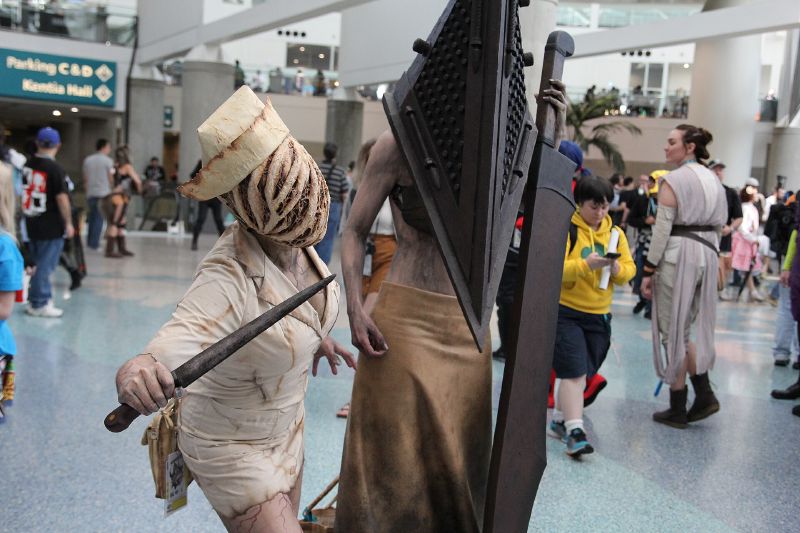
The Guardian describes Silent Hill 2 as Konami’s answer to Resident Evil, trading zombie shocks for psychological horror. James Sunderland, a grieving everyman, comes to the town because a letter from his wife, supposedly dead, has asked him to meet her there. What follows draws on Japanese horror and exploitation cinema, with undead nurses, animated shop dummies and Pyramid Head. The Guardian lists it among the 50 best games of the 21st century.
IGN goes further. It ranks Silent Hill 2 the scariest horror game ever made, and perhaps the bleakest, most sombre game of all. Its subject is guilt, grief and trauma, and IGN credits the game with handling them with grace and maturity. The Guardian later wrote that the town itself came to embody James’s psychosexual neuroses.
Pyramid Head’s arrival is on the Guardian’s list of the scariest moments in games. Its writer admits nobody knows why a man with a giant triangular head should be so frightening, but there it is.
The PlayStation 2 years
Those games had company. IGN calls the PlayStation 2 home to many giants of the genre, from Fatal Frame to the lesser-known Forbidden Siren 2. The Guardian’s list of scariest moments includes Project Zero, which arrived during a mainstream craze for Japanese ghost films. It sent you into a haunted house armed with nothing but a camera.
How the genre lost its nerve, then found it again
The shoulder camera
In 2002 Capcom announced five exclusives to prop up the struggling Nintendo GameCube. One was Resident Evil 4, technically the 13th game in the series, which reached the console in 2005. Leon Kennedy is sent alone to a village in rural Spain to rescue the US president’s kidnapped daughter.
The lumbering zombies were gone. In their place came fast, axe-wielding villagers infected with parasites, the Ganados. Producer Hiroyuki Kobayashi said the game’s theme was “fear of groups”. The Guardian heard echoes of folk horror in it, of The Wicker Man and Witchfinder General.
The bigger change was the camera. Resident Evil 4 dropped the floating third-person view for a tight over-the-shoulder one, which made aiming easier and brought the teeth and axe blades uncomfortably close. Mikami has said he never realised how revolutionary it would be. It shaped Gears of War and the 2018 God of War. Dead Space designer Ben Wanat called his game “Resident Evil 4 in space”. The Guardian’s list of the century’s best games says Resident Evil 4 began a whole new era of third-person shooters.
It also opened an argument that has never closed. IGN says Resident Evil 4 redefined survival horror and drew a slew of imitators. As horror alone, though, IGN thinks it stepped back from the first three games and favoured roundhouse kicks over jump scares.
Horror goes to space
Dead Space arrived in 2008. The Guardian sums up its pitch as Resident Evil meets Alien. You play Isaac Clarke, a lowly engineer sent to the “planet-cracking” ship Ishimura, which is overrun by Necromorphs built from reanimated human corpses. A bullet to the head will not stop them, so you learn to cut off limbs instead. Rock Paper Shotgun places it at the gun-happy end of the survival horror spectrum, with a strong setting and real scares.
The drift into action
The trouble came after. The Guardian counted dozens of Resident Evil games across 20 years, and found almost all of them built on just two templates: the original and Resident Evil 4. With budgets rising fast, it wrote, “survival horror” slid into “action horror”, and then into “action with a few blobby monsters”. IGN says Resident Evil 5 and 6 practically abandoned the genre. In 2014 the Guardian called Resident Evil 5 disappointing and Dead Space 3 risible, blaming co-operative play for tipping both towards action.
In December 2008 the Destructoid writer Jim Sterling declared the genre dead. The argument went like this. Fixed cameras, awkward movement and scarce weapons were what made Resident Evil and Silent Hill frightening, and modern players now saw all three as bad design. The Guardian agreed only partly. It predicted that indie developers, with small teams and low budgets, might bring traditional survival horror back, because horror is cheap.
Capcom has defended the action years. Kanda told Polygon that some fans joined the series during Resident Evil 4, 5 and 6 and love that style, while others want the classics.
A five-person team in the dark
Two years later a tiny studio proved the Guardian half right. Amnesia: The Dark Descent was the first full-length game from Frictional Games, released in 2010 and made by a five-person team who built their own engine. You play Daniel, who wakes with no memory in the castle of Brennenburg. You have a lantern and nothing else, so running and hiding are your only defence. Stay in the dark too long and Daniel starts to lose his mind.
Rock Paper Shotgun’s reviewer could not think of a game that used audio cues better, and thought it safe to say Amnesia is the most successfully frightening game made. PC Gamer’s Jacob Fox says it did to horror games what The Blair Witch Project did to horror films. IGN says almost every modern survival horror game owes it something, and credits it with pulling the genre back from action.
The stalker, perfected
Creative Assembly’s Alien: Isolation arrived in 2014. It abandons pulse rifles and Colonial Marines, and asks you to outwit one xenomorph that cannot be killed, aboard the Sevastopol space station. The creature learns your tactics and finds new ways to hunt you. PC Gamer calls it the best Alien game by a long way, and notes that the alien can hear and see your motion tracker. The Guardian’s pick of its scares is stepping out of a locker after 20 minutes of hiding, only to be killed by the monster’s tail.
Mikami returned that year too. The Evil Within was his return to survival horror, a four-year project that divided critics. Rock Paper Shotgun says it is not just a third-person survival horror game but every one of them, moving from madness to gothic melodrama and Hammer horror.
A corridor that would not end
In 2014 a nondescript teaser at Gamescom led to a quiet release on the PlayStation Store. Within hours, players worked out that P.T., a “playable teaser”, was a trailer for Silent Hills, a collaboration between Hideo Kojima and Guillermo del Toro. It took place in one looping hallway, and small changes on each loop played on players’ sense of familiarity. The Guardian called it a snack-sized Groundhog Day.
Konami cancelled Silent Hills a day after P.T. left the store, and it is no longer available to download. Its reach went far beyond its run. Games heavily influenced by it followed, such as Visage, and PC Gamer still calls it influential.
Frictional again, and the return home
Frictional followed Amnesia with Soma, set in a decaying underwater research facility. It keeps Amnesia’s rule of no combat and adds questions of identity, consciousness and artificial intelligence. PC Gamer calls it an underwater sci-fi horror masterpiece.
Resident Evil came home in 2017. Resident Evil 7: Biohazard switched to a first-person view and set Ethan Winters against the Baker family in the Louisiana swamps. IGN says it brought back careful resource management, a power balance tilted towards the enemy and a stalker. It also credits the first-person switch partly to Amnesia’s success. Polygon said it felt like a throwback to the series’ original philosophy. A Polygon interviewer says its director told him he required his whole team to watch The Evil Dead and Army of Darkness.
Where survival horror stands now
PC Gamer recalls that many people called survival horror dead in the late 2000s, and that it came shambling back like one of its own zombies. Today big-budget remakes of Resident Evil and Silent Hill form the core of the revived genre, in PC Gamer’s view, while the real joy is in the odd stuff around the edges.
Old houses, rebuilt
Capcom’s 2019 remake of Resident Evil 2 rebuilt the game rather than polishing it. Kanda told Polygon the team kept the original’s key beats but grounded them for the RE Engine’s photorealism, down to Leon’s shoulder pads. The fixed camera went. In return the over-the-shoulder camera allowed binaural sound, so even stereo headphones place a zombie’s moan around you. Kanda wanted players to find zombies scary again, not treat them as bullet sponges.
The Guardian’s reviewer, who had reviewed the 1998 original, called the remake genre-defining horror loaded with dread, and “horror game design as true craft”. IGN now ranks it the best survival horror game ever made. The 2023 remake of Resident Evil 4 won the same paper over as a beautiful, tense, camp and gory summation of the series.
Silent Hill 2 is harder to agree on. Bloober Team’s 2024 remake impressed every fan of the original on PC Gamer’s team, which now calls it the most accessible way to play the game. IGN says it preserves Team Silent’s vision. The Guardian’s reviewer, who had missed the 2001 original, found it slow, long and full of one-dimensional characters, and judged it an overlong, dated and tedious experience for newcomers.
The remake gave Bloober new confidence. Its next survival horror game, Cronos: The New Dawn, is set in an alternate 1980s Krakow and echoes a mechanic from Capcom’s GameCube remake of the first Resident Evil. Enemies left undisposed of can merge with corpses into tougher forms, and the co-directors admitted that remake’s Crimson Heads were a key influence.
New fog, new mansions
Konami’s Silent Hill f, released in 2025, moves the series to 1960s Japan. Schoolgirl Hinako Shimizu wakes in her conservative home town after a supernatural fog descends, and the monsters she meets mirror her fears and the attitudes of the society around her. The Guardian called it that rarest thing, a horror game with something to say, and proof that the genre has plenty left to give 30 years after its birth. PC Gamer called it a stunning return to form for the series.
Resident Evil Requiem is the latest chapter in what the Guardian calls a 30-year series. FBI analyst Grace Ashcroft explores a sprawling care facility with a flashlight, a pistol and never quite enough ammunition, while an older Leon Kennedy handles the gunfights. You can play either character in first or third person. The Guardian’s reviewer found it scary, and said there is plenty of life in the undead yet. Aniel believes the games are now more accessible than ever, because frequent sales make them affordable even in emerging markets.
The small and strange
The Guardian’s 2008 prediction about small developers has held up. Rose Engine’s debut, Signalis, came out in 2022 as a throwback to early Resident Evil and Silent Hill, minus the tank controls. You play Elster, an android searching a decaying planet for the woman she loves. Eurogamer’s reviewer counted only a handful of jump scares, and praised its slow-burning dread of dwindling supplies and locked doors. PC Gamer calls it fixed-camera horror at its best.
Some developers copy the old hardware outright. Haunted PS1 began in March 2018 as a small Discord server for developers making games in the style of the original PlayStation. Its founder, Breogán Hackett, told PC Gamer that the community had grown to more than a thousand members and hundreds of releases. Hackett finds the era’s jittery vertices and warping textures unnerving, as if the game might fall apart.
PC Gamer crowned another lo-fi game, Labyrinth of the Demon King, its best horror game of 2025. It plays like a cross between King’s Field and Resident Evil, set in a feudal Japanese castle.
Why it still works
Academics now take the genre seriously. The Guardian has reported from a conference on horror and games at Falmouth University in Cornwall, which included a talk on the monstrous little girls of survival horror. Poppy Wilde, a senior lecturer at Birmingham City University, said horror games often treat control, and the lack of it, as the source of the fear.
That is the bargain Resident Evil struck, and players keep taking it. Even after Resident Evil 4’s shoulder camera and Resident Evil 7’s first-person view, the Guardian notes, the series still keeps its characters vulnerable and its supplies scarce. You still count your bullets.
Starter guide
Ten games to play, from Capcom’s first mansion to a writer’s looping nightmare.
- Resident Evil (Capcom, 1996). The Guardian ranks it among the 15 greatest games of the 1990s, and IGN lists it among the 10 best survival horror games, saying it set the mould for everything that followed.
- Resident Evil 2 (Capcom, 1998). The Guardian calls it Capcom’s survival horror classic and possibly the greatest example of the genre ever produced, and Polygon calls the PlayStation original a landmark zombie game.
- Silent Hill 2 (Konami, 2001). The Guardian lists it among the 50 best games of the 21st century, and IGN puts it first among the 25 best horror games ever made.
- Resident Evil 4 (Capcom, 2005). The Guardian lists it among the 50 best games of the 21st century, and IGN says it became recognised as one of the greatest games of all time.
- Dead Space (Visceral Games, 2008). The Guardian lists the original among the 50 best games of the 21st century, and IGN lists it among the 25 best horror games ever made.
- Amnesia: The Dark Descent (Frictional Games, 2010). IGN lists it among the 10 best survival horror games and calls it a landmark, and PC Gamer includes it in its guide to the best horror games on PC.
- Alien: Isolation (Creative Assembly, 2014). Rock Paper Shotgun calls it an FPS horror masterpiece, and IGN calls it one of the very best examples of the survival horror genre.
- The Evil Within (Tango Gameworks, 2014). Rock Paper Shotgun lists Shinji Mikami’s return to the genre among the 25 best horror games on PC, and IGN among the 25 best horror games ever made.
- Soma (Frictional Games, 2015). Rock Paper Shotgun lists it among the 25 best horror games on PC, and IGN among the 25 best horror games ever made.
- Alan Wake 2 (Remedy Entertainment, 2023). IGN lists it among the 10 best survival horror games, and PC Gamer includes it in its guide to the best horror games on PC.