Switzerland has four national languages: German, French, Italian and Romansh. Romansh is an official language in only part of the country. In its home canton, Graubünden, isolated mountain valleys split it into five dialects.
more
How the mountains split one language into five
Romansh grew out of Vulgar Latin, carried in by Roman soldiers and colonists who conquered Rhaetia, now the canton of Graubünden, around 15BC. It mixed with Rhaetian, the language already spoken there, and the hybrid became the region’s everyday speech for centuries.
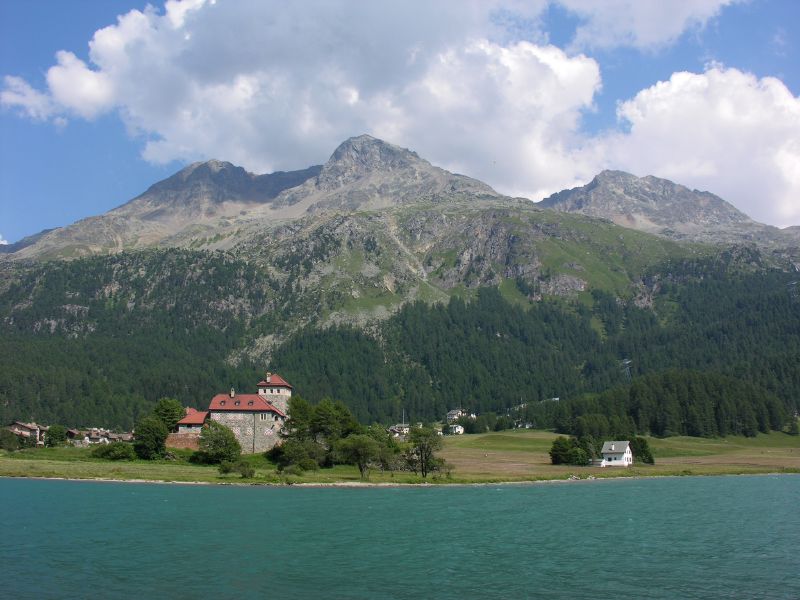
Graubünden is Switzerland’s largest canton, and its villages sat isolated across 150 mountain valleys. Romansh split into five dialects, each with its own written form.
- Sursilvan, spoken by around 60% of people in the Vorderrhein valley.
- Sutsilvan, the rarest, in the Hinterrhein valley.
- Surmiran, around the Albula valley and Vaz.
- Puter, spoken by 30% of the Upper Engadine.
- Vallader, in the Lower Engadine.
That split cost Romansh the single voice that let German and French keep growing elsewhere, and by the 19th century Graubünden was pushing its Romansh speakers to learn German instead. Even so, more than 90% of Swiss voters chose to make Romansh a national language in 1938, and the government still spends about 7.6 million Swiss francs a year keeping it going. In 1982, the linguist Heinrich Schmid and the group Lia Rumantscha built a single standard, Rumantsch Grischun, out of the five dialects. It has been the administrative language since 1996, though many speakers still treat it as an outsider’s version of their own tongue. Daniel Telli, head of Lia Rumantscha’s language unit, said many still see the standard version as “a major threat to their own original dialect or idiom” and prefer what they call “the language of the heart.”
Why a three-mile train ride changes the language
Switzerland has 26 cantons. Its French speakers, who call their region Suisse Romande, and its German speakers, who call the whole country Schweiz, have lived as linguistic neighbours for close to a thousand years without merging. The border between them is known as the Röstigraben. The towns of Rougemont and Saanen sit less than three miles apart, on opposite sides of it, one French-speaking and the other German.
Switzerland is home to 8,851,000 people and ten living indigenous languages in total. French and Italian are official nationwide, Romansh is official in part of the country, and German, though not indigenous, is official too. Four of those languages are used to teach in schools, and the country is 99% literate.
What survives, and what does not
Not every indigenous language has held its ground equally. Ethnologue counts three of Switzerland’s indigenous languages as “institutional”, meaning schools and government sustain them beyond the home. Five more count as merely “stable”, and two as endangered. Romansh has lost half its speakers over the past century, down to about 60,000, and fewer than 0.5% of the Swiss population can now speak it.
Speakers are also leaving. Almost 40% of Romansh speakers have left Graubünden for cities such as Zürich, and the language is rarely heard once they arrive. Gregory Anderson, director of the Living Tongues Institute for Endangered Languages, said losing a language costs more than its words: it is “a salient and important expression of cultural identity.”