Real robots walked the red carpet at the Los Angeles premiere of The Electric State, on loan from a UCLA robotics lab for the occasion. The screening that followed started 45 minutes late.
more
Nobody in that room could have priced what came next. The Electric State carries a reported production budget of $320 million, which puts it among the most expensive films ever made. Within three days of its Netflix release, the streamer’s own figures put viewership at 25 million. That was a little over half the 43 million who watched The Gray Man, the Russo brothers’ previous Netflix film, over its opening weekend in 2022. Carry-On, Damsel and Rebel Ridge, three films that cost a fraction of the price, each drew more viewers than The Electric State did in their own first three days. On Rotten Tomatoes, it settled at 16%.
A streaming release has no box office to fail at, so a figure like that only shows up against a comparison Netflix itself provides. There was no opening weekend to watch collapse in real time, just a viewership chart with three much cheaper films sitting above it.
What happens in the film
The story is set in an alternate 1990s, after a war between humans and sentient robots that humans won using drone technology built by the tech tycoon Ethan Skate (Stanley Tucci). Skate’s invention lets a person’s consciousness pilot a robot remotely through a headset, which is how the drone army defeated the robot uprising in the first place. The defeated robots live in exile in a fenced desert Exclusion Zone.
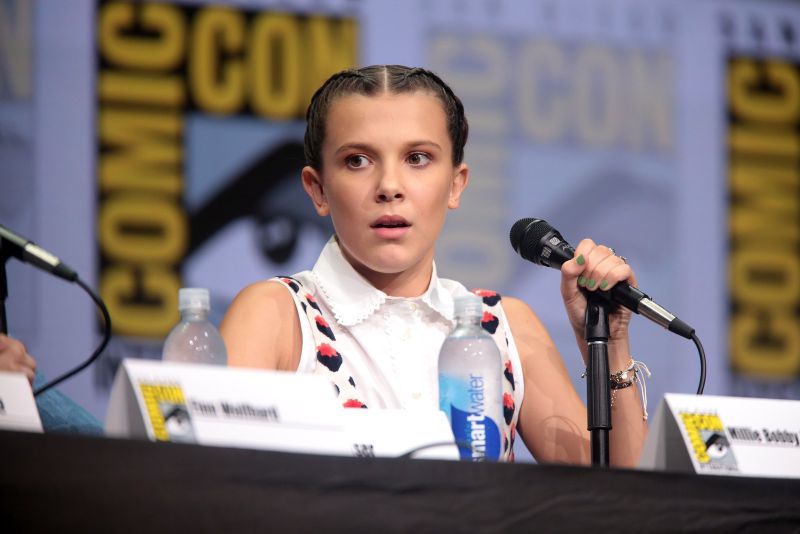
Michelle (Millie Bobby Brown), an orphaned teenager, believes her younger brother Christopher died in the same car crash that killed their parents. When a small robot with her brother’s favourite cartoon face, Kid Cosmo, turns up in her yard and seems to be steered by his consciousness, she sets out to find his body. A smuggler called Keats (Chris Pratt) and his robot partner Herman (Anthony Mackie) help her along the way. Giancarlo Esposito plays the soldier hunting them, nicknamed the “Butcher of Schenectady.”
The robots they meet along the way are built from familiar brand names rather than invented designs. The rebellion’s leader is a towering, steampunk version of Mr Peanut, voiced by Woody Harrelson. Ke Huy Quan plays a scientist hiding out in the Exclusion Zone who knows what really happened to Michelle’s brother. It is, as Empire put it, a story that “borrows the aesthetics but not the tone” of Stålenhag’s book, moving from a “haunting dystopia” to “quippy action adventure.”
Where the idea came from
In 2018, the Swedish artist Simon Stålenhag published The Electric State, an illustrated science fiction book built from spare, melancholic paintings of a decaying, retro-futurist America. Empire called it a “narrative art” book with “darkly understated beauty.”
The Russo brothers’ film version was originally set up not at Netflix but at Universal. The project moved with them to their own company, AGBO, and by June 2022 Netflix had taken over the rights. Screen reported at the time that Millie Bobby Brown, fresh from Stranger Things, would star, and that Chris Pratt was in talks to join her. Production was due to begin that autumn, on a reported budget of more than $200 million. The final figure ran $100 million higher. Mike Larocca produced alongside the Russos for AGBO.
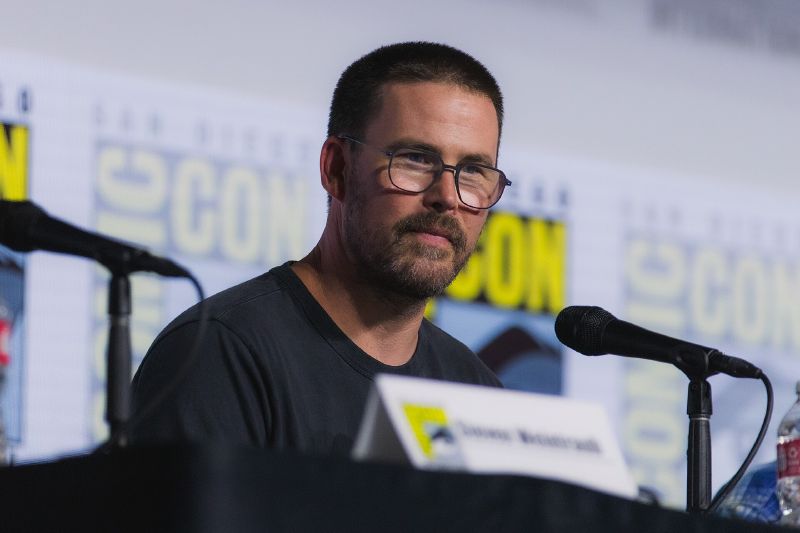
At a New York Comic Con panel, footage and a cast discussion played to an enthusiastic crowd at the Empire Stage, hours after a new teaser trailer had gone online. Joe Russo joked that he was “exhausted” juggling the project alongside a pair of upcoming Avengers films. He called The Electric State “a real passion project” and said the brothers wanted to “tell very big stories”. He described the alternate history at its centre: robots built for Disney theme parks “became sentient” and demanded rights, sparking the war the film opens with. Anthony Russo said Stålenhag’s graphic novel was “very opaque,” and that turning it into a two-hour script meant getting far more specific about the plot than the source material ever was.
Chris Pratt had planned to take time off before the script arrived. He read it anyway, and said he was “moved to tears”. Brown, who had little time to prepare between this film and another shoot, said she thought about photos of Drew Barrymore in the 1990s while building her character, and called the process a challenge.
The Russos’ track record
Joe and Anthony Russo built their careers directing television comedy, on shows including Arrested Development and Community, before Marvel handed them Avengers: Endgame. Their production company, AGBO, has since swung between wildly different scales of budget and outcome.
At the cheap end, 21 Bridges cost $33 million and made $50 million worldwide, and Extraction cost $65 million and reached 135.7 million views in its first 91 days. Mosul, a $20 million war film shot in Arabic about an Iraqi police unit’s true fight against the Islamic State group in Mosul, never had its viewership released, but AGBO reported it was popular across Europe and the Middle East. Cherry, a $42 million Tom Holland drama for Apple, released no viewing figures either. Everything Everywhere All at Once cost just $25 million to make and went on to win seven Oscars, including best picture and best actress for Michelle Yeoh.
At the expensive end, Citadel, their $250 million spy series for Prime Video, needed extensive reshoots after the Russos were unsatisfied with the first season. The Gray Man, their previous $200 million film for Netflix, reached 41.2 million views in its first week and 139.3 million in its first 91 days.
The Electric State cost more than any of them, and its early viewing figures came in below The Gray Man’s, on a budget more than half as large again. Measured purely on cost against audience, it sits at the wrong end of a spread the Russos themselves built.
What the budget bought
Reviewers agreed the money is visible on screen. Empire credited the Russos with “a boatload of impressive visual effects”, close copies of Stålenhag’s sweeping vistas, and art direction it called nicely analogue. The soundtrack leans on needle-drops from Tom Petty, The Clash and Judas Priest, plus pop staples including “Wonderwall” and “I Will Survive,” building to a final battle scored to “Ride of the Valkyries.”
Not every choice landed, Empire said, and it singled out one line of dialogue as a stand-out of the film’s eccentricity: “Mr Peanut signed a treaty of surrender with President Clinton today”. Variety noted that the film’s central villain, Skate, and his enforcer are never given much menace, despite the scale built around them.
Why critics turned on it
Most of the reviews landed together. The Guardian’s first review called the film “a very bland and derivative sci-fi adventure” that “drains away the book’s thoughtful human complexity.” Its second review was blunter: “a bogglingly expensive dud.”
The Hollywood Reporter’s verdict fit into a single line: “Robotic in the worst way”.
Variety judged that the Russos and their writers had taken Stålenhag’s “salient, bleak thriller” and turned it into “a whimsical, sanitized mess of mimeographed ideas”. The same review found Brown capable of more than the script asked of her, and Pratt’s smuggler “rather superfluous to Michelle’s quest”.
The Guardian’s first review pressed on the story’s own logic rather than just its tone, asking whether the robots could die at all, and whether the film ever meant to answer that question. A script that cannot say what happens to its own robots, the review argued, had given up the satirical premise it started with.
Empire was the outlier. Its review still found the human leads wanting, saying Brown and Pratt each had “better chemistry” with their robot co-stars than with one another. But it credited the film with scale and nerve: “at least it’s a singular experience with ambition in spades”.
Pratt’s own casting drew its own line of commentary. The Guardian’s first review said he “basically reprises every performance he has ever given.”
What comes next
A producer who has worked with Netflix, quoted by TheWrap, summed up the project bluntly: giving the Russos hundreds of millions of dollars produced a result where “the creative sucks”.
The same outlet reported a promotional tour through Los Angeles, Madrid and London, describing it as a run of polite interviews rather than the bolder pitch the brothers had made for their earlier streaming projects. The open question it put to the industry was harder to answer: whether the Russos are good filmmakers, or only good Marvel filmmakers.
Marvel, at least, still wants them. The Russos are already committed to Avengers: Doomsday in 2026 and Avengers: Secret Wars in 2027, both produced with Marvel and their own AGBO. Variety’s own verdict, printed in the same tally of their budgets, was that the size of a film’s budget does not necessarily correlate with the size of its audience.