Where the red cap grows
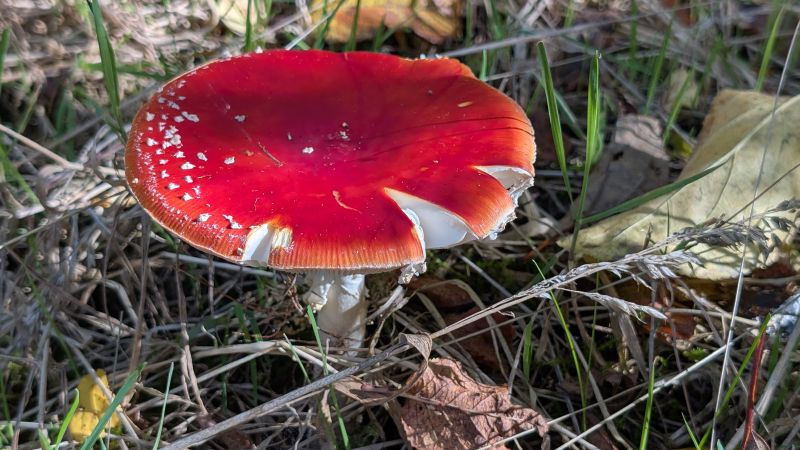
Ask someone to draw a mushroom and they will probably give you a red cap with white dots. Mia, aged 11, made that point in a Young country diary for The Guardian in November 2025. She had only ever seen the thing in books until a misty morning in Dalby Forest, on the North York Moors, when she found a whole clump on the pine needles.
more
The mushroom is the fly agaric, Amanita muscaria. It is the one red toadstool almost everybody can name, and it has spent centuries moving between science, folklore and the nursery. Travellers’ tales from Siberia made it famous as a drug. Victorian painters made it the furniture of fairyland. Christmas cards, cartoons and Nintendo kept it there.
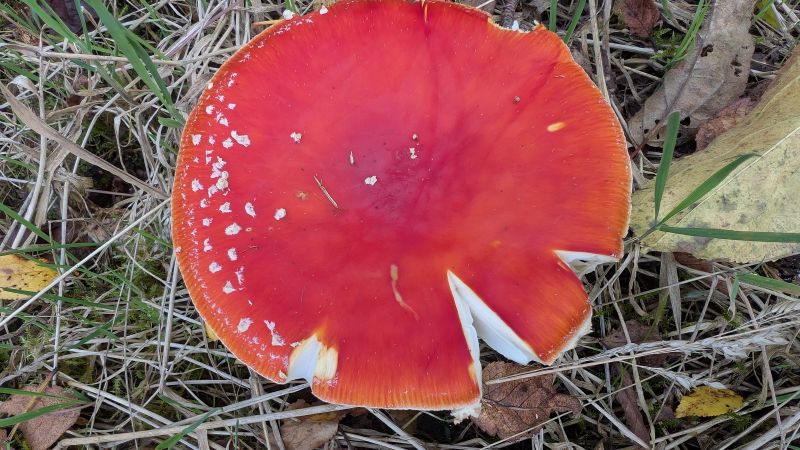
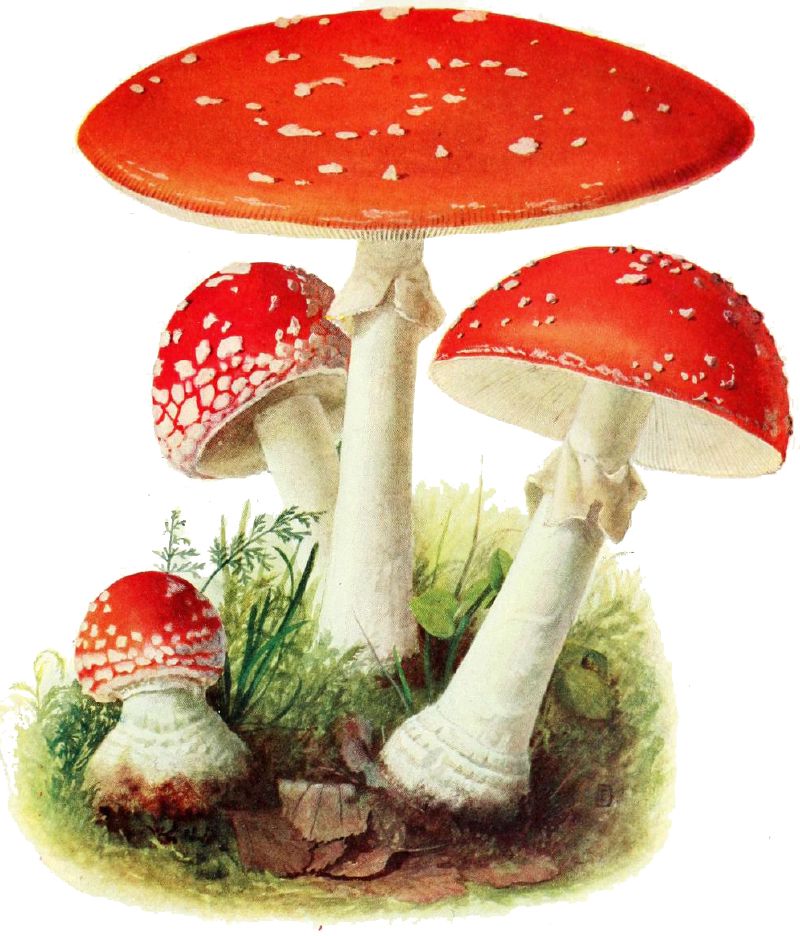
The real fungus is less tidy than the picture. Aliya Whiteley, in her book The Secret Life of Fungi, describes a scarlet, almost orange cap with raised white flecks that fades to a yellowish brown as it ages and droops back to the earth. On BBC Radio 4’s Natural Histories, the forager John Wright said it is so familiar that people on his forays sometimes think he planted it there. On the same programme the presenter, Brett Westwood, and Wright described caps that open as wide as a dinner plate. They also described troops of a dozen or more standing out scarlet against the browns of a wood.
Those white spots are the remains of a membrane. The pair explained that the young mushroom pushes up as a pale button, bursts through its white veil, and carries scraps of it on the cap as it opens.
What lives under the cap
The red part is only the fruit. The fungus itself is a web of threads in the soil, and Mia noted that the cap she saw lasts one to three weeks while the network below lives for many years. Kew’s Grow Wild project describes the fly agaric as native to Europe, Asia and North America, fruiting from late summer to early winter. In The Conversation, researchers place its origin in Siberia or Beringia and describe it as a species complex spread through the boreal and temperate forests of the northern hemisphere.
It never grows alone. The fly agaric is mycorrhizal, which means it trades with the roots of a tree. The Guardian’s Specieswatch column says to look mostly near birch and pine. Whiteley adds oaks and cedars to the list. On the radio, Wright explained the bargain: the fungus gives the tree water and minerals, and the tree pays in sugars.
That partnership explains a detail in old picture books. Two Australian scientists writing in The Conversation note fly agarics in illustrations for Little Red Riding Hood, Jack and the Beanstalk and Enid Blyton’s stories. One of them recalls conifers in the background and says this was no coincidence, because the fungus partners with many conifers.
Britain is full of the real thing. In September 2026, BBC News reported fly agarics under woodland birches across the West Midlands, among the 15,000 or so species of fungi found in the UK. Wright called it common all over the British Isles wherever its host trees grow.
A poison with a pretty face
The name is a recipe. Specieswatch describes the old country trick: soak some of the mushroom in a saucer of milk, and flies that sip it die. Trees for Life, the Scottish rewilding charity, says pieces were floated in milk to intoxicate the flies drawn to its smell. Wright suggested on the radio that the flies probably drowned happy. “Muscaria” comes from the Latin for fly, so the scientific name repeats the common one.
more
Whether the trick works is less certain. Whiteley reports that a 2016 study at the University of Ljubljana tested traditional Slovenian preparations of the mushroom as a fly killer and got mixed results.
What it does to a person
Two compounds do most of the work: ibotenic acid and muscimol. Richard Miller, a professor of pharmacology at Northwestern University, explained on Natural Histories that ibotenic acid does not reach the brain on its own. An enzyme in the gut turns some of it into muscimol, which does.
Writing in The Conversation, a pharmacologist compared muscimol to the anti-anxiety drugs in the Valium family, because it acts on the brain’s Gaba-A receptors and slows it down. Ibotenic acid resembles glutamate, the brain’s accelerator, and is toxic in high doses. Most of it leaves in the urine within about an hour.
The historian Mike Jay, writing for The Public Domain Review, lists the effects as an unpredictable mix:
- wooziness and disorientation
- drooling, sweats, and numb lips and fingers
- nausea and muscle twitches
- sleep, and a hazy sense of waking dreams
At low doses none of these may show. At high doses they can lead to coma and, rarely, death.
The figures are sobering. In tests on mice, the oral dose that kills half the animals was 22mg of muscimol and 38mg of ibotenic acid per kilogram of body weight. Morphine’s equivalent is 524mg. Deaths in people are few, but The Conversation reports a recent case of a 44-year-old man. He had a heart attack about ten hours after eating four or five caps and died nine days later.
Mordecai Cooke’s 1860 survey of narcotics, The Seven Sisters of Sleep, records an older tragedy. A group of French soldiers in Russia ate a large quantity of the mushroom, four of them refused emetics because they felt fine, and all four died.
Australia’s poisons line sees the mushroom too. The medical director of the New South Wales Poisons Information Centre, which takes 300 to 500 mushroom calls a year, describes “the mushroom that features in the Smurfs” as a cause of gut upset, sedation and confusion.
Why it is back in the news
Interest is rising. Researchers at the University of California, San Diego, counted a 114% rise in Google searches for the mushroom between 2022 and 2023. Sellers now offer muscimol gummies, tinctures and capsules with loose promises of better health, often borrowing the reputation of psilocybin, a different compound from a different mushroom.
The US Food and Drug Administration has told food makers that Amanita muscaria and its constituents are not authorised as ingredients in conventional food. It also recommended that people avoid foods with these ingredients, some of which are sold as “legal psychedelics” or “mushroom edibles”. In most countries the mushroom is not a controlled substance.
What travellers brought back from Siberia
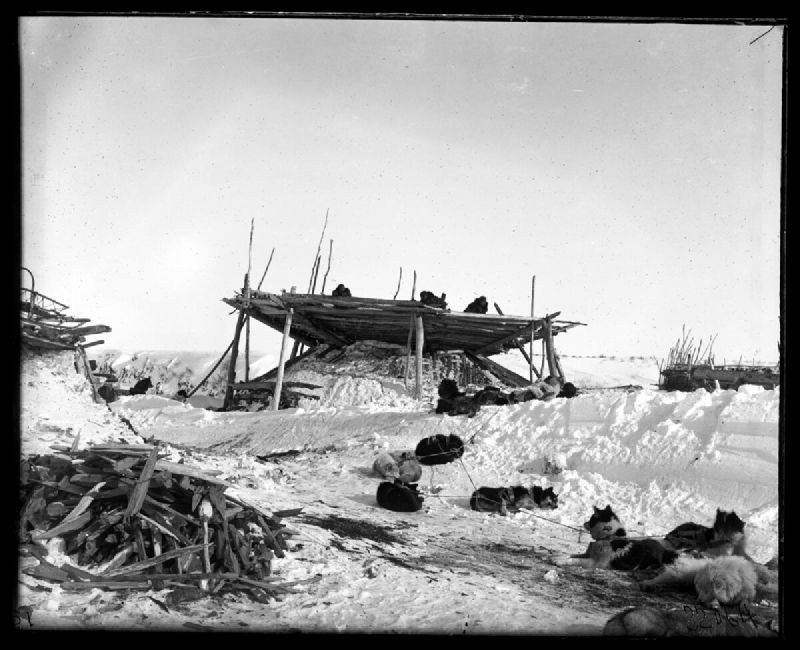
Europe learned the fly agaric was a drug from the far east of Russia. Through the 18th century, Swedish and Russian explorers came home from Siberia with stories of shamans, spirit possession and bright toadstools eaten on purpose, Mike Jay writes.
more
On Natural Histories, Richard Miller traced the story to a war between Sweden and Russia. A Swedish count taken prisoner spent 12 years in Siberia and wrote down what he saw of the local peoples. Miller said the count noticed shamans eating the fly agaric to commune with the gods. He also saw other people drink the shamans’ urine and become intoxicated in turn. Sent back to Europe, the account “became kind of sensational”.
The urine detail is not a joke. Trees for Life explains that the hallucinogenic compounds leave the body unaltered in urine. The charity describes the practice among the Koryak people of north-eastern Siberia, and adds that people there watched reindeer get drunk on the mushroom and ate their meat to share the effect. In 1998 Sean Edwards, addressing the North West Fungus Group, cited reports that one dried fly agaric could be worth three reindeer out of season.
The first trip report
The first account from someone who took it came from a Polish traveller, Joseph Kopék. In about 1797, two years into a stay in Kamchatka, he fell ill with a fever, and a local told him of a “miraculous” mushroom. He ate half a fly agaric and dreamed of gardens and of women in white who fed him fruit and flowers. A second, stronger dose sent him back through his childhood and, by his own account, into the future. His diary appeared in 1837.
Mordecai Cooke gathered the Siberian reports into a chapter called “The Exile of Siberia” in The Seven Sisters of Sleep (1860). Cooke describes the dried mushroom rolled into a bolus and swallowed whole, one large or two small caps for a day’s intoxication. He also wrote down the effect that would matter most to literature. Users misjudged size and distance, so that a straw lying in the road became an obstacle worth a leap big enough to clear a barrel of ale.
Gods and berserkers
The Siberian reports set off a fashion for finding the fly agaric in older stories, Jay argues. Two of those claims have lasted.
The first concerns soma, the sacred drink of the Rig Veda. Trees for Life says the fly agaric has been put forward as the most likely candidate. Miller told the BBC that a new translation of the hymns turned up passages about passing soma from one person to another in urine. R. Gordon Wasson, who had helped bring the Central American magic mushrooms to wide notice, took that as a sign that soma was the fly agaric. The Public Domain Review cites Wasson’s 1968 book Soma, Divine Mushroom of Immortality as its source for Kopék’s diary. Miller added that the idea went on to feed a whole shelf of books. The most famous was John Marco Allegro’s The Sacred Mushroom and the Cross, which claimed a mushroom cult lay behind Christianity.
The second claim concerns the Viking berserkers. Trees for Life says modern research on how the two compounds dampen fear would fit the theory that berserkers took the mushroom before battle. Jay points out that no saga or Edda mentions it. The idea starts with a Swedish professor, Samuel Ödman, whose 1784 essay built it on the Siberian reports.
How fairyland claimed it
Herbals and medical books from the Renaissance on gave mushrooms a poor press, Jay writes, and tied fungi to rot, dung heaps and poison. Irish folklore was no kinder. Jonny Dillon, an archivist at the National Folklore Collection at University College Dublin, told National Geographic that fungi were long linked with the devil, the púca and the fairies. English had a word for the rings mushrooms make in grass, elferingewort or elf-ring, by at least the 12th century.
more
more
Fairy art used mushrooms long before it used this one. In Margaret Cavendish’s 17th-century poem “The Pastime of the Queen of Fairies”, a mushroom serves as Queen Mab’s dining table. Late 18th-century paintings by Henry Fuseli and Joshua Reynolds put fairies on mushrooms too. Jay notes that none of those fungi look like a fly agaric.
The Victorians choose a mushroom
The change came in the 19th century. Folklore collectors such as the Brothers Grimm and Robert Southey were rushing to record country stories before the move to the cities erased them. The fairy painting and storytelling that grew out of that work filled woods with flower fairies and toadstool-dwelling elves, until the rings and toadstools became a shorthand for fairyland itself.
Of all the fungi on offer, the one that stuck was the red-and-white fly agaric. Jay allows that its looks and its danger might be explanation enough. He also points out that it took over only in the Victorian era, after the Siberian reports had spread.
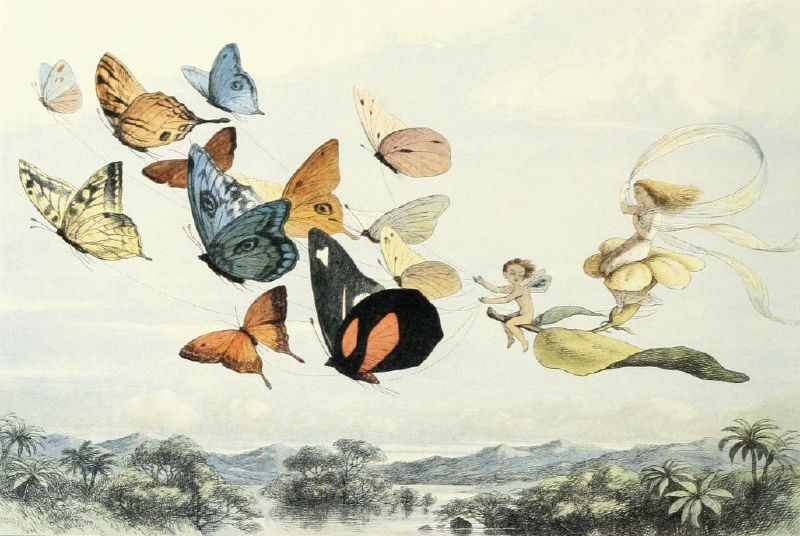
The paintings show it happening. John Anster Fitzgerald’s The Intruder, painted around 1860, puts a fly agaric centre stage. Richard Doyle’s In Fairyland: A Series of Pictures from the Elf-World (1870) illustrates Jay’s account of toadstool-dwelling elves. By the end of the century the motif had travelled east and back. Ivan Bilibin’s illustrations for an 1899 edition of the Russian tale Vasilisa the Beautiful strew the ground around Baba Yaga with fly agarics. A German New Year’s card from around 1900 shows a gnome hauling one along.
The habit outlived the Victorians. Whiteley first met the fly agaric in a big book of fairy tales, under a talking frog in the one dark picture of the forest. Not every toadstool in children’s books is the same species. On Natural Histories, Big Ears gets a mention: he lived in a cep, a penny bun, rather than a fly agaric.
Did Alice eat one?
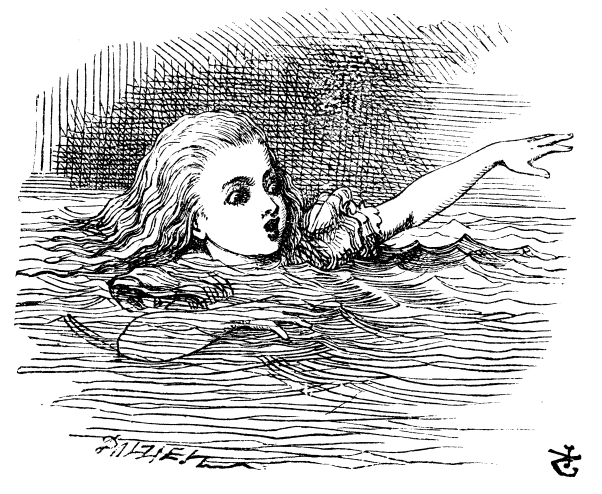
Alice’s Adventures in Wonderland (1865) is the most famous and most debated case. Alice meets a caterpillar on a mushroom, who tells her one side will make her grow taller and the other shorter. Carroll never says what kind of mushroom it is. Whiteley calls it an unidentified mushroom, though she finds it no stretch to imagine the fly agaric behind it.
The Guardian’s Specieswatch column goes further, describing Alice as pictured nibbling a fly agaric. Carroll’s own drawing of the scene, in his original manuscript, gives no hint that the mushroom is one, Jay notes.
The case for a link rests on Carroll’s reading rather than his text. The scholar Michael Carmichael found that a few days before Carroll began the story, he made his only visit to Oxford’s Bodleian Library. The library held a copy of Cooke’s The Seven Sisters of Sleep with most of its pages still uncut. The fly agaric chapter was one of the few someone had opened. Carroll had seven sisters and was a lifelong insomniac, which Carmichael thinks would have drawn him to the title. Carroll also owned James F. Johnston’s The Chemistry of Common Life (1854), which mentions the fly agaric and its tricks with size.
Jay concludes that nobody can now know whether Carroll read either passage. He thinks some contact with the Siberian reports far likelier than any secret British drug tradition, or any trip of Carroll’s own. On the radio, Richard Miller put it more firmly: he said Carroll heard about the reports, and that is where Alice’s mushroom-eating comes from. Lewis Carroll scholars, Jay notes, often dismiss the drug reading altogether.
That reading took hold in the 1960s, most memorably in Jefferson Airplane’s “White Rabbit” (1967).
Did Father Christmas borrow its colours?
Many people believe Father Christmas wears red and white because of the fly agaric. Trees for Life sets out one version of the story. Siberian shamans brought sacks of dried mushrooms to midwinter festivals and entered the yurt down the pole through the smoke hole. People believed they could fly. Some versions add reindeer that also liked the mushroom. Today’s Santa, the charity notes, wears the mushroom’s colours, carries a sack of gifts, uses the chimney, flies with reindeer and lives in the far north.
Kew’s Grow Wild blog asks whether it is a coincidence that the mushroom’s colours became the colours of Christmas. It repeats the claim that shamans wore red and white. On Natural Histories, Patrick Harding, a former university lecturer and author of The Christmas Book, described the shaman coming “down the chimney” with gifts of healing at the darkest time of the year. National Geographic notes that the story has run in NPR, The Guardian, The New York Times and The Atlantic.
What the record shows
The people the story is usually pinned on reject it. Tim Frandy, who teaches Nordic Studies at the University of British Columbia and belongs to the Sámi descendant community in North America, told National Geographic the theory has “a critical number of flaws”. He says Sámi people have widely criticised it as a romanticised misreading of their culture.
Frandy took the claims one at a time. The fly agaric was a drug across much of Siberia, but there is scant evidence that Sámi shamans used it. They reached trance through music, alcohol or pain. Siberian shamans’ clothing is sometimes linked with mushrooms, and Sámi clothing is not. Sámi midwinter was a time to hide in silence from the stállu, a creature that drained the life spirit, which he calls a red flag for any link with a jolly gift-giver. And in Sápmi the mushrooms come up in September and lie under snow by December. He grew up Finnish, Swedish and Sámi and never heard of a Christmas mushroom until Ikea began selling mushroom decorations for the tree.
Santa’s real history runs through a bishop and a poem. The first Santa, St Nicholas, was a fourth-century bishop of Myra, in modern Turkey, known for generosity and miracles. The Dutch Sinterklaas grew from him. Reindeer arrived with the poem A Visit from St Nicholas, which gave him eight tiny ones pulling a flying sleigh. Thomas Nast’s drawings for Harper’s from 1863 added the North Pole, the elves and the toy workshop.
The red suit owes something to the north, though not to a mushroom. Frandy points to Haddon Sundblom, of Finnish and Swedish descent, whose 1931 Santa for Coca-Cola had a pointed hat, bright red colours and a trimmed tunic with a wide belt, all vaguely reminiscent of Sámi dress.
How the story started
The belief grew from real reports stretched too far. Siberian peoples did use the mushroom, and Jay traces a 19th-century fashion for reading it back into European folklore wherever it might fit. The Conversation’s history of St Nicholas allows that the flying reindeer may echo stories of Sámi herders feeding them the mushroom. Frandy’s view is blunter. He calls it a story invented by outsiders that turns elements of Sámi culture into something they are not.
From Christmas cards to Super Mario
The fly agaric is on Christmas cards whatever the truth about Santa. Whiteley says the Victorians treated it as a symbol of good luck and cheer, and put it on many Christmas card illustrations. Her favourite shows four smiling fly agarics in neat pointed shoes bursting through an elf’s front door with sprigs of holly. Trees for Life says the mushroom has long been a midwinter emblem in central Europe, on cards and as decorations for the tree and the wreath.
Kew offers a theory for the link. When people brought evergreens indoors for winter, the mushrooms that grew beneath them came too. Whiteley suggests another. Travellers’ accounts of the mushroom’s use in the east were circulating just as the Christmas card took off.
Games, cartoons and emoji
The motif left the page for the screen. “It’s in Alice in Wonderland, it’s in Super Mario Brothers,” James Benwell of the Birmingham and Black Country Wildlife Trust told BBC News, calling it “the mushroom of fairy tales”. Popular Science reports that nearly every mushroom in Nintendo’s Mario games is modelled on Amanita muscaria. The first super mushroom, in 1985, was orange with red spots. The same report says most people recognise it as the inspiration for the first mushroom emoji, in 2015.
Whiteley has seen it in games from Mario to Assassin’s Creed, and once in an advertisement trying to sell her tea. It is the Smurfs’ mushroom too. Specieswatch calls it a favourite image for the covers of books about fungi.
In the counterculture the fly agaric never quite caught on. Jay writes that today’s psychedelic culture meets it only at the distant margins, while psilocybin mushrooms have gone global and into clinical trials.
Look, but leave it
The best place to meet one is still a wood in autumn. Benwell said there are still adults who have never seen one. He and his son follow one rule on their fungus hunts: “No licking, no picking, no kicking.”
If you go looking and come home empty-handed, Wright has a comfort. Even in a dry autumn, he told the BBC, the fungus is perennial and still there, out of sight.
Starter guide
Read, see and hear these to follow the fly agaric from Siberia to the toy box.
- An Attempt to Explain the Berserk-Raging of Ancient Nordic Warriors through Natural History (Samuel Ödman, 1784). Mike Jay traces the idea of mushroom-fuelled berserkers to this essay, built on the Siberian reports rather than any saga.
- A Visit from St Nicholas (Clement Clarke Moore, 1823). The poem that gave Santa his eight flying reindeer, which The Conversation suggests may echo stories of herders feeding them the mushroom. National Geographic says the modern Santa emerged with its publication.
- The Chemistry of Common Life (James F. W. Johnston, 1854). A book Lewis Carroll owned, which mentions the fly agaric and its distortions of size, according to The Public Domain Review.
- The Seven Sisters of Sleep (Mordecai Cooke, 1860). Its chapter “The Exile of Siberia” gathers the travellers’ reports, including the straw that looks big enough to need a leap. Jay ties the book to the Alice debate.
- The Intruder (John Anster Fitzgerald, c. 1860). A fairy painting with a fly agaric centre stage, which Jay uses to show the mushroom becoming fairyland’s stock motif.
- Alice’s Adventures in Wonderland (Lewis Carroll, 1865). Carroll never names the caterpillar’s mushroom, and Jay sets out why some readers link it to the fly agaric.
- In Fairyland: A Series of Pictures from the Elf-World (Richard Doyle, 1870). Jay illustrates his account of toadstool-dwelling elves with Doyle’s pictures.
- Vasilisa the Beautiful (Ivan Bilibin, 1899). Bilibin’s illustrations for this Russian tale strew the ground around Baba Yaga with fly agarics, Jay notes.
- Soma, Divine Mushroom of Immortality (R. Gordon Wasson, 1968). Wasson’s case that the sacred drink of the Rig Veda was the fly agaric, as Richard Miller recounts on Radio 4. The Public Domain Review cites the 1968 book.
- Super Mario Bros. (Nintendo, 1985). The game James Benwell of the Birmingham and Black Country Wildlife Trust named alongside Alice when he called the fly agaric “the mushroom of fairy tales”. Popular Science says nearly every mushroom in the series is modelled on Amanita muscaria.
- Natural Histories: Fly Agaric (BBC Radio 4, 2016). Brett Westwood and the forager John Wright search the New Forest for the mushroom, with Alice and Father Christmas along the way.
- The Secret Life of Fungi (Aliya Whiteley, 2021). Lit Hub ran its chapter on the fly agaric, from fairy-tale frogs to Christmas cards.