The Treaty on the Non-Proliferation of Nuclear Weapons split the world with a bargain. Five countries that already had the bomb, China, France, the Soviet Union, the United Kingdom and the United States, were recognised as nuclear-weapon states, and they promised to pursue disarmament in good faith. Every other party agreed not to build nuclear weapons, in return for access to peaceful nuclear technology.
The treaty opened for signature on 1 July 1968 and came into force on 5 March 1970. Fifty-nine countries signed on the first day. It now has 190 parties.
Where the line came from
The idea started small. On 17 October 1958 Ireland put a draft resolution to the UN General Assembly’s First Committee, and non-proliferation became a subject of its own. Ireland pressed again, and the Assembly took up the item the following year.
By then the club was growing. In the two decades after the United States bombed Hiroshima and Nagasaki, four more countries built nuclear weapons, according to CFR Education. The US and the Soviet Union, which held most of the world’s warheads, put a joint draft treaty to the Eighteen Nation Disarmament Committee on 11 March 1968. The General Assembly commended the text on 12 June 1968 in resolution 2373.
Non-nuclear countries got changes into the draft first. CFR Education records that it was revised to reflect their concerns, the eventual elimination of nuclear weapons among them.
How the two sides are checked
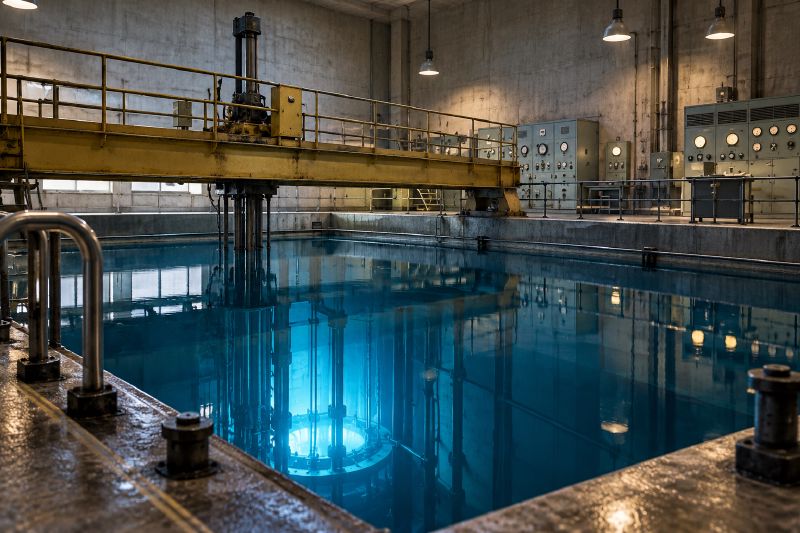
The non-nuclear side is watched. Each party accepts monitoring by the International Atomic Energy Agency, the UN body that verifies peaceful nuclear use. A further 144 countries have signed up to extra protocols that allow surprise inspections at nuclear sites.
The five carry a different obligation, the promise to disarm. Many countries without nuclear weapons argue that the five have not met it.
Did the split hold?
Partly. Four countries outside the treaty have or are believed to have nuclear weapons: India, Israel, Pakistan and North Korea. North Korea joined in 1985 and withdrew in 2003. Its UN envoy, Kim Song, said in May 2026 that his country would not be bound by the treaty under any circumstances.
Others went the other way. Argentina and Brazil considered nuclear programmes and dropped them, South Africa built a stockpile and then destroyed it, and Belarus, Kazakhstan and Ukraine handed the weapons on their soil to Russia after the Soviet Union broke up. In 1995, 25 years after it took effect, the parties agreed unanimously that the treaty should stay in force indefinitely.
The promise the five have not kept
The disarmament half is the weak one. A statement by 56 former leaders and foreign and defence ministers from NATO and US-allied countries, quoted by the European Council on Foreign Relations in 2020, said the five appeared to treat the treaty as a licence to keep their arsenals indefinitely. That frustration fed the Treaty on the Prohibition of Nuclear Weapons, which the UN General Assembly adopted in July 2017.
The numbers have fallen but not far enough for the critics. The Stockholm International Peace Research Institute counted 12,241 warheads across the nine nuclear-armed states in January 2025, nearly 90% of them American or Russian. At the 2026 review meeting, UN Secretary-General António Guterres said the treaty’s spirit was eroding.