Where trance came from
more
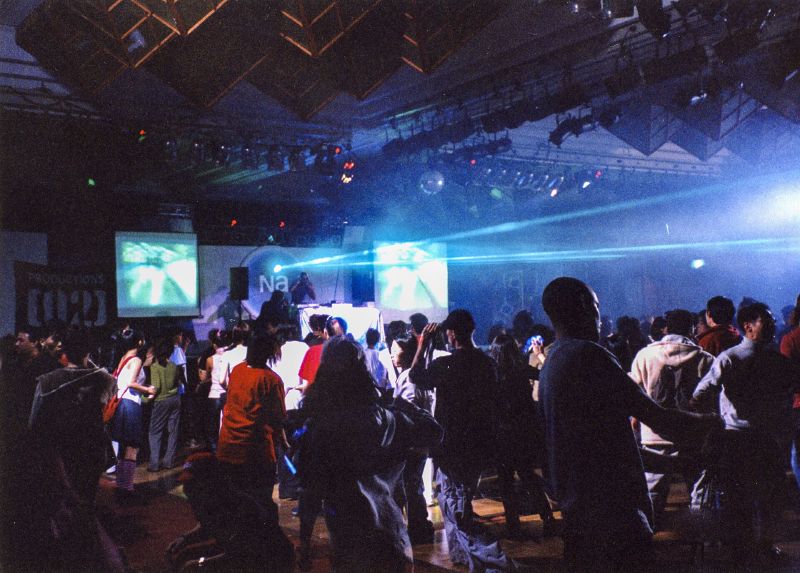
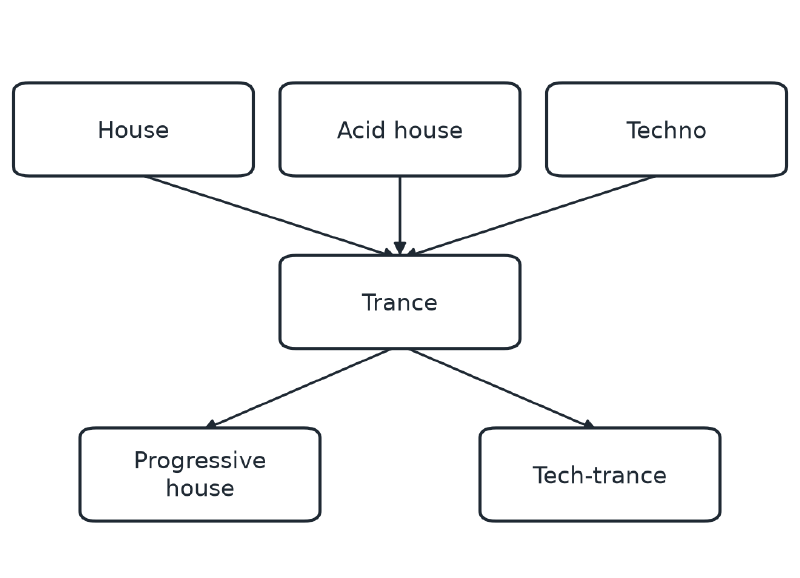
Trance began in the early 1990s in Germany, in dark clubs where DJs such as Sven Väth played fast techno laced with melody. Red Bull’s history of the genre places its birth in Europe, and in Frankfurt above all. Ferry Corsten, one of its biggest names, remembers it the same way. Trance now has a reputation for lasers and stadium shows, he told Red Bull, but it came out of those dark rooms, and it was always about dancing.
more
The idea behind it is far older than the records. Resident Advisor’s introduction to a guide by Arjan Rietveld, author of the trance encyclopaedia Hypnotised, traces its roots to trance states found across many cultures, from the worship of the African Apostles to Sufi mysticism. In its account the music offered a modern version of that experience, built from melody, harmony and repetition. Before techno even existed, hippies on the beaches of Goa danced to electronic beats stretched out for days, with mystical trance as the goal. That Goa scene later gave rise to psytrance, which runs between 135 and 150 bpm and strips out the vocals for layer on layer of synth rhythm.
Who gave it a name
Somebody had to call it something. Mixmag credits Mark Reeder, a British entrepreneur who ran the Berlin label Masterminded For Success, or MFS, as one of the first to use the word “trance” for the sound. Reeder set up the project behind Tranceformed From Beyond, released in 1992 and perhaps the first trance compilation to win real fame. It held 13 tracks, by Harald Blüchel under names such as Cosmic Baby, by Mijk van Dijk, and by friends of the pair. Mixmag says it raised the bar for every compilation that followed, in sound and in artwork alike.
Väth founded two labels, Eye Q and Harthouse. He told Resident Advisor that he could not compose at a keyboard himself. He described his ideas to musicians, and he says that partnership produced the music people now call trance. To this day he calls trance a state of mind rather than a genre.
The records that came first
A few records got there before the name. Rietveld’s ten-track history of trance opens in 1988, with the KLF’s “What Time Is Love (Pure Trance 1)”, issued on KLF Communications. Age Of Love released their self-titled track in March 1990, and Mixmag counts it among the first trance tunes to become a big hit. The same year, Critical Rhythm’s “It Could Not Happen” blended deep house and trance into something ambient. Cosmic Baby’s “Stimme Der Energie”, from 1992, samples Kraftwerk’s “The Voice of Energy”. Mixmag draws that line of descent onward, to Daft Punk.
Armin van Buuren insists the debt runs to America. He tells American fans who feel they came late to trance that Chicago invented house music, and that trance would not exist without it. He names Kevin Saunderson, Todd Terry and Masters At Work among the early adopters he owes.
What makes a track trance
The sound has a shape you can hear inside a minute. DJ Mag’s Harold Heath lists its fixtures: planet-sized major chord riffs, euphoric melody, and breakdowns that seem to go on for ever. Corsten told Red Bull that trance has no real groove, only fast or slow, but a great deal of melody, which puts it nearer classical music than tribal rhythm. Tony McGuinness of Above & Beyond was blunter. At 140 BPM, he said, there is no room for funk.
Scientists have tested the formula. For an EU project on music made by machine learning, Dr Dorien Herremans of the Singapore University of Technology and Design and her colleagues played computer-made uplifting trance to fans. The chords grew steadily more complex from track to track, and the fans rated each one. They liked a middle point best, with chords neither too plain nor too knotted. Herremans put it down to expectation. Listeners predict the next chord the way they predict the last note of “Happy Birthday”. Steve Helstrip, who records as The Thrillseekers, agreed that familiar chord progressions are part of what defines the genre.
The DJs and labels who built it
DJ Mag names Ferry Corsten, Paul van Dyk, and the duo Jam & Spoon among the early pioneers, who made some of the first and best-loved trance records. Van Dyk and Tiësto, the Guardian adds, set the genre’s template in the mid-1990s, at the height of the superclub era.
Sasha, Digweed and Oakenfold
In Britain the DJs came first. Sasha, born Alexander Coe, and John Digweed each made a name in the early 1990s with long, winding, emotional sets. Mixmag credits the pair with turning DJing into a respected art, judged on track selection and mixing. Their Renaissance: The Mix Collection came out in 1994.
Mixmag says Paul Oakenfold is widely considered the godfather of British trance. He had helped bring acid house to Britain in the late 1980s, and he took to trance soon after. His Perfecto label worked with some of the boldest trance acts of the day, BT, Man With No Name and Tilt among them.
Labels built the scene underneath them. Simon Berry founded Platipus in 1993, and its acid-tinged early records made it a driving force in British trance. Several came from Berry himself, under names such as Art Of Trance. Other British labels, including Rising High and Choci’s Chewns, joined early trance to the hardcore rave scene, alongside the outlaw collective Spiral Tribe. In the Netherlands, Psychick Warriors Ov Gaia tied it to the industrial and occult underground.
Robert Miles and “Children”
Then came Robert Miles. Born Roberto Concina, the Swiss-Italian producer led an Italian boom in dream trance in the mid-1990s. Dream trance rests on a catchy melody, typically played on an acoustic instrument. Platipus picked up his track “Children” in 1995.
The story behind it is a sad one. In 1994 his father came home from an aid mission to the former Yugoslavia and showed him photographs of children killed in the war. Miles wrote “Children” in a small soundproofed studio he had built in a converted garage near the family home. He was scared the first time he played it in a set, because the DJ before him had closed on something heavy. The dancers stopped and stared at the booth. Then the track reached its climax, the floor roared, and a girl came up in tears to ask what the music was.
“Children” had a practical use as well. Billboard reported in 1996 that weekend crashes, with ravers driving home from parties, had become a grave problem in Italy. DJs took to playing the track last, to calm the crowd before the drive, and Italian authorities and parents welcomed it. It topped the charts in more than 12 countries and held the top of the Euro Top 100 for 13 weeks. Miles died of cancer in Ibiza, aged 47.
Gatecrasher and the superclubs
Trance in Britain needed a home, and Gatecrasher became one. Simon Raine was bidding for cleaning contracts at nightclubs when he met Scott Bond. In 1993 the pair started a night called Gatecrasher in Birmingham, then moved it to Sheffield. It stood with Liverpool’s Cream and Ibiza’s Amnesia among the superclubs, rooms for more than 1,000 people that the Guardian calls a commercial answer to rave’s DIY ideals.
The regulars made the night their own. One of them, GJ, came every week from Glasgow and bought a sewing machine for her 21st birthday to make outfits. Her mother once drove her out at 1am to take traffic cones, so GJ could cut their reflective strips into tiny Gatecrasher lions. GJ never took drugs. A bouncer once asked a friend to take her outside for air. GJ says he had apparently noticed that she had danced at full tilt for three hours, and he did not want her in trouble.
The Dutch generation
Armin van Buuren arrived a little later. He got his first sampler in 1992, began producing at 16, and released his first records on the Dutch label Timeless Records in 1996. His “Blue Fear” reached John Digweed and landed on Sasha and Digweed’s Northern Exposure 2. He finished a law degree before he played abroad. His first foreign gig was in the Courtyard at Cream in Liverpool, on February 5, 2000, the day AM:PM signed his single “Communication”.
Across the Atlantic, the producer BT, Brian Transeau, worked almost alone, because trance barely reached America in the 1990s. His “Flaming June” (1997) still made its way to Europe, and to DJs such as Tiësto, Oakenfold and Sasha.
The records that defined trance
The early classics came from all over Europe. Jaydee’s “Plastic Dreams” came out on the Belgian label R&S Records in 1992, a 10-minute track with a slow intro, a deep groove and a soulful organ. Solar Quest’s “Kirsty Cried” (1994) folded acid house into trance on the London label Choci’s Chewns.
For Red Bull, Age Of Love’s track is the trance archetype, with its building riff, choir-like voices and a breakdown made for the rush. Red Bull lists the Jam & Spoon mix, and Solomun is among the many who have remixed it since. Red Bull lists the KLF’s “What Time Is Love? (Pure Trance Mix)”, from 1988, first among its trance anthems and calls it immensely influential. Jimmy Cauty and Bill Drummond gave it a spiralling riff, burbling acid and enormous pads.
“Acid Eiffel” first put French electronic music on the map, in Rietveld’s view. Laurent Garnier, Didier Delesalle and the engineer Ludovic Navarre made it as a one-off project called Choice, at the peak of the Roland TB-303 acid era. It runs 11 minutes, and Rietveld calls it a great techno record and an essential trance anthem at once. Mixmag’s history of Ibiza notes that DJs played it religiously through the decade.
“Café Del Mar”
Energy 52’s “Café Del Mar” was the work of two Berlin producers, Harald Blüchel and Paul Schmitz-Moormann. The original came out on Väth’s Eye Q label in 1993. Its fame grew when the UK label Hooj Choons asked Three ‘N One for a remix, which Rietveld rates above every other version. The track became one of the most remixed in electronic music. Listeners of BBC Radio 1 voted the original the best dance track of the previous two decades. Mixmag singles out the chord line as the part that shines brightest.
The anthems of the heyday
Mixmag dates trance’s heyday from 1993 to 1997. Paul van Dyk’s “For An Angel” appeared on his debut album, 45 RPM, in 1994. Van Dyk grew up in East Germany under the Stasi, and Mixmag hears the track as his own declaration of freedom. Red Bull calls the 1998 version a trance classic, with an evocative bassline and a celestial piano line.
Cygnus X’s “The Orange Theme” borrows its melody from the theme to A Clockwork Orange and runs at 148 BPM. The German duo took their name from the first widely recognised black hole. Three Drives’ “Greece 2000” built its famous synth line on a sample of Crusin’ Gang’s Italo house record “Chinatown”. Rietveld says remixes were the way to success in 1990s trance. Humate’s “Love Stimulation” was a hit on MFS in 1993, but Paul van Dyk’s 1998 “Lovemix” made it far bigger.
The turn of the century
Two records closed the decade. Ferry Corsten’s “Out Of The Blue”, released as System F on Tsunami Records in 1998, was among the first tracks built on the Roland JP-8000 synthesiser. That synth has been a fixture of trance ever since, and the record opened a Dutch wave led by Corsten, Armin van Buuren and Tiësto. Sasha’s “Xpander” (1999), 11 and a half minutes long, helped launch British progressive house, with subtler, minor-key melodies than trance. Mixmag heard it everywhere in Ibiza, from the Space Terrace to Manumission, and says it marked the end of the island’s superclub era.
Mauro Picotto’s “Lizard”, released under his own name in 1998, summed up the new trance sound for many listeners, Mixmag says. Oakenfold’s 1998 compilation Tranceport aimed at the American market, with Agnelli & Nelson’s “El Niño”, Binary Finary’s “1998” and “Greece 2000”. Mixmag argues that compilations like it carried these tracks to a mass audience across the northern hemisphere.
When Billboard asked Armin van Buuren for his 30 best trance tracks, he chose Veracocha’s “Carte Blanche”, Motorcycle’s “As The Rush Comes” and his own “Communication”. His list also takes in Gouryella’s remix of “1998” and Chicane’s “Saltwater”, sung by Moya Brennan.
How trance took the clubs, then lost its cool
By the mid-1990s Britain was the centre of the trance boom. Few clubbers knew what the DJs looked like, because record sleeves showed brand logos rather than faces. Global Underground, run by Boxed, changed that in 1996 when it put DJs on its CD covers.
Paul van Dyk remembers how little help the music had. Trance was absent from radio and television, he told Mixmag, so anyone who loved it had to go looking. Red Bull says it stayed an underground scene until the end of the decade, when the formula of big breakdowns and lasers broke through.
Gatecrasher goes global
Gatecrasher shows the whole arc. By 1998 it was staging huge outdoor events, the first with Ministry of Sound and broadcast live on Radio 1. In 1999 it took the show on a world tour. In Australia, Simon Oates, the third partner, found young clubbers dressed exactly like the Sheffield regulars, calling themselves the Sydney Kids.
Then the mood turned. In spring 1999 Gatecrasher had its first reported drug-related death. A month later came claims that Judge Jules wanted an amnesty box at the door for dummies and glow sticks. Feeling towards the Crasher Kids soured through the early 2000s. The DJ Jane Fitz told Red Bull that by 1998 or 1999 trance had stopped being inventive, above all the commercial sound linked with Gatecrasher and Judge Jules. JD Twitch called it “the T-word”.
Darude’s “Sandstorm” reached No. 3 in the UK singles chart in 1999. Mixmag says trance soon became a piñata, and big names such as Armin van Buuren and Tiësto left to try other styles.
America, a decade late
America caught up slowly. In the late 1990s the light, melodic trance of Paul van Dyk and Paul Oakenfold drove a revival of raves in southern California, the Guardian reports. By the turn of the millennium those raves drew 20,000 to 40,000 people.
Armin van Buuren started his radio show, A State Of Trance, in June 2001, in Dutch. Two fans in the north of the Netherlands streamed it illegally over Shoutcast, and listeners around the world gathered to talk about it on IRC. Six months later he flew to the United States for the first time, in economy, with his vinyl in the hold. He calls 2008 a key year for dance music in the US, when David Guetta’s hits such as “Love Takes Over” reached daytime radio. He has since sold out Madison Square Garden twice, and has run an A State Of Trance stage at Ultra Music Festival for nine years. Above & Beyond have sold out Madison Square Garden and The O2 in minutes.
The sound kept shifting as it travelled. The producer Matt Darey calls trance a chameleon that fuses with every genre it meets. Jan Johnston told DJ Mag that trance now leans orchestral and puts more weight on vocals.
Trance now
“For us, it never left,” Mixmag’s trance editor Ellie Hanagan said when asked about a comeback. Hundreds of thousands still tune in to Armin van Buuren’s radio show, and Paul van Dyk’s Ibiza residency still packs out every week. By the start of this century, Red Bull notes, trance had become the biggest money-spinner in dance music.
more
A younger generation hears it without the baggage. In 2015 the Guardian found the producer Evian Christ, real name Josh Leary, running confetti-cannon nights called Trance Party. Hearing Tiësto’s “Suburban Train” at 11 had moved him to tears. His Warp labelmate Rustie told the paper that everything he made had trance in it. The Guardian called the music the sonic opposite of austerity.
The signs kept coming. Mixmag points to a 2015 clip that went viral, of Belfast’s Space Dimension Controller playing DJ Taucher’s mix of “Ayla” at the AVA festival. Bicep told Mixmag they had to watch for tracks turning “way too trancey” while making their debut album. Red Bull credits Bicep, Lorenzo Senni and Nina Kraviz with the revival, and ends its list of anthems on Bicep’s “Orca”. Cristian Dinamarca, of the Staycore label, sampled Fridge’s “Paradise” on his EP Himnos.
The producer Nathan Micay told DJ Mag that trance is less a genre than a palette. People now use the word for the fast techno of Amelie Lens and the Copenhagen scene, he says. He points to new artists such as Roza Terenzi and D. Tiffany, and to reissues of early trance that new producers are learning from.
Not everyone likes where it went. Väth told Resident Advisor that Tiësto’s records follow “a pop format for trance”. Corsten answers the sneers another way. Fans cry in front of him, he says, and soldiers on active service have told him the music kept them going.
Paul van Dyk is the plainest proof that trance survives. He fell through the stage at the A State Of Trance festival in Utrecht, with brain and spine injuries. He had to learn to walk and talk again, then came back with a new live show, AEON. Giuseppe Ottaviani told DJ Mag that trance is not a fashion, and that new fans know a surprising amount about it. Armin van Buuren puts it most plainly of all: he will always keep making trance tracks.
Starter guide
Each record below has two trusted publications behind it. Hear them in order of release.
- The Age of Love (Age of Love, 1990). Mixmag puts it among the 10 best early 90s trance tracks, and Resident Advisor calls it a trance classic.
- Acid Eiffel (Choice, 1993). Resident Advisor calls it an essential trance anthem, and Mixmag’s Ibiza history calls it a masterpiece.
- Café Del Mar (Energy 52, 1993). Mixmag says the original laid the foundations for a classic, and Resident Advisor calls it a White Isle classic.
- For an Angel (Paul van Dyk, 1994). Mixmag calls it a bona fide classic, and DJ Mag calls it one of trance music’s defining anthems.
- Children (Robert Miles, 1995). Mixmag puts it among the 15 best mid-90s trance tracks, and Resident Advisor names it among the defining moments of trance’s rise.
- Born Slippy .NUXX (Underworld, 1995). Mixmag puts it among the 15 best mid-90s trance tracks, and Rolling Stone among the 200 greatest dance songs of all time.
- Silence (DJ Tiësto’s In Search Of Sunrise Remix) (Delerium featuring Sarah McLachlan, 2000). Resident Advisor calls it a trance classic, and Armin van Buuren’s picks for Billboard’s 30 best trance songs ever include it.
- Adagio for Strings (Tiësto, 2005). Billboard’s critic puts it among Tiësto’s 20 best songs, and Rolling Stone among the 200 greatest dance songs of all time.