Where the roguelike came from
more
A roguelike is a game named after one game. In 1980 two students at UC Santa Cruz, Glenn Wichman and Michael Toy, set out to shuffle the maze, the monsters and the treasure of Colossal Cave Adventure so that no two games matched. They also wanted to fold in Dungeons & Dragons and Star Trek, a 1970s mainframe game in which you hunted Klingon warships against the clock. The result was Rogue: a hero descending a dungeon of many floors, hunting treasure and fighting monsters, with no extra lives and a new layout every time.
more
Die in Rogue and you start again from nothing. Polygon’s account of the genre puts the appeal down to replayability: the map changed, but the monsters and items always behaved the same way, so what you learned from one death carried into the next attempt.
The @ and the capital letters
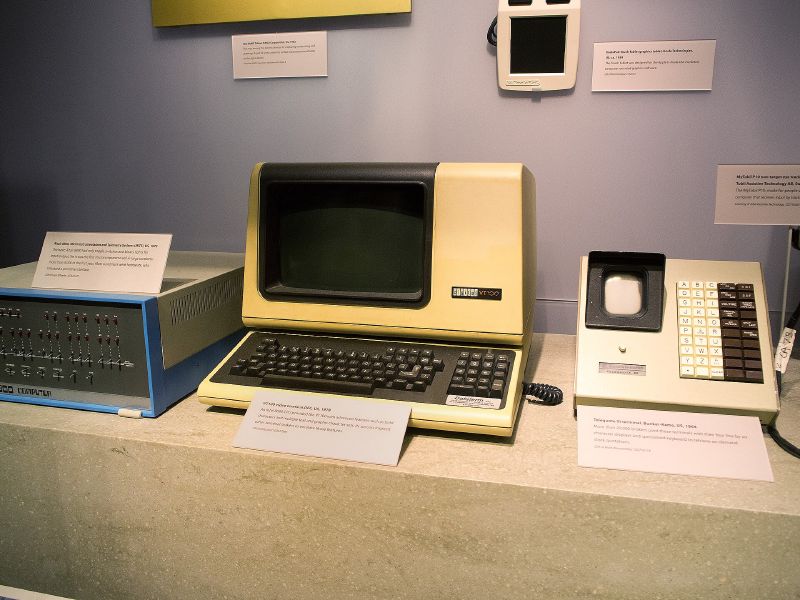
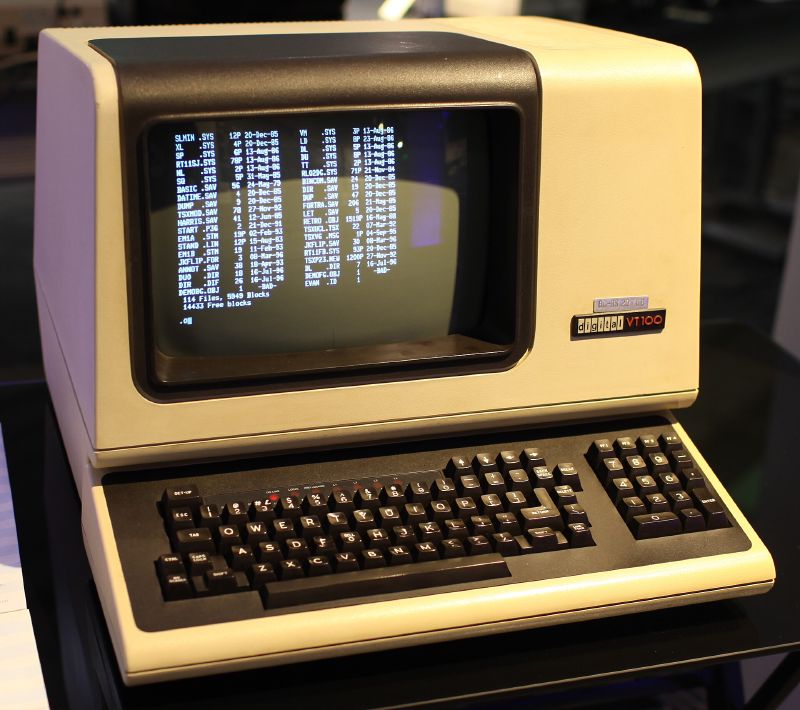
Rogue drew its world in text. It ran on Unix at a time before graphical displays were common, so your hero was an @ sign, the monsters were capital letters, and the loot was punctuation. The tool behind that look was curses, a library Ken Arnold wrote for BSD Unix that drew pictures from a terminal’s own character set. BSD Unix came out of the University of California at Berkeley, where Toy was a student.
Bill Loguidice and Matt Barton, writing in their book Vintage Games, rank Rogue among the most quietly influential games ever made, and among the longest-lived. Their point is that people were still playing, porting and forking it two decades on. One writer at Gamesindustry.biz notes, with some affection, that a classic roguelike can pass for a spreadsheet when your boss glances at your screen from across the room.
Rogue was not the first
Rogue was not the first game to randomise a dungeon. Ars Technica traces the idea to Beneath Apple Manor, which fell into obscurity before Toy and Wichman arrived at the same concept on their own. Rogue’s turn-based format mattered too. Polygon notes that it rewarded careful movement over fast reflexes.
Why a whole genre took its name
Rogue’s code did not stay in one place. Separate teams took it over and pushed it in new directions, and this family of role-playing games built on Rogue became known as roguelikes. Rogue begat Hack, and Hack begat NetHack, as IGN puts it.
The name stuck long after the family grew strange. Rock Paper Shotgun points out that the word once meant something precise, a game resembling Rogue. Today its plainest meaning is procedurally generated levels and little exposition, with permadeath, dungeon crawling, unlockable extras and high difficulty mixed in at will.
People have tried to pin it down. At the International Roguelike Development Conference in 2008, a group of enthusiasts wrote a set of rules called the Berlin Interpretation. It split a roguelike’s traits into high-value factors and low-value ones. PC Gamer reports that the creed brought no peace, and the arguments have run ever since.
The students and hobbyists who built it
Rogue’s three makers are usually named together: Michael Toy, Glenn Wichman and Ken Arnold. Its reach came from an accident of distribution. Rogue shipped with BSD Unix in 1984, which put it on machines across universities. Years later Wichman told a conference audience that if you ever get the chance to ship on the operating system, you should take it, and Toy added that they had been the Minesweeper of Unix. A commercial release by Epyx in 1985 flopped, Toy said, but by then the game was everywhere.
Jay Fenlason and Hack
Jay Fenlason made Hack because he wanted more Rogue and could no longer get it. He started by rebuilding it from memory, then with help from a few high-school classmates turned the clone into its own game. He later told the author David L. Craddock that he wanted Hack to satisfy in the same ways Rogue did, with better monster behaviour and better levels. Hack appeared in 1982, written by Fenlason and three friends, and players noticed how cleverly it let you interact with its world. Kill and eat a leprechaun, for example, and you teleport somewhere random.
The NetHack DevTeam
NetHack grew out of Hack in 1987. PC Gamer credits Mike Stephenson, Izchak Miller and Janet Walz with creating it. Anyone could make their own version, but only the DevTeam could change the main code. In 1988 Miller, a philosophy professor at the University of Pennsylvania, helped organise the main contributors into that DevTeam.
Walz described her route in to Salon in plain terms. NetHack crashed on her, she fixed the crash, and after a few rounds of that she had a list of things to build next. Jean-Christophe Collet found the game while working for a Unix company in Paris. He told Salon the team worked on it because it was fun, and that making it a job would most likely make it less fun for players too. Collet later called NetHack one of the first software projects built entirely over the internet by a team spread across the globe, which is where the “Net” comes from. He said he learned as much from it as from his paid jobs.
Moria, Angband and ADOM
Robert Koeneke, a student at the University of Oklahoma, wrote Moria in 1983 and themed it on The Lord of the Rings. Unlike Rogue, it had a town with six shops where you could buy equipment. Angband descends from it.
Thomas Biskup released Ancient Domains of Mystery, or ADOM, in 1994. It offered quests, skills, ten races and twenty classes, all aimed at stopping Chaos from overrunning the land of Ancardia. Biskup, like many roguelike developers, worked largely alone. He argued that an ASCII interface kept the focus on play rather than graphics.
The ones who came for the conversation
The pioneers never quite stopped talking to their players. Josh Ge, the developer of Cogmind, told Gamasutra that roguelikes tend to be long-term pet projects, refined for years rather than finished at version 1.0. Talking with players, he said, is part of how they get better. The Seven Day Roguelike Challenge shows the same habit. In 2008 it had nine successful entries, and by 2012 more than seventy.
The games that set the rules
Purists have a short canon. Lars Doucet, the developer of Defender’s Quest, built a chart comparing newer games against five “canonical” roguelikes as measured by the Berlin Interpretation. The canonical five came out looking very alike, while the newcomers were all over the place. PC Gamer names NetHack and ADOM as the choice of the arch-conservative.
NetHack and ADOM
NetHack took Rogue’s plain Dungeons & Dragons setting and filled it with pop culture, from Tron to Discworld. It added classes, shops and pets, and later versions added tiles and even an isometric view. ADOM, which started in 1994, has been described as NetHack from a mirror universe, mixing in ideas from Omega, Angband and Larn.
ADOM keeps a hold on people. One Gamesindustry.biz writer has spent hundreds of hours in it. The same writer says roguelikes come down to managing risk and reward, and that 45 hours of play can hang on whether one unidentified potion kills or cures. Biskup has paid a price for that devotion. At the Roguelike Celebration in San Francisco he described death threats over his refusal to release ADOM’s source code. He also told of a dozen players turning up at his home in Germany while only his mother was in.
Angband and its fifty children
Roguelikes are often open source, and that is why they keep producing variants. ZangbandTK is one of more than fifty versions of Angband, which itself grew from Moria.
Dungeon Crawl and Brogue
Linley’s Dungeon Crawl came out in 1997. Its community fork, Dungeon Crawl Stone Soup, began in 2006 and became the main version. Stone Soup added autoexplore, auto-eating, better mouse support and many small changes to cut tedium. Mark Johnson, who made Ultima Ratio Regem, picked it as a game developers should study, for the volume of its content and the way its community builds hand-made vaults into its procedural dungeon.
Brian Walker began Brogue in 2009, and it was a popular pick among the developers Gamasutra asked. Tanya Short, the designer of Moon Hunters, said its interface was made for the player’s pleasure and ease, which she could not say of most roguelikes. Josh Ge praised how its terrain creates varied situations.
Dwarf Fortress, which you cannot win
Dwarf Fortress, from the brothers Tarn and Zach Adams, goes the other way and piles on complexity. You build and protect a fortress of dwarves who are only vaguely under your control. Nobody wins. IGN notes that every game ends in loss, and the community that has funded its development by donation sums this up as “Losing is fun”.
At the Roguelike Celebration, the Dungeon Crawl Stone Soup developer Nicholas Feinberg used Dwarf Fortress as an example of grinding for advantage. He had seen players suggest training by wrestling a crab while arguing with a bard. Then he conceded that in a game you cannot win, optimal play hardly matters.
Spelunky, the bridge
Derek Yu released the first public Spelunky on the TIGSource forums in late 2008, after more than a year of prototyping. He described it as a fast platformer with the tension, replayability and variety of a roguelike. His forum thread drew more than 4,500 replies. Edmund McMillen, who made Super Meat Boy and The Binding of Isaac, called it the best indie game ever made and one of the most influential he had played.
IGN credits Spelunky with creating the roguelite. That label covers The Binding of Isaac, FTL and Desktop Dungeons, each of which took another genre and added permadeath and random levels.
Slay the Spire and the deck
Slay the Spire, in 2017, took the base of an earlier game called Dream Quest and gave it handsome art. Its designer, Anthony Giovannetti, likened it to the draft at the start of a Magic: The Gathering tournament. In a roguelike, he said, you always have an excuse to try new things. The game hands you a deck-changing decision every couple of minutes.
How the roguelike spread and changed
The roguelike left the university terminal in several directions at once.
Japan’s Mystery Dungeons
In Japan the form took its own road through the Mystery Dungeon series. Chocobo’s Mysterious Dungeon, in 1997, was the first in the series to sell a million copies. It let you play as a chocobo with a moogle at your side and borrowed Final Fantasy’s active time battle system. Rogue’s influence shows in later Square games such as Chocobo’s Dungeon 2 for the PlayStation in 1999.
Diablo and the action roguelike
Commercial games borrowed the parts they wanted. Dreamforge’s Dungeon Hack, published by SSI in 1993, put Hack’s play inside Westwood’s Eye of the Beholder engine. Ars Technica judges it more Eye of the Beholder with roguelike elements than a true roguelike. Engadget calls Diablo II a clear descendant of roguelikes with an action twist. Its hardcore mode gave you exactly one life, a throwback to Rogue. Engadget also links roguelikes to early online games such as Island of Kesmai and The Shadow of Yserbius.
The indie boom
Gamasutra once declared the roguelike the it-genre, above all among independent developers. Risk of Rain won the best student game at the Independent Games Festival, and Klei Entertainment sold over a million copies of Don’t Starve. Klei’s Kevin Forbes put the run down to success breeding success. A few good games, he said, had become both a way in for players and a model for developers.
Developers had practical reasons too. Tanya X. Short of Kitfox Games called roguelike design programmer-friendly, and so indie-friendly. She noted most indie studios are at least half programmers. Daniel Cook of Spry Fox said roguelikes treat a game like code, built from small modular objects and systems of interaction. He had played NetHack for more than 20 years.
The mash-ups multiplied. Ars Technica lists Desktop Dungeons and Road Not Taken as puzzle games, Hand of Fate as a card game crossed with an action RPG, and Nuclear Throne as a roguelike shooter. FTL’s Justin Ma pointed to Spelunky as a commercial hit built on roguelike mechanics. Players, he suggested, were tired of being led by the hand.
Death stops being final
Then the rules bent. Moria had kept a monster memory that carried from one game into the next through a save file. Tarn Adams said that brought out the tradition of each new game making the world richer. Cellar Door Games took that idea of persistence into Rogue Legacy, a platformer from 2013. In Rogue Legacy each death produced a new character to carry on.
Arguing about the word
Not everyone liked the new names. Doucet called the “roguelike-like” and “roguelite” labels a confusing mess, because likening something to a definition invites everyone to argue about the definition. He proposed a term, “procedural death labyrinth”, and said he would happily keep calling classic games roguelikes. Forbes himself described Don’t Starve as roguelike-inspired rather than a true roguelike.
The deck builder grew a branch of its own. Monster Train and Slay the Spire made a niche hybrid popular, The Verge reports. Richard Garfield, the designer of Magic: The Gathering, co-designed Roguebook in 2021 with the Belgian studio Abrakam. He built it on a “fat deck system”, out of frustration with deck builders where most of the game is about not playing cards.
Failbetter Games brought out Sunless Sea, which added procedural generation and permadeath to its browser game Fallen London. Richard Rouse III praised it as a balanced hybrid of two genres. Even its permadeath had a merciful mode for players who wanted to avoid it.
Where the roguelike stands now
The roguelike is now mainstream.
GamesRadar’s 2026 list of the best roguelikes runs from Hades 2 to Blue Prince. Blue Prince drops permadeath altogether. Each day in its mansion counts as a run, and the rooms rearrange themselves from one day to the next. Caves of Qud left Early Access in 2024 after 15 years of development and reached the Switch in 2026. Gunfire Reborn brings first-person shooting and co-op to the form.
The old guard and the new players
PC Gamer spoke to the moderators of the r/roguelike forum. Josh Ge told the writer that the team had in effect banned threads about the nature of roguelikes, and that he had grown exhausted of the arguments. For him the question has become one of identity, as games like Hades collect Game of the Year awards. Darren Grey, who hosts the Roguelike Radio podcast, came to roguelikes because he has close to no interest in games that need reflexes. He notes that Hades probably has more players than every ASCII roguelike put together.
Purists now call games with meta-progression and real-time combat, such as Hades, “roguelites”. The Guardian describes roguelites as games where you keep some skills, items or weapons after death. Games like Dead Cells are steadily redefining the word, PC Gamer concludes.
What the makers meant by death
Rogue’s creators have offered their own correction. At the Roguelike Celebration, Wichman said people remember permadeath as the three of them being mean. He described permadeath as an example of “consequence persistence” instead. If you can save, drink a potion, find it is bad and reload, he argued, the whole mechanic disappears. Toy added that they wanted to make things matter, not to make the game more painful. Wichman set the audience homework to find a better name.
Rami Ismail, who co-created Nuclear Throne, told The Guardian the genre is about failing a little later each time. The Guardian adds that death in this genre is a step towards understanding the game rather than a failure. The New Yorker’s reviewer found roguelikes oddly restful. The review notes that they encourage caution and patience, and that when you die a new world begins.
The community that grew up around it
The roguelike’s players remain its biggest asset. Communities still swap stories of amusing NetHack deaths, Dwarf Fortress collapses and unlucky Binding of Isaac drops, Gamasutra reports. A Gamesindustry.biz writer who claims to hate roguelikes still calls their players the most welcoming communities around.
Ars Technica sees the genre’s history as an echo of its own design, with hundreds of games branching off one another and ideas tested again in new combinations. Back in 2000, Salon’s reviewer judged every new game by one test: was it as complex and absorbing as NetHack? More than ten years after first playing it, the reviewer found the answer was rarely yes.
Starter guide
Eight games to play, from the original terminal dungeon to the card table. Each has two trusted publications calling it a classic, influential or one of the best.
- Rogue (Michael Toy, Glenn Wichman and Ken Arnold, 1980). Kotaku calls it the genre-defining classic, and IGN lists it among six classic roguelikes you can play for free.
- NetHack (the NetHack DevTeam, 1987). PC Gamer calls it hugely influential, and IGN lists it among the same six classic roguelikes.
- Dwarf Fortress (Tarn Adams and Zach Adams, 2006). PC Gamer calls it one of the most influential games on PC, and IGN lists it among the six classic roguelikes.
- Spelunky (Derek Yu, 2008). IGN calls it one of the most influential games of all time, and Polygon puts it on its list of the 100 best games of the decade.
- Into the Breach (Subset Games, 2018). PC Gamer named it its Ultimate Game of the Year for 2018, and Polygon puts it on its list of the 100 best games of the decade.
- Slay the Spire (Mega Crit, 2019). Kotaku calls it one of the best games ever made, and Polygon puts it on its list of the 100 best games of the decade.
- Hades (Supergiant Games, 2020). PC Gamer named it the best action game of 2020, and IGN, on its list of the staff’s 100 best games, calls it one of the best introductions to the roguelike genre.
- Balatro (LocalThunk, 2024). PC Gamer calls it the best game that came out in 2024, and the Guardian puts it on its list of the 20 best video games of that year.