DE&S announced on 27 March that it had accepted the UK’s 48th F-35B, the last of the first batch, AGN reported. One jet was lost in the Mediterranean in November 2021, so the working fleet stands at 47. The next order waits on a Defence Investment Plan with no publication date.
British companies make 15% by value of every F-35, according to Defence Equipment & Support, the Ministry of Defence’s buying arm. That share applies across a global order book of more than 3,000 jets, not only the ones the UK flies. DE&S puts the value to the UK economy of building and sustaining the worldwide fleet at more than £50 billion over its life.
more
Who flies Britain’s jets, and from where
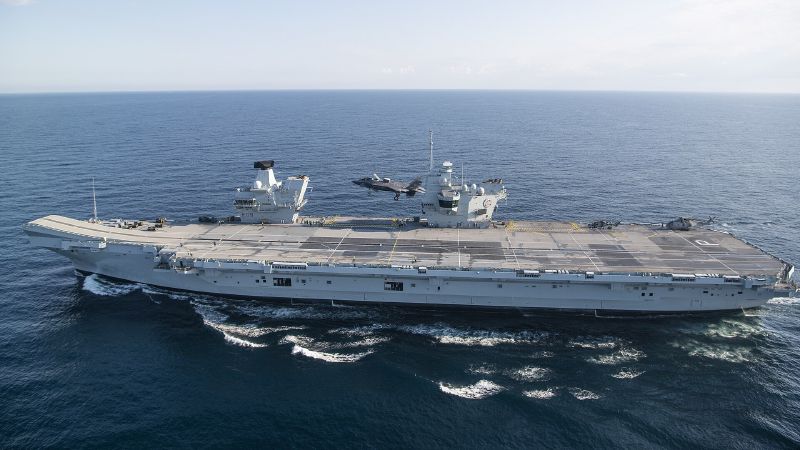
The UK’s own version is the F-35B, which the RAF and the Royal Navy operate together from RAF Marham in Norfolk. Because it can take off short and land vertically, it flies from the Queen Elizabeth-class carriers as well as from bases with short runways.
Britain joined the programme’s development phase in 2001 and took its first aircraft, for US-based operational testing, in 2012. The first front-line unit, 617 Squadron, the Dambusters, brought four jets to Marham in June 2018. The Royal Navy’s 809 Naval Air Squadron is the second.
The UK was one of eight founding partners, alongside the US, Italy, the Netherlands, Australia, Norway, Denmark and Canada. A joint programme office in Arlington, Virginia, manages the jet for all of them.
The jet that spent five weeks in Kerala
The jet’s most public moment came on the ground. One from HMS Prince of Wales diverted to Thiruvananthapuram airport in the Indian state of Kerala on 14 June 2025 after bad weather, then developed a technical fault.
Engineers from the carrier could not fix it, so the Ministry of Defence sent a team of 14. The jet finally left on 22 July, bound for Darwin in Australia. By then the stranded aircraft, valued at $110m (£80m), had become a running joke on Indian social media, and its case had been raised in the House of Commons.
How many the UK has, and what comes next
The UK’s long-term plan still calls for 138 of the jets. How many more arrive, and whether some are the conventional F-35A the 2025 Strategic Defence Review asked for, waits on that plan.