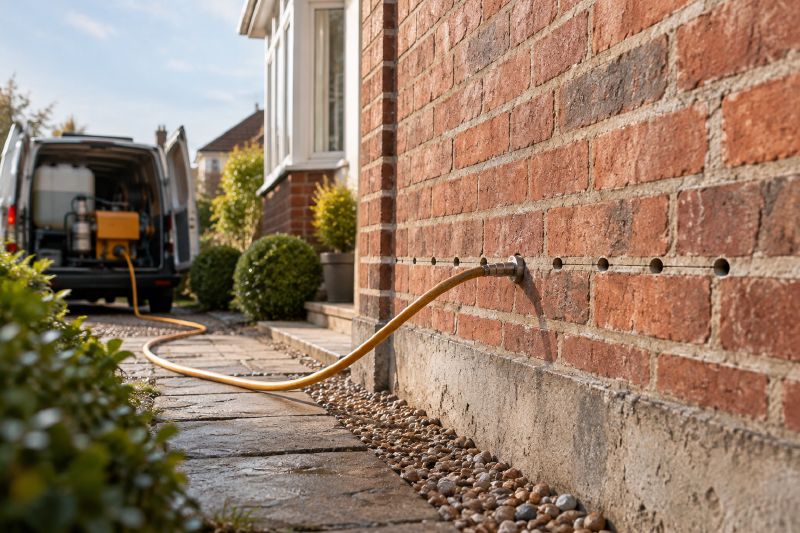
An installer fills an existing cavity wall from outside. They drill through the outer layer of brick and inject insulation into the gap behind it, between the outer and inner leaves of masonry. The holes get made good once the job is done.
What sits inside the wall
A cavity wall is two masonry walls standing side by side with a space between them. The Energy Saving Trust says the outer one is usually brick, and the inner one is brick or concrete block. Most British homes built after about 1920 have one.
The material pumped into that gap varies. The specification Which? used for its cost figures, drawn from Royal Institution of Chartered Surveyors data, was polystyrene beads injected into a 100mm cavity.
How to tell whether your walls are hollow
Look at the bricks. On a cavity wall every brick runs lengthways, so they all look the same size. On a solid wall some bricks sit end-on, and they show as short half-bricks from the street.
If render or cladding hides the brickwork, measure the wall at an open door or window. The Energy Saving Trust puts a brick cavity wall at 260mm to 350mm thick. A thinner one is probably solid.
When the injection is a bad idea
Not every cavity should be filled. The Energy Saving Trust lists four cases where the insulation might not suit a home:
- walls exposed to extreme weather
- a building in poor condition
- rooms at risk of overheating
- cavities narrower than 50mm, usually in houses built before the 1920s
Those risks are for the installer or a building professional to assess. The BBC’s Rip Off Britain covered homeowners who had trouble after poor quality wall insulation, in a programme aired on 19 January 2026. Its advice was to use a professional installer, for the sake of the regulations and the guarantee.
What it saves
About a third of the heat an uninsulated home loses goes out through its walls, by the Energy Saving Trust’s estimate. It puts a typical installation in Great Britain at around £2,200. Which? reports that insulating cavity walls could save up to £370 a year on heating.
The government’s Warm Homes Plan is meant to put close to £15 billion into UK homes. The Energy Saving Trust says it will fully fund insulation for people on low incomes.