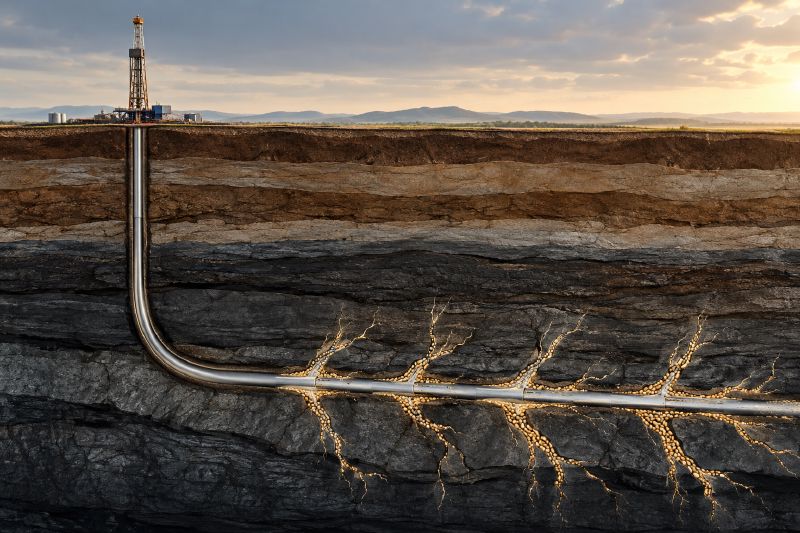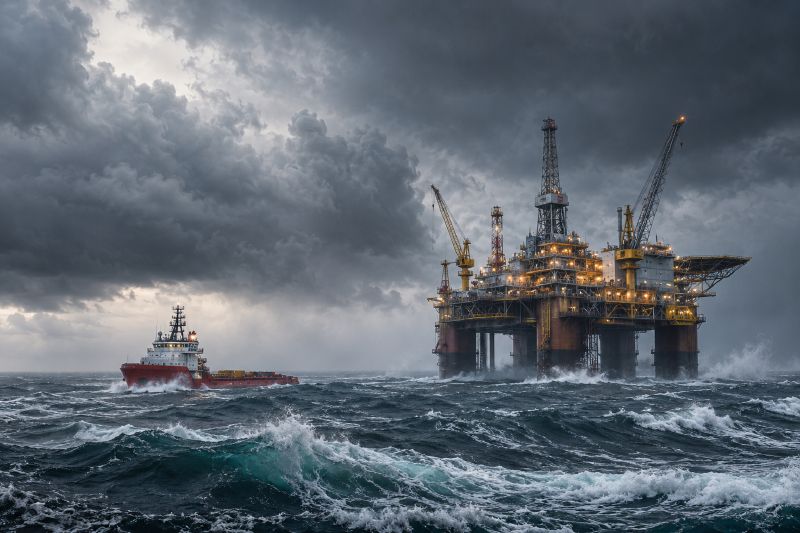
The UK windfall tax on oil and gas is a flat 38% charge on the profits companies make from extracting UK oil and gas. Its formal name is the Energy Profits Levy. It sits on top of the tax North Sea producers already pay, and the stack is steep.
Those firms pay 30% corporation tax on their profits, then a supplementary rate of 10%. Add the levy and the total reaches 78%, a figure Bob Ward of the Grantham Research Institute at the London School of Economics puts at roughly what Norwegian producers pay.
What the levy counts
The charge falls on profit, not on how much oil comes out of the ground. Simon Cran-McGreehin of the Energy and Climate Intelligence Unit told the Guardian that this makes it an upstream tax. International markets set the price of a barrel, so a UK producer cannot pass the levy on to the people buying its fuel.
Only UK extraction counts. BP and Shell both run large operations abroad that the levy never touches, and the UK supplies less than 5% of Shell’s global oil and gas production.
How the rate climbed
Rishi Sunak, then chancellor, brought the levy in in May 2022 at 25%, with an end date at the close of 2025. Russia’s invasion of Ukraine had sent prices soaring, and producers’ prices rose by more than half within weeks while their costs stayed put.
The Conservative government and then the Labour government both raised and extended it. It now stands at 38% until 31 March 2030. A price floor survives from the Conservative design: if oil and gas prices stay below a set level for six months, the levy stops early.
What it has raised
The levy brought in £2.6bn in 2022-23, its first year, then £3.6bn in 2023-24 and £2.9bn in 2024-25. The Guardian puts the running total at about £12bn. That sits against the £56bn the government spent helping households with energy bills during the 2022-23 price spike.
What comes after 2030
In the 2025 Budget the government announced an Oil and Gas Price Mechanism to take over when the levy ends. It works differently. It taxes revenue rather than profit, at an extra 35%, and it applies only once oil passes $90 a barrel or gas passes 90p a therm.
The fight over the current levy is already under way. In March 2026, with oil at $100 a barrel during the US-Israel offensive on Iran, the Guardian reported that the chancellor, Rachel Reeves, was considering cutting or replacing it. The Conservatives want it scrapped. Ward’s view was that removal looked premature with producers again set for windfall profits.
Electricity generators face a separate charge. The Electricity Generator Levy on the excess profits of some low-carbon generators rose to 55% from 1 July 2026, after a government announcement in April, and will now run beyond 2028.