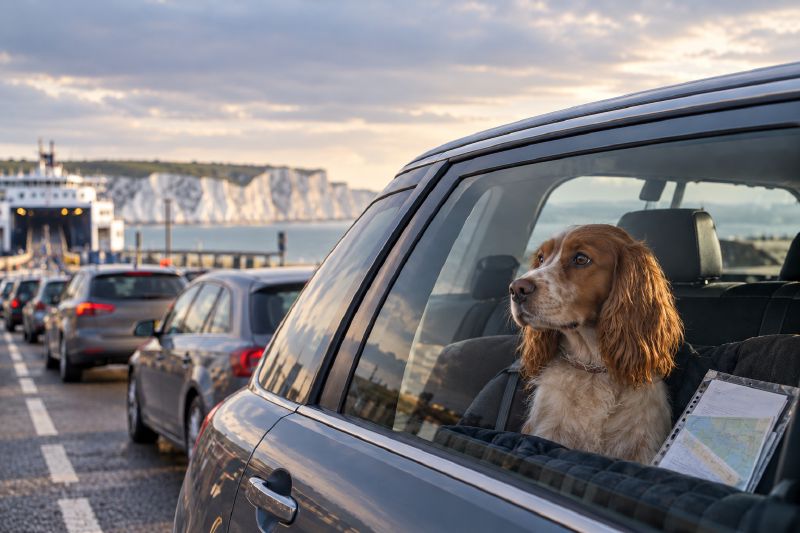
Taking a pet from Great Britain to the EU now costs a vet’s certificate every time you go. The animal health certificate, or AHC, replaced the EU pet passport, and Good Housekeeping put its price at around £100 to £150 a trip. That assumes your pet already has a microchip and an up-to-date rabies jab.
The old passport did not have to be renewed for each journey. The AHC does.
What the certificate proves
An AHC shows that your dog, cat or ferret is microchipped and vaccinated against rabies. The same rules cover assistance dogs. A dog going straight to Finland, Ireland, Northern Ireland, Norway or Malta may also need tapeworm treatment.
The paperwork is longer than it was. Justine Shotton, president of the British Veterinary Association, said an AHC runs to 9 to 12 pages, which makes it slower and dearer to produce than a passport.
The timing that catches people out
Your vet must issue the AHC no more than ten days before you leave. If your pet needs a rabies vaccination first, you must wait 21 days after it, counting the day after the jab as day one. Good Housekeeping advised telling the vet you need an AHC when you book the vaccination, and bringing the microchip date and vaccine history.
Once issued, the certificate lasts for different periods:
- 10 days to enter the EU or Northern Ireland
- 4 months for onward travel inside the EU
- 4 months to come back into Great Britain
The costs on top
The certificate is not the only bill. In 2019 Country Living quoted £32.60 for a rabies vaccination or booster. It was writing before the Brexit deadline, when owners were told to prepare for extra steps. That advice included a rabies antibody blood test at least 30 days after the vaccination, sent to an EU-approved laboratory. Good Housekeeping’s 2022 guide to the AHC lists no blood test.
Outside the EU
For a country outside the EU, nothing changed with Brexit, according to Good Housekeeping. You need an export health certificate, signed by an official vet, showing that your pet meets that country’s rules. Some operators set their own terms as well. Eurotunnel’s LeShuttle told owners of pet rabbits to carry a veterinary certificate for French border controls.