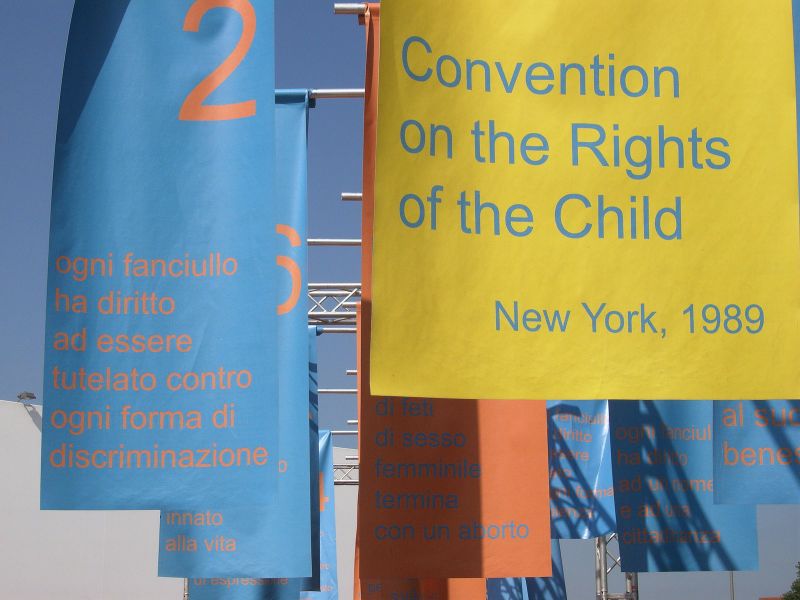
The United Nations Convention on the Rights of the Child is the treaty that sets out what every child is owed. All UN member states except the United States have signed it, according to the Royal College of Paediatrics and Child Health. It was written in 1989 and came into force in September 1990.
more
Who counts as a child
The convention’s answer is plain. A child is every human being under 18. Its rights apply to each child in a state’s jurisdiction, whatever the race, sex, religion, disability or birth status of the child or the parents.
The paediatricians’ college groups the treaty around three themes: provision, protection and participation.
What it says about families
Much of the text deals with the family. In every action concerning children, whether by courts, welfare bodies or lawmakers, the child’s best interests must be a primary consideration.
The convention also sets rules on separation:
- A child should not be separated from their parents against their will. The exception is where competent authorities, subject to judicial review, find it necessary for the child’s best interests.
- A child separated from one or both parents keeps the right to regular contact with both, unless that harms the child.
- A child whose parents live in different states keeps a right to regular contact with both.
The schedule to Scotland’s 2024 act also respects the duty of parents, and of extended family where custom provides, to guide a child in a way that fits the child’s growing capacities.
BBC Bitesize lists the rights it adds to those in the Universal Declaration of Human Rights. They include a child’s own name and identity, a relationship with both parents after a separation, and a life free from abuse. Every child should be registered at birth, the convention says, and has a right from birth to a name.
How the UK took it in
The RCPCH says the UK made the convention law in 1992. In each UK nation, a Children’s Commissioner watches over children’s rights.
Scotland went further. Its parliament passed the United Nations Convention on the Rights of the Child (Incorporation) (Scotland) Act 2024, whose schedule sets out the convention’s requirements in Scottish statute.
What children themselves picked
The RCPCH asked the young people in its RCPCH &Us network which articles matter most. They chose five, including Article 12, the right to a say in decisions that affect you, and Article 31, the right to rest and play. Over two months in autumn 2019, 1,791 children and teenagers in the UK voted on what makes the best health service.
The top answer, at 28%, was more help from adults with making healthy life choices.