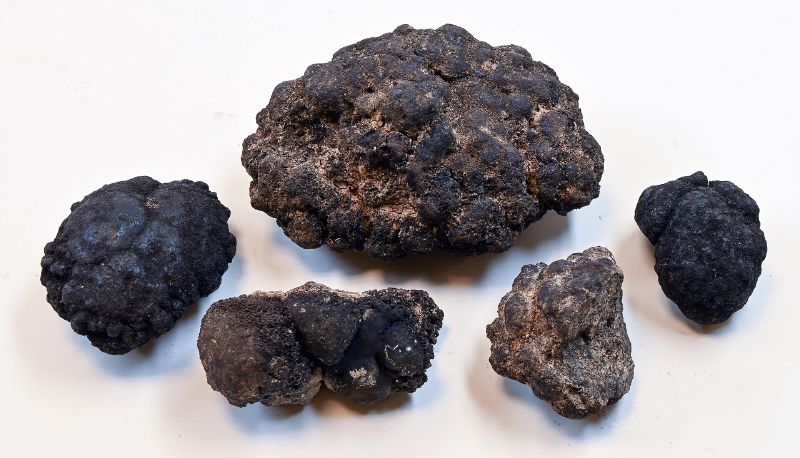
A US company has asked Washington for the right to lift metal-rich nodules off the ocean floor beyond any country’s waters, and NOAA is now weighing the request. The Metals Company USA filed a consolidated application for an exploration licence and a commercial recovery permit, and NOAA posted it in the Federal Register on August 19, 2026. Public comments run until October 19, and a virtual hearing is set for October 13.
more
If NOAA grants the recovery permit, it would be the first of its kind. The agency’s own register lists no commercial recovery permit ever issued under the law it administers. The only exploration licences on the books are two held by Lockheed Martin, both issued in 1984.
Why the US has its own route
The International Seabed Authority oversees mining in international waters, but only for states that have joined the Law of the Sea Convention. The United States is not a party. Instead, the Deep Seabed Hard Mineral Resources Act gives NOAA the job of licensing US companies to explore for and recover polymetallic nodules in those same international areas.
That route has grown busy. President Trump signed Executive Order 14285 on April 24, 2025, setting out a policy of US leadership in seabed mineral exploration and recovery. NOAA then rewrote its rules in a final rule dated January 21, 2026, which merged the public comment steps for licences and permits. Since late 2025 it has posted applications from The Metals Company USA, American Metal Resources and American Deep Sea Minerals.
What is down there
The nodules NOAA licenses carry manganese, nickel, cobalt and copper. UNEP adds gold, lead, silver and zinc to the list of metals that countries hope to take from the deep seabed. The IUCN ties the interest to shrinking land deposits and to demand from smartphones, wind turbines, solar panels and batteries.
The deep seabed begins at 200 metres and covers about two thirds of the whole sea floor, by the IUCN’s count. By May 2022 the ISA had issued 31 contracts to explore it, over more than 1.5 million square kilometres, an area about the size of Mongolia. It has issued exploration contracts only, and is still writing the rules for extraction. UNEP says no commercial deep-sea mining is under way yet.
Why it has never paid before
Deep water has beaten miners before. Woods Hole Oceanographic Institution records that about 40 years ago, investors spent almost half a billion dollars prospecting for manganese nodules and never turned a profit. Shallow water has gone better. In the 1960s Marine Diamond Corp. took nearly a million carats of diamonds off Namibia.
What mining would do to the sea floor
The IUCN calls direct disturbance of the sea floor the most direct harm from deep-sea mining, and says the damage is most likely permanent. It also warns that sediment plumes could drift for hundreds of kilometres and smother animals, and it names noise and light as threats to whales, tuna and sharks. IUCN members adopted Resolution 122 in Marseille in September 2021, calling for a moratorium until the risks are understood and effective protection is assured.
Woods Hole is less certain about recovery than about damage. Its biologists warn that mining could wipe out the life around hydrothermal vents, though similar animals may return in time. The institution says too little research exists to know.
NOAA’s hearing on October 13 is the next public step. Whatever the agency decides, the ISA’s own rules for extraction are still unfinished.