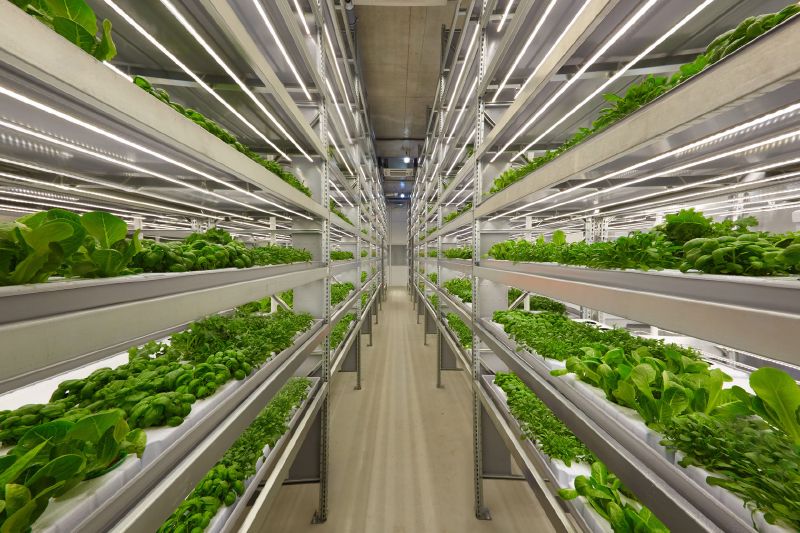
In Miyagi Prefecture, Japan, the company Mirai turned a former Sony factory into an indoor farm. It harvests about 10,000 heads of lettuce a day under 17,500 LED lights.
more
The open question is the electricity.
What the lights and racks do
Indoor growers control temperature, humidity, light and carbon dioxide together. The BBC says other growing systems cannot achieve that combination.
The BBC described the Invergowrie farm in 2018 as the UK’s first large-scale vertical farm. It grows basil, which is ready in about 20 days.
In California, the company Plenty hangs crops in towers more than 15 feet tall. Robots named John, Paul, George and Ringo move the seedlings into them.
Where the savings are
Water is the clearest gain. The Guardian reported in 2022 that vertical farms use 70 to 95% less water than outdoor farming, because they recapture and recycle it. Mirai’s chief executive, Shigeharu Shimamura, said his plant uses less than 1% of the water normally needed for vegetables.
Waste falls too. Mirai’s coreless lettuce loses under 3% of the crop, against 30 to 40% for lettuce grown outdoors.
Money has followed. Indoor farming raised over $1bn in 2021, according to the Guardian, which reported an estimate of more than 2,000 vertical farms in the US. Walmart invested in Plenty and agreed to source greens for its California stores from the company.
What the power bill rules out
Critics say the energy needed to run the lights makes vertical farms less green than their branding suggests. The Washington Post columnist Tamar Haspel calls the produce “lettuce for rich people”.
The BBC report makes the same point about price. Outdoors, sunlight is free, so a crop like potatoes becomes hard to grow cost-effectively under lights.
Shimamura described Mirai’s harvest as about half automated, with picking still done by hand.