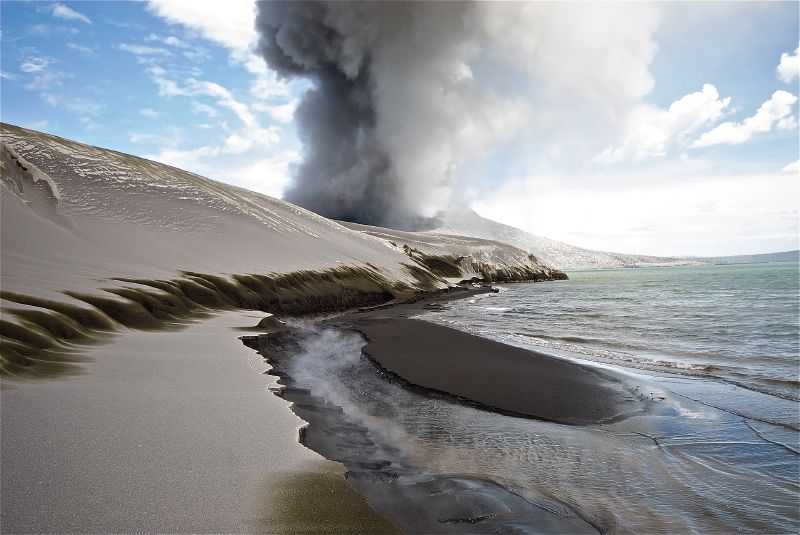
On the evening of June 23, 1982, British Airways Flight 009 left London Heathrow for Auckland. Hours later, at 37,000 feet, all four engines of the Boeing 747 stopped, and nobody on board knew why. The jet had flown into an ash cloud from the Galunggung volcano in West Java, 93 miles away.
more
The night four engines failed
The crew first saw what Betty Tootell, an eyewitness, described as millions of sparks. Onlookers took it for St. Elmo’s fire. Then the fourth engine flamed out, and the other three followed in less than a minute. Captain Eric Moody told passengers, “All four engines have stopped.”
The crew descended to 13,500 feet and tried again. The engines came back one by one, though one had to be shut down again. The pilots were then confident of a safe landing at Jakarta.
Seven years later, over Alaska
The second warning came in December 1989. Mount Redoubt erupted and sent ash up to 45,000 feet. KLM Flight 867 flew into the plume with 231 passengers and lost power in all four engines.
The aircraft fell from 27,900 feet toward the sea. The crew restarted the engines at 13,300 feet and landed in Anchorage. All four engines needed replacing, and the repair bill came to an estimated $80 million.
Why airspace closes
Smithsonian Magazine describes the danger as gas and highly abrasive pulverised rock debris thrown out during an eruption. The Met Office says a high concentration of ash in the engines can stop them or damage them badly. At lower concentrations, flights may operate through ash if the engine maker certifies it and the national aviation authority allows it.
The 2010 eruption of Eyjafjallajökull in Iceland closed large amounts of European airspace. David J. Schneider of the US Geological Survey’s Alaska Volcano Observatory says volcanic activity has stayed roughly constant, but more people fly, so more aircraft meet ash.
A finer forecast
The Met Office runs the London Volcanic Ash Advisory Centre, which forecasts ash for eruptions in Iceland and the north-eastern North Atlantic. Its new Quantitative Volcanic Ash service was due to start on 27 November 2025. It gives expected ash concentration for 12 slices of the atmosphere, up from three.
The Met Office estimates that disruption from a repeat of Eyjafjallajökull would now be half the April 2010 level. The aim is to shut only the airspace with dense ash, rather than everything near a visible cloud.