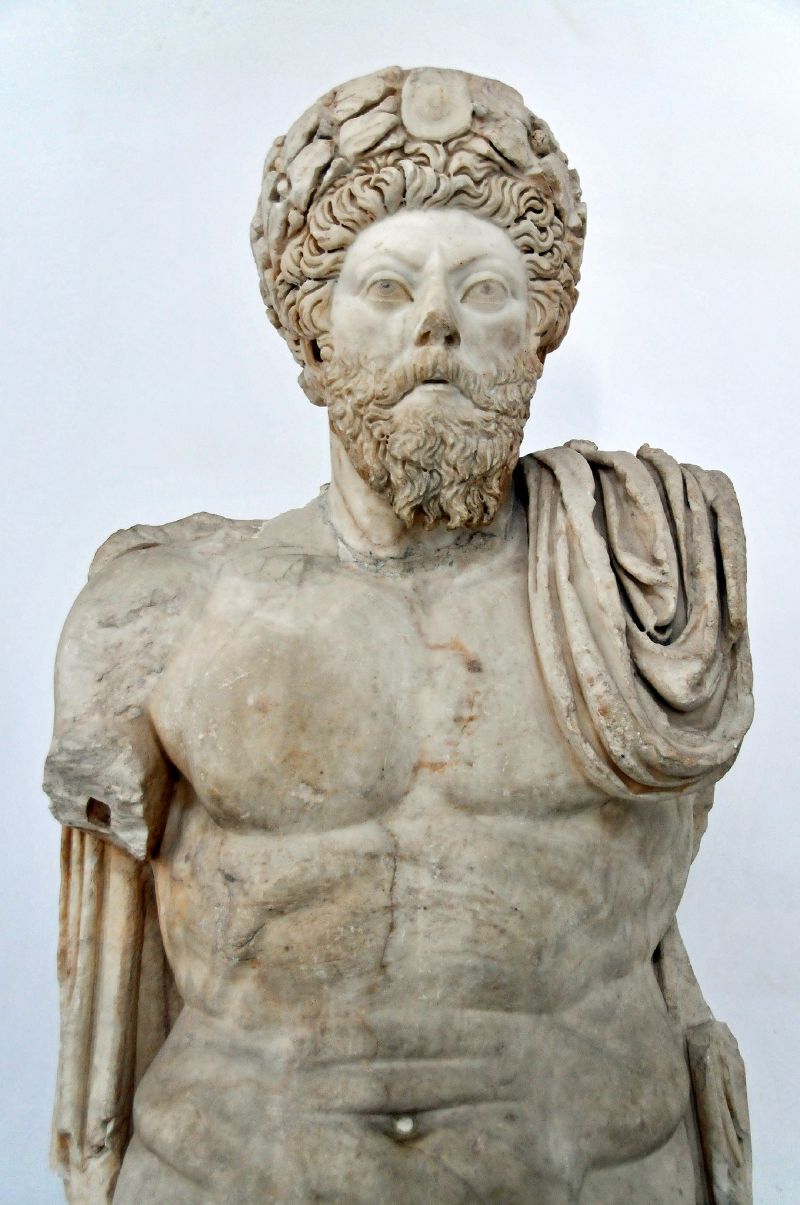
Marcus Aurelius may not have been the Stoic he described in his own notebook. He took Rome’s throne in 161 CE, after his adoptive father Antoninus Pius, and held it until he died in 180. The book that made him famous, Meditations, was never written to convince a reader of anything. Marcus wrote it for his own benefit, as a kind of self-instruction, and he did not necessarily expect anyone else to read it. Jon Brooks of The Stoic Handbook argues that its most repeated lines sound like a man still working on a problem, not one who had already solved it.
more
Why the book still reads like scripture
Stoicism began in Greece under Zeno in the fourth century BC and later flourished in Rome, prizing what the BBC Radio 4 programme In Our Time calls “inner solitude, forbearance in adversity and the acceptance of fate.” The programme notes that Stoicism went on to influence the Christian church and Shakespeare, though it was almost forgotten in the twentieth century. The Guardian calls Marcus “the last famous Stoic philosopher of antiquity,” and notes that the book opens with a chapter listing the qualities he most admired in about seventeen friends, relatives and teachers.
What the case for him looks like
Some of the evidence favours him. During the Antonine Plague, with Rome’s economy devastated, Marcus spent two months selling jewels, furniture and finery owned by the emperor. The writer Ryan Holiday cites the episode as an example of Marcus putting other people first. After the general Avidius Cassius led a failed rebellion in 175, the senator Cassius Dio recorded that Marcus refused to punish the rebellion’s supporters and would not even look at Cassius’s severed head, ordering it buried.
What the case against him looks like
Other evidence cuts the other way. Marcus made his son Commodus co-emperor at sixteen, a decision Brooks says failed catastrophically. In 177, Christians in Lyon were put to death, and Brooks writes that historians still dispute whether Marcus ordered the persecution, approved it at a provincial level, or had no direct hand in it. Dio also records that Marcus wanted to wipe out the Iazyges people during the Danube wars, before events forced a settlement. In one entry, Marcus tells himself to quit debating what makes a person good and, in two words, to “be one.” Brooks reads that line as evidence Marcus still needed telling, not proof he had already arrived.
A diary written by someone who felt alone
The diary’s final decade, written between 170 and 180, shows a man increasingly alone, according to Aldo Dinucci, writing for Modern Stoicism. In one passage, Marcus tells himself that death will free him from people who share none of his convictions. In another, he orders himself to “live as on a mountain,” apart from everyone around him. Dinucci links that isolation to the deaths of Marcus’s friends and teachers in his last years.
Brooks adds a caveat about Cassius Dio’s account of the buried head. Dio wanted his readers to admire the emperor, so his praise cannot be taken as neutral either.