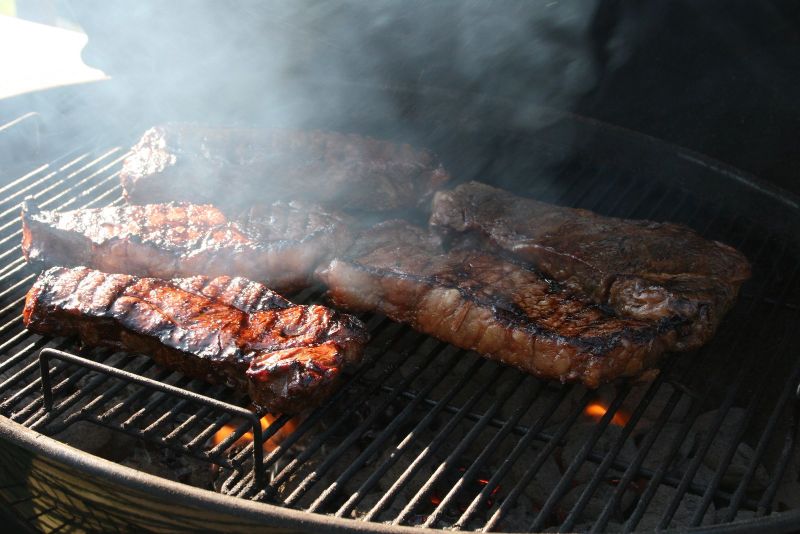
A fire extinguisher’s rating is not a mark of quality. It is a match to one kind of fuel, and using the wrong one can make a fire worse. Pour water on a pan of burning cooking oil and the two do not mix. The water breaks the oil into smaller droplets, and the fire gets worse.
more
What a fire actually needs
Every fire needs fuel, oxygen and heat, together at once. Take away any one of them and it stops burning. That idea, called the fire triangle, is why extinguishers are not interchangeable. Each type attacks a different side of the triangle. The fuel decides which side is worth attacking.
Water works by removing heat. It soaks up the heat of a fire very well, and a fire without enough heat stops burning. That makes water the right choice for the UK Health and Safety Executive’s first category: wood, paper and cloth fires.
Oil and other flammable liquids need a different approach, because water and oil do not mix. Poured onto burning oil, water only splits it into smaller droplets, which makes the fire worse. The HSE lists dry powder or foam extinguishers for flammable liquids instead.
Why electrical fires need a third answer
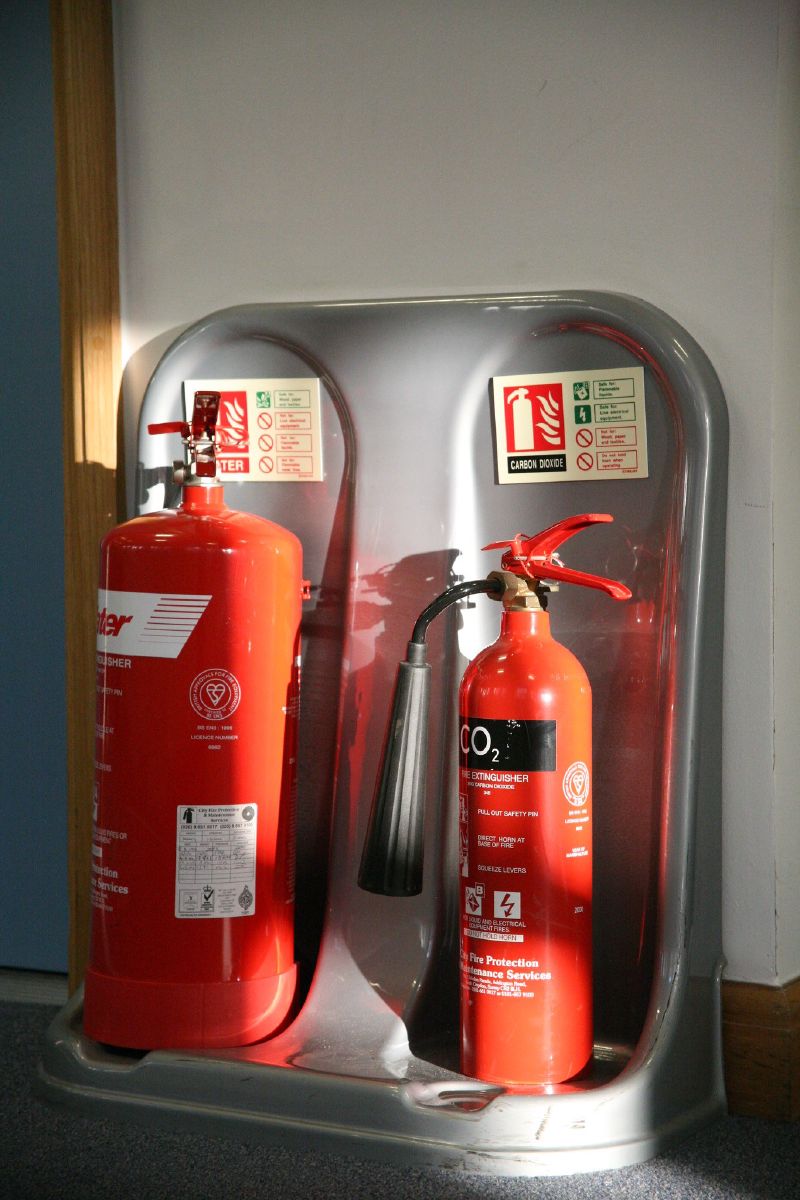
Electrical fires rule out water for a separate reason: it brings a risk of electric shock. Carbon dioxide extinguishers solve this by displacing the oxygen around the fire instead. Carbon dioxide is non-flammable and denser than air, so it pushes oxygen away from the flame. The same principle explains why closing a door during an evacuation slows a fire: it cuts off the fresh oxygen a blaze needs to keep growing.
Why a building site keeps three kinds ready
Employers running a construction site have to think this through before any fire starts. The UK’s Regulatory Reform (Fire Safety) Order 2005 requires a “responsible person”, usually the main contractor, to carry out a fire risk assessment and keep it up to date. Part of that assessment is deciding where to place extinguishers and which type belongs at each point, because the HSE’s own guidance splits the job into the same categories a chemistry classroom teaches. Water covers wood, paper and cloth. Dry powder or foam covers flammable liquids. Carbon dioxide covers anything electrical. Nominated staff are then trained to use whichever extinguisher sits at their fire point, rather than being handed one type and told it covers everything.
Buying the right one for a home
A single extinguisher can be built to cover more than one class. Multipurpose home models are commonly rated for wood, paper and plastic as well as flammable liquids and live electrical equipment, which is why a label carries several letters rather than one. A dedicated kitchen extinguisher is usually the opposite. It is built for grease, oven and stove fires, and it says plainly that it is not meant for ordinary trash, paper or wood. A small aerosol model aimed at flammable liquids, oils and textiles can also be rated for the lithium-ion battery fires behind many e-bike blazes.
A pressure gauge that is easy to read matters too, because it shows whether the extinguisher still works. So does tank size: a small canister built for a kitchen cabinet is not rated for a larger blaze, whatever its class rating says. Reading the letters on the canister, rather than assuming any extinguisher will do, is what decides whether it helps in the seconds that matter.
Removing one side of the fire triangle is the whole job. Which side is worth removing depends entirely on what is burning.