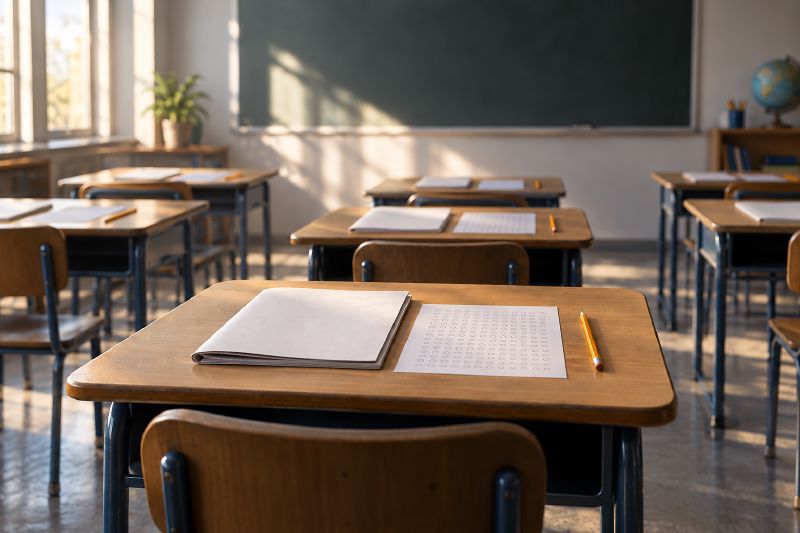
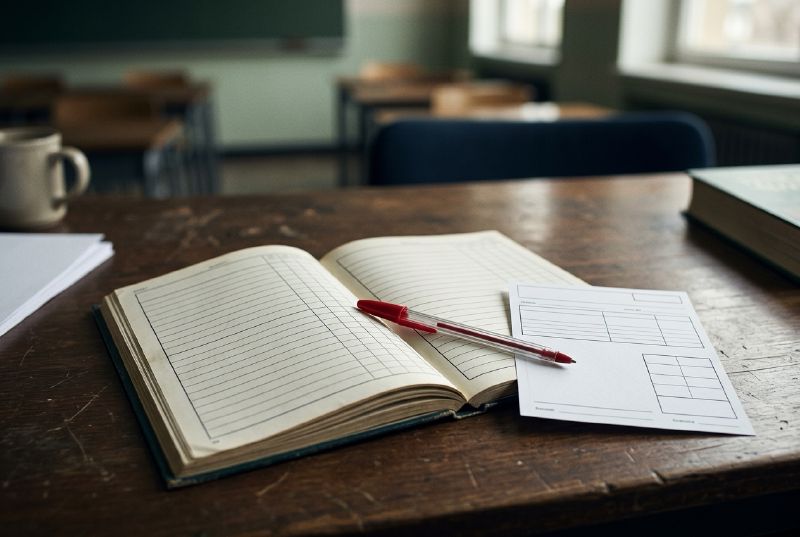
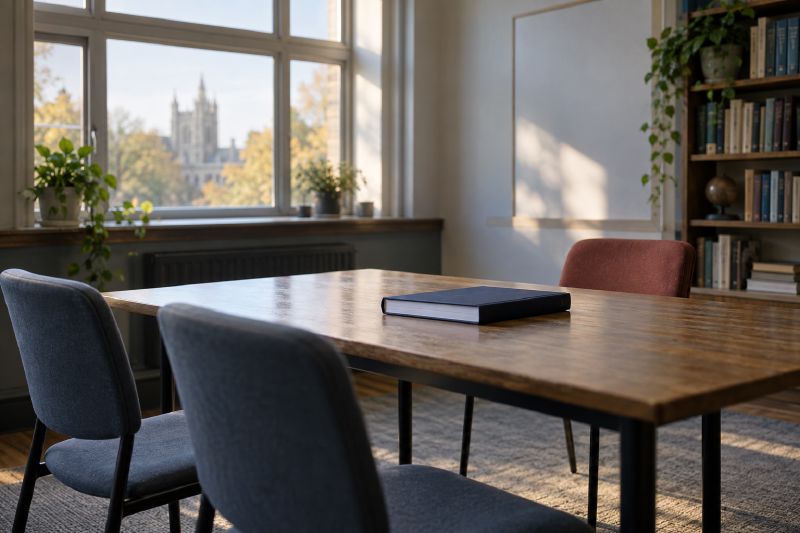
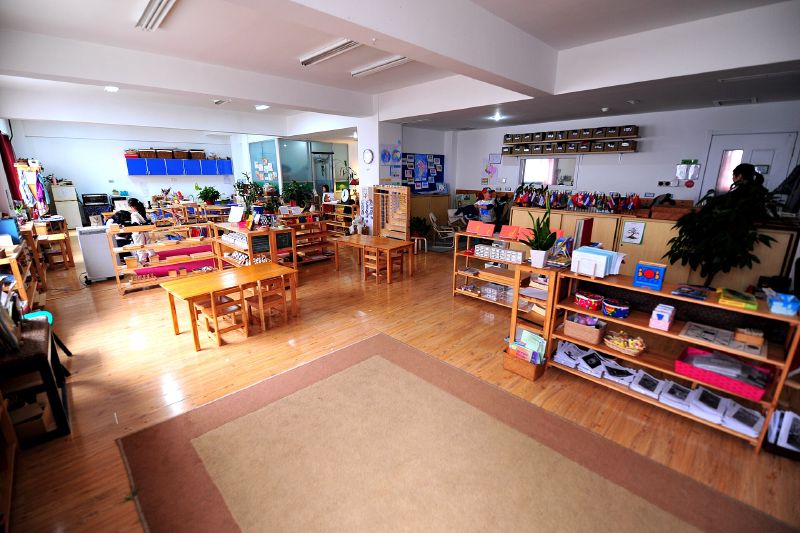
A Montessori classroom removes the parts of school most children take for granted. There’s no blackboard, no teacher’s desk, and no register of instructions from the front of the room. The child, not a timetable, decides what happens first.
more
At Walthamstow Montessori School in north-east London, the day starts on that principle. Pupils greet their teachers with a handshake, then pick up whichever piece of equipment they choose. Some read in a corner. Others thread beads or piece together a jigsaw. Nobody tells them what to do first, and nobody stands at the front waiting for quiet.
Why the teacher stays out of the way
Lorna Mahoney founded the Walthamstow school after nine years spent training other Montessori teachers. She puts the difference plainly: “I’m directing them to learn rather than telling them to.” In an “ordinary” classroom, she says, the teacher runs the room from the front. Hers has no desk to run it from.
Abigail Kay, deputy head at The English Montessori School in Madrid, describes the same shift from a different classroom entirely. A traditional lesson goes out to everyone at once, then the class moves on together. A Montessori one teaches each child at their own pace, because not every six-year-old learns at the same speed. The youngest children work one-to-one with an adult. Older ones work in pairs or small groups, on materials the teacher has already chosen for them.
Kay calls the result “freedom within limits.” The child picks the work. The adult picks what’s on offer.
What the equipment is actually doing
Montessori’s method holds that nothing reaches a child’s mind before it first reaches their senses, and the equipment is built around that idea. A globe with its land traced out in sandpaper lets a child feel the difference between land and sea before they can name it. A set of ten spindles is built so a child can tell, without being told, whether they have counted correctly.
Beads carry the idea further. A set divided into units of one, ten, a hundred and a thousand gives children a “muscular impression” of how much bigger each is than the last. Handle enough of them, Mahoney says, and a child works out for themselves that a thousand is a hundred hundreds joined together.
The room itself is treated as part of the lesson. At Kay’s school, three-year-olds put materials back on the shelf once they’ve finished, walk around classmates’ mats rather than through them, and prepare their own snacks. Nobody grades them on it. It’s how the room runs. Maria Montessori herself measured success by how little the adult needed to do. The goal, she said, was to reach a point where “the children are now working as if I did not exist.”
Why it never spread through Britain the way it did elsewhere
The method is older than most of the schools that now run on it. In the early twentieth century, an aristocrat who had watched Maria Montessori teach in Italy wanted to bring her to Britain so every infant could learn the same way. The Second World War got in the way, and it never happened. Montessori has proved more popular in Canada, the United States, Italy, Sweden and Ireland than in Britain.
Does any of it show up in the results
For most of a century, the case for Montessori rested on testimony like Mahoney’s and Kay’s. An evaluation from the Riley Institute at Furman University put numbers behind it, in the setting where the method is hardest to run: an ordinary public school system.
Researchers tracked pupils in South Carolina’s public Montessori programmes against pupils in other public schools from the 2012-13 year to 2015-16. They matched each Montessori pupil to a similar one elsewhere rather than assigning them at random. The Montessori pupils came out ahead in English, in maths, and on a separate test of creativity, and their schools recorded higher attendance and fewer suspensions.
The gains weren’t even across groups. White pupils in Montessori programmes outperformed their counterparts in every subject measured. Black pupils did better in English and social studies, but not in maths or science. Hispanic pupils scored about the same either way. Brooke Culclasure, the study’s lead investigator, called the results “very convincing” while cautioning that the study is “a piece of the puzzle” rather than the whole picture.
How closely a school followed the method mattered too. Of 43 programmes researchers observed in more than 120 classroom visits, 21 ran with what they judged high fidelity to the original model. The lower grades stuck to it more closely than the upper ones did. David Fleming, a senior researcher on the study, said the open question had always been whether a method that had worked in private schools would work as well in public ones.
Public Montessori is growing. Of the more than 500 now running in the United States, more than half have opened in the past fifteen years. Most of them run without a Lorna Mahoney or an Abigail Kay on hand to explain, class by class, why there’s no desk at the front.