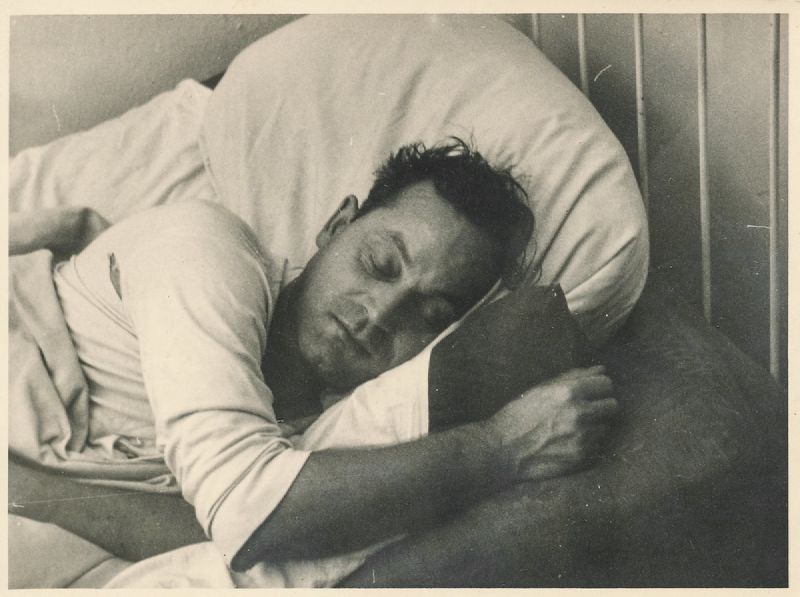
On your side. That is the usual answer, and it holds up on average. In a 15-night trial, 13 volunteers wore a flexible sensor that tracked their posture through the night. The ones who mostly lay on their right side, turning over the least, reported the best sleep quality. Separately, Danish researchers wired volunteers with motion sensors and found people spend just over half the night on their side, about 38% on their back, and 7% on their front.
The catch is in the word “average”. Cleveland Clinic sleep specialist Nancy Foldvary-Schaefer says the ideal position varies with what each person needs. If you have back pain, reflux, or a snoring problem, the general answer can point you the wrong way. The research behind it is thinner than the confidence of the advice suggests.
How anyone knows where you actually sleep
You are a poor witness to your own night. People mostly remember the position they fell asleep in and the one they woke up in, and little in between, the BBC’s science writer notes. So researchers turn to cameras and wearables instead.
The sensor study behind that right-side finding used its own device: a flexible angle sensor paired with a six-axis motion sensor. Thirteen healthy adults, seven men and six women, wore it for eight hours a night across 15 nights. The team logged more than 50 separate position changes per person to check the equipment was reading correctly, while a wristband tracker and questionnaires recorded how well each person actually slept.
Other teams have taken different routes. Danish researchers fixed small motion sensors to volunteers’ thighs, backs and arms. In Hong Kong, a team is building an infrared depth-camera system that can read a sleeper’s posture through a thick blanket. That effort tells you how hard the basic measurement is, and the BBC notes how few large studies exist given how much sleep matters. Keep that in mind whenever a sleep-product website sounds certain.
Why the side helps with snoring and sleep apnoea
On your back, gravity pulls the tongue and the loose tissue at the back of the throat down towards the airway, narrowing it. Foldvary-Schaefer describes seeing this in the sleep lab: significant apnoea while a patient lies on their back, which eases or resolves once they roll onto their side.
The BBC cites a study of seafarers on merchant container ships, in which breathing disturbances such as snoring were more common during back sleeping. In some cases, switching from mostly back to mostly side sleeping resolved sleep apnoea outright. Positional obstructive sleep apnoea, where symptoms are markedly worse lying flat, affects around half of people with the condition, according to the Sleep Foundation. Some people only have symptoms at all when they are on their back.
Back pain, and the twist that can undo the benefit
Side sleeping has a second case behind it. The BBC cites research on welders working aboard container ships in Nigeria, where those who slept on their backs reported more back pain than those who slept on their sides.
But not every side position helps. Researchers in Western Australia filmed volunteers’ bedrooms for 12 hours a night. People who woke with a stiff neck spent more time in what the team called “provocative” side positions, meaning the top thigh crossed over the other, twisting the spine. People sleeping in a straighter, supported side position reported less neck pain. The study cannot say which way the cause runs. Neck pain might push someone into that twisted position, rather than the position causing the pain, the BBC notes.
When back sleeping is the better call
Cleveland Clinic often recommends the opposite of the general advice for people already dealing with pain. Foldvary-Schaefer says a person with back or neck pain can often find relief on their back, using a pillow under the knees as a bolster and another under the neck for support. She also advises keeping both arms in the same position, rather than one overhead and one at the side, to avoid straining one half of the body.
The exceptions run further. Sciatica can feel better on the back if the underlying problem is a bulging disc, while spinal stenosis usually favours the side instead. There is a cosmetic argument too: Cleveland Clinic notes that some studies suggest back sleeping may help reduce facial wrinkles, since the face is not pressed into a pillow all night.
Left or right, and what changes in pregnancy
For most people, which side barely matters. A very small observational study cited by the BBC found a slight edge for right-side sleepers over left-side ones, with people who slept on their backs coming last of the three. That is one small study, worth treating as a curiosity rather than a rule.
Pregnancy is different. Cleveland Clinic advises sleeping on the side as much as possible once pregnant, because lying on the back lets a growing bump press on the large veins that return blood to the heart. The left side is considered the better of the two, which Foldvary-Schaefer says may, in theory, help blood flow. Reflux tips the answer the same way outside pregnancy too. The Sleep Foundation says the left side is usually best for heartburn and GERD: acid has a harder path to travel up towards the oesophagus from that position.
Whether to change anything at all
Foldvary-Schaefer’s own test is a useful one to borrow. If you are comfortable in bed, wake up refreshed, and are not snoring, she says there is probably no reason to change your position.
What the field still lacks is the harder kind of evidence: trials that move people into a new position and measure what happens, rather than just watching the position they already favour. Until that exists, the side remains a reasonable default. Your own pain and your own breathing are the better guide than any single average.