Three structures on an owl’s wing break up the sound a flying bird would otherwise make: a serrated leading edge, a velvet-soft upper surface, and a fringed trailing edge. Researchers reviewing the field have named these the same three features since a British pilot pointed them out in 1934.
more
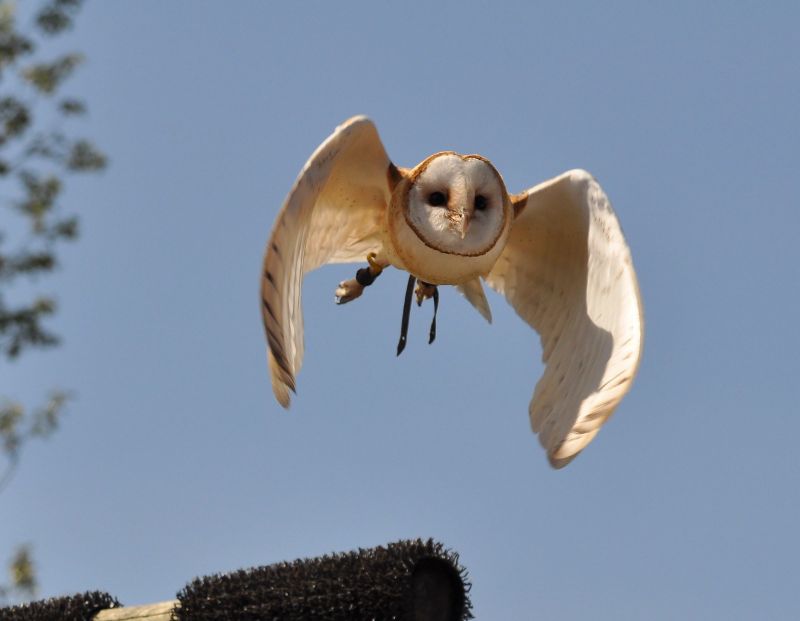
BBC Earth once tested the claim directly, filming a barn owl, a pigeon and a peregrine falcon flying the same studio course past six hypersensitive microphones. The pigeon’s wingbeats registered clearly. The falcon’s registered more heavily still. The owl barely registered at all.
Why a hunter needs its own wings to stay quiet
Laboratory tests have found the faint swoosh of a barn owl’s wingbeat sits below the threshold of human hearing until the bird is roughly three feet away. Owl wings mute frequencies above about 1,600 hertz, roughly the note two and a half octaves above middle C on a piano. That is roughly where rodent hearing begins, so it is the range an owl gains most from muffling as it hunts.
Scott Weidensaul, an owl expert and contributing editor at Audubon, points to the owl’s low, buoyant style of flight as part of the same trick, describing it as “moth-like” and well suited to closing in on prey unnoticed. Quiet flight protects the hunt twice over: it keeps prey from hearing the owl coming, and it keeps the owl’s own ears free to catch the prey.
The comb, the velvet and the fringe
Robert Rule Graham, a British pilot who was also an aeronautical engineer, pointed out the same three structures in 1934, and his account is still cited in papers on owl flight nearly a century later. The first is a row of stiff, comb-like barbs along the front edge of the flight feathers, which breaks up the airflow before it can produce a clean whoosh. The second is a soft, downy nap across the upper surface of the feather. The third is a ragged fringe of filaments at the trailing edge, in place of the sharp edge most birds fly with.
A review of the literature, cited in a paper in Nature Communications, still describes these as the three defining features of an owl feather: leading-edge serrations, a soft downy coating, and trailing-edge fringes. Christopher Clark, an ornithologist at the University of California, Riverside, expects the answer to involve a number of mechanisms, Graham’s among them.
What a fringed trailing edge actually does
Simulations run by Hao Liu’s team at Chiba University in Japan modelled an owl wing twice, once with its trailing-edge fringes intact and once with them removed, then ran both through the same airflow. The fringed wing was quieter, especially when the wing met the air at a steep angle, and it kept aerodynamic performance comparable to the unfringed version.
The team, whose findings appeared in the journal Bioinspiration & Biomimetics in November 2023, traced the effect to two things happening at once. The fringe breaks up the vortices that would otherwise roll off the trailing edge. It also weakens how air moving off neighbouring feathers interacts near the wingtip, which cuts down the wingtip vortex too.
Wings built to move slowly
Owls also carry large wings for their weight, which lets a barn owl fly at speeds as low as two miles an hour. Weidensaul notes that the more nocturnal a species of owl is, the more it depends on this kind of flight. That is why he calls the barn owl and the great grey owl particularly good models for engineers.
A peregrine falcon shows what the opposite strategy looks like. Its narrow, swept wings are built for a dive that can reach 200 miles an hour, and the falcon flies loudly because outrunning its prey matters more to it than surprising it.
Engineers keep coming back to the same three tricks
Justin Jaworski, an engineer at Lehigh University in Pennsylvania, and a NASA Langley researcher tried copying the velvet layer by stretching various fabrics over an ordinary airfoil. A wedding veil worked best of all the materials they tried. Fitting tiny 3D-printed finlets to a wind turbine blade, modelled on the same trailing-edge fringe, gave even better results than the veil. Owl-inspired designs of this kind can cut noise by as much as 10 decibels, which Jaworski compares to the gap between a passing truck and a passing car. Siemens has since built comb-like ridges directly inspired by owl feathers into its “Dino Tail” turbine blades. A University of Cambridge coating tested on a turbine blade in a wind tunnel proved quieter too, though not as quiet as the wing that inspired it.
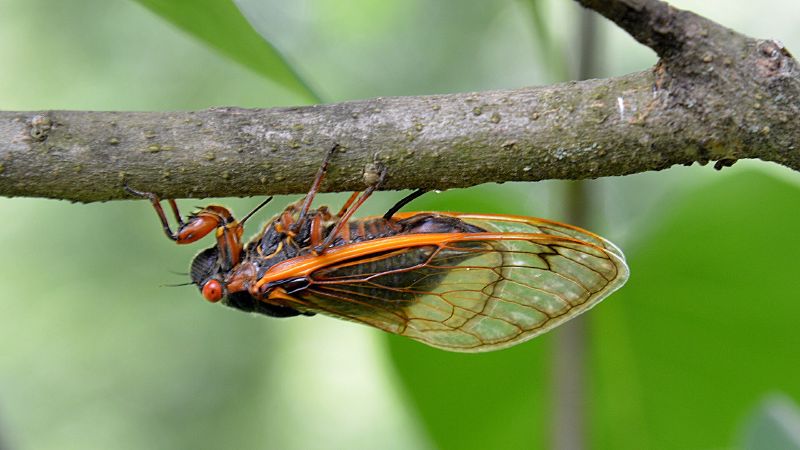
A propeller built around a three-dimensional version of the owl’s serrated feather, combined with the wing geometry of a cicada, cut overall sound levels by up to 5.5 decibels against a standard industry propeller while pushing propulsive efficiency up by more than 20 percent. Christopher Clark cautions that engineers still have not settled the physics of owl flight itself, and may not yet have identified the most important source of the noise they are trying to design away.