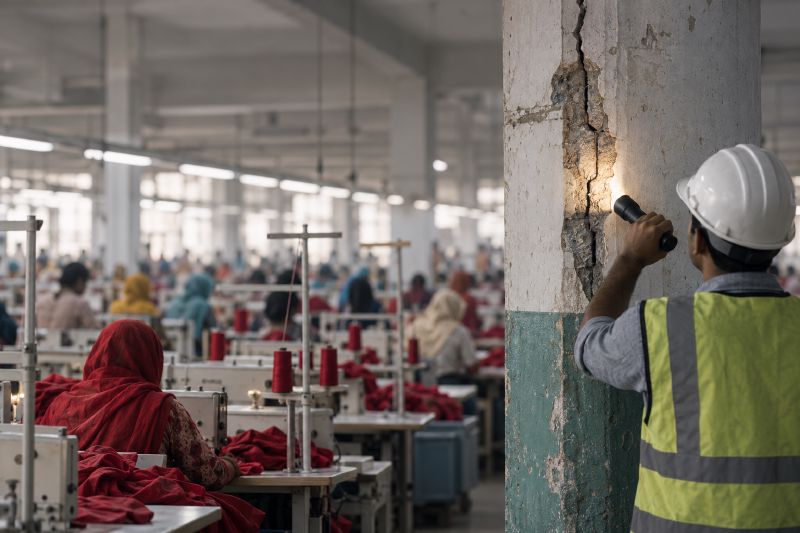
The accord brought an inspection regime with legal teeth. Within weeks of the Rana Plaza collapse in Bangladesh, which killed more than 1,100 people on April 24, 2013, the world’s two biggest fashion retailers backed an accord on fire and building safety. Ten years later, Corporate Knights counted 56,000 independently overseen inspections at more than 2,400 garment factories as the accord’s work to that point.
How the accord came about
Rana Plaza was not the first disaster. A factory fire the previous November had killed 112 people, and CNBC reported that the run of deaths had drawn world attention to safety in Bangladesh’s garment trade, then second only to China’s as a clothing exporter.
The International Labour Organisation and trade unions drove the talks, and IndustriALL Global Union pushed brands to sign by a May 15 deadline. In May 2013 Inditex, the owner of Zara, and H&M both backed the five-year deal. IndustriALL said it would bring coordinated inspections, training, money from retailers in proportion to their business in Bangladesh, and the right for workers to refuse dangerous work.
The government moved too. As the search for victims ended, Bangladesh’s cabinet paved the way for parliament to let garment workers form unions without first asking factory owners.
What the inspections found
Corporate Knights reported that the work resolved more than 140,000 health and safety problems. Factories also gained safety training and ways for workers to file complaints. The magazine concluded that the accord had made factories safer for the 4.1 million people working in the sector.
The original accord did not last in its first form. In 2020 it became the RMG Sustainability Council, where RMG stands for ready-made garment. In 2021 brands and unions formed a new International Accord covering health and safety in textiles and garments. It had 190 signatories by 2023.
What did not change
The binding protection reaches workers in only two countries, Bangladesh and Pakistan, according to Corporate Knights. Most global brands have not signed. They follow their own policies and remedy problems only voluntarily.
Pay is the other gap. Fashion Revolution’s transparency index found that nearly half of the 250 brands it ranks now publish their first-tier factory lists, but only 4% say whether their workers earn a living wage. Campaigners such as the Clean Clothes Campaign are still calling for proper compensation for Rana Plaza’s survivors, many of whom have failing health.