Bartolomeo Cristofori, an Italian instrument maker working in Florence, is widely credited with inventing the piano. His change was a single mechanism: where the harpsichord plucked its strings, his instrument struck them with hammers.
more
That swap gave the player control through the fingers. The harder a key went down, the louder the note, and the lighter, the softer.
The instrument it displaced
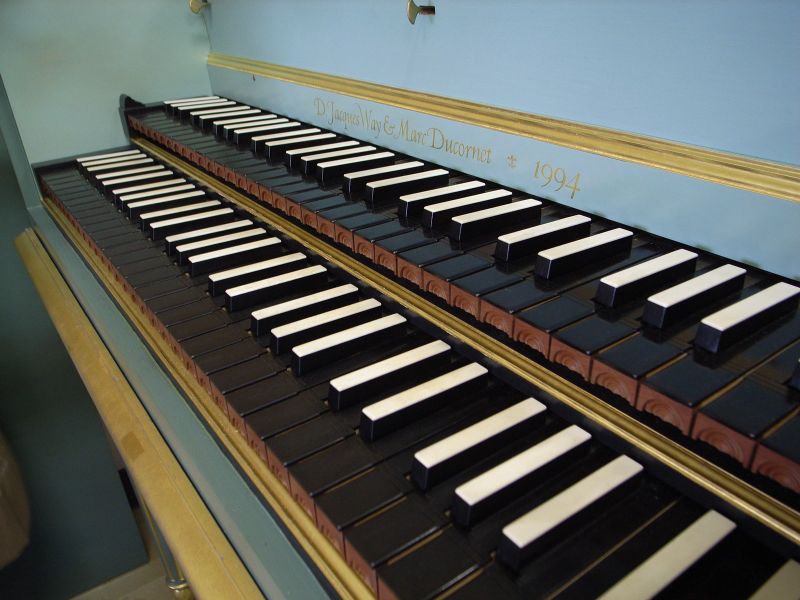
By Cristofori’s day the harpsichord was everywhere. It had first appeared in the middle of the 16th century, and its strings were plucked by a mechanism and held at low tension. Makers had added extra keyboards and other devices to vary its sound.
What players still lacked was touch. BBC Radio 3 notes that composers and performers were searching for more expression through the keyboard itself.
What Cristofori built
His hammers let the force on a key shape both tone and attack. He also added extra strings for each note, which gave the sound more depth.
The name records the novelty. In his lifetime the instrument was called a harpsichord that plays soft and loud, in Italian gravicembalo col piano e forte.
1700 or 1709?
The sources do not agree on the year. BBC Radio 3 dates the breakthrough to around 1700. Encyclopaedia Britannica, as quoted by the Guardian, says he apparently invented it around 1709. It adds that contemporary sources record four of his pianos in existence by 1711.
Cristofori was born in Padua in 1655, then part of the Republic of Venice. Britannica notes that little is known of his life. His invention was not widely known while he lived.
How the idea spread
Others carried it forward. Across the 1700s, German organ builders such as Silbermann took up his ideas. By the middle of that century hybrids had appeared, some pairing plucked strings with hammers in one keyboard.
Mozart played the next stage, the fortepiano. In a letter to his father dated October 17, 1777, he named Johann Andreas Stein of Augsburg as his favourite maker at the time.